
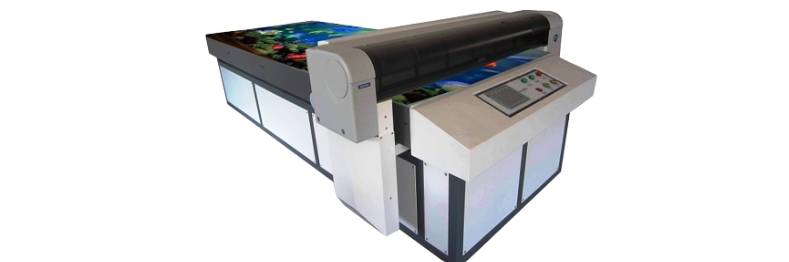
The world of printing has undergone a seismic shift over the past two decades. We have moved away from the noisy, chemical-heavy darkrooms and analog screen-printing tables toward a cleaner, faster, and infinitely more flexible digital future. While most consumers are familiar with the paper document printer sitting in their home office, industrial printing tells a very different story. At the heart of this industrial revolution lies a machine that has effectively broken the rules of what a printer can touch: the flatbed digital printer.
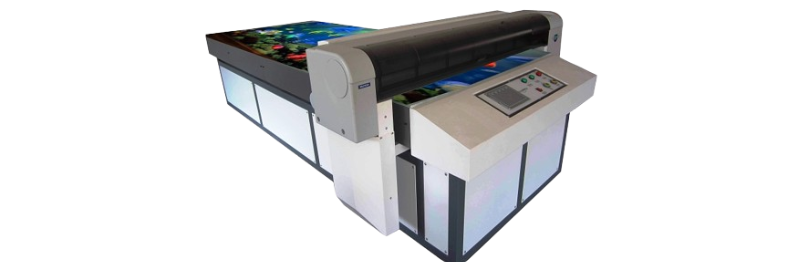
A flatbed digital printer is a specialized piece of industrial equipment designed to print high-resolution graphics directly onto rigid or thick materials. Unlike roll-to-roll printers that are limited to flexible substrates like vinyl or paper, flatbed printers feature a stationary, flat surface (the bed) where materials are loaded. A gantry holding the print head moves across the X, Y, and sometimes Z axes to apply UV-curable ink directly onto the object. This seemingly simple shift—moving the head instead of the substrate—has opened the floodgates for customization in industries ranging from aerospace to home decor. In this post, we will explore the technical mechanics, the chemistry of UV inks, the vast array of applications, and the economic justification for investing in this transformative technology.
The Mechanical Genius: How a Flatbed Actually Works
To appreciate the capability of these machines, one must understand the basic workflow. Imagine a large, level table (the bed) that can be 4×8 feet or larger. You place a piece of wood, a sheet of acrylic, or even a pre-manufactured circuit board onto this bed. Vacuum suction holes on the surface activate to hold the material perfectly flat, preventing any warping or shifting during the print cycle.
Above this bed, a bridge (gantry) slides back and forth. On this bridge is a carriage holding dozens of tiny print heads. As the gantry moves forward, the print heads eject microscopic droplets of ink. What makes this possible is the “digital” aspect: every single droplet is mapped to a pixel in a raster image. There are no screens to burn, no plates to etch, and no dies to cut. If you can design it on a computer screen, the flatbed digital printer can reproduce it on a physical object within minutes.
Advanced models include a “Z-axis” capability. The print heads can raise or lower automatically to accommodate objects of varying thicknesses. Need to print on a 4-inch thick block of foam? The sensor measures the height, and the heads adjust. Need to print on the slightly uneven surface of a reclaimed barn door? The vacuum table holds it flat, and the heads fire from a precise distance to ensure focus.
The Magic of UV Ink: Instant Curing and Adhesion
The unsung hero of this ecosystem is not the hardware, but the liquid: UV-curable ink. Traditional solvent or aqueous inks dry through evaporation, which can take minutes or hours and often leads to bleeding or smudging. UV ink, however, is a reactive monomer. As the printer lays down the ink, a bank of LED or mercury vapor lamps located directly on the print carriage follows immediately behind. These lamps emit ultraviolet light at a specific wavelength (usually 395nm or 365nm).
Upon exposure to UV light, a photo-initiator within the ink triggers a chemical reaction called cross-linking. The liquid transforms into a solid plastic polymer in a fraction of a second. This “cure on demand” capability is vital for flatbed printing because it allows the printer to layer ink on top of ink to create texture (raised varnish effects) and to print on non-porous surfaces like glass and metal where absorption is impossible. Because the ink dries instantly, the finished product exits the printer ready for immediate handling, assembly, or shipping.
Beyond Paper: A Universe of Substrates
The primary competitive advantage of the flatbed digital printer is its material versatility. While a standard printer chokes on a piece of cardboard thicker than 1mm, a flatbed thrives on rigidity. Here are the primary categories of substrates these machines dominate:
- Rigid Plastics: PVC (foam board), Styrene, Acrylic (Plexiglas), Polycarbonate, ABS. Used for signage, point-of-purchase displays, and industrial nameplates.
- Metals: Aluminum (Dibond), Stainless steel (with primer), Brass sheets. Used for architectural signage, memorial plaques, and industrial control panels.
- Glass and Ceramic: Direct printing on shower doors, table tops, tiles, and mirrors. UV inks offer excellent adhesion to glass, creating durable, scratch-resistant graphics.
- Wood and Composites: Plywood, MDF, oriented strand board (OSB), and bamboo. Perfect for custom furniture, game boards, and rustic home decor.
- Stone and Masonry: Slate coasters, marble tiles, and brick veneers. The non-porous nature of cured UV ink allows for full-color printing on stone without fading.
- Pre-Fabricated Objects: Golf balls, phone cases, wine bottles, skateboards, and even surfboards (using specialized fixtures to hold curved objects on the flat bed).
Industries Being Disrupted
The adoption of flatbed digital printing is not a niche trend; it is a wholesale restructuring of manufacturing workflows.
Signage and Graphics: This remains the largest market. Sign shops have replaced massive screen-printing tables with flatbeds. A job that required 20 hours of setup for screen printing (color separation, screen burning, registration) now takes 20 minutes of prep in Adobe Illustrator. Variable data printing allows for 50 unique signs in one run without stopping the press.
Interior Decor and Furniture: The rise of “print on demand” furniture is entirely thanks to this technology. Manufacturers can print photorealistic wood grain onto cheap MDF, or print a customer’s family photo onto a glass coffee table. Small batch runs are economically viable, eliminating the need for massive warehousing of pre-designed goods.
Industrial Manufacturing: In the “Industry 4.0” era, flatbeds are used for functional printing. This includes printing conductive inks for circuit boards, printing legends onto membrane switches, and printing alignment marks for automated assembly lines. The durability of UV ink against chemicals and abrasion makes it suitable for heavy machinery dashboards.
Promotional Products: Companies that personalize gifts rely on flatbeds with rotary attachments. While strictly speaking a flatbed is for flat objects, many models offer a “roll-away” option or a rotary jig that spins a bottle or mug under the stationary head, effectively turning a flatbed into a cylindrical printer.
The Economics: Cost, Speed, and Waste
Investing in a flatbed digital printer requires a shift in financial perspective. The entry cost is high—ranging from $15,000 for a small desktop A3-sized unit to over $300,000 for a high-speed industrial 10×20 foot machine. However, the operational savings are substantial.
Elimination of Tooling: Screen printing requires a physical screen for every color ($50-$200 each). Digital requires zero tooling. For short runs (1 to 500 pieces), digital is exponentially cheaper.
Reduced Labor: One operator can manage a flatbed printer while a screen-printing carousel might require a team of four.
Inventory Waste: With analog methods, if you print 1,000 pieces and sell 400, you are left with obsolete inventory. With digital, you print exactly what you sell, when you sell it (Just-in-Time manufacturing).
The primary ongoing cost is ink, which typically runs between $0.50 and $2.00 per square meter, depending on coverage. White ink, which is essential for printing on clear or dark substrates, is usually the most expensive because it contains high concentrations of titanium dioxide, requiring constant circulation in the printer to prevent settling.
Technical Challenges and Considerations
Despite the magic, flatbed digital printing is not a push-button panacea. Operators face specific challenges:
- Adhesion Testing: While UV ink sticks to almost anything, “almost” is not “everything.” Oily metals or waxy plastics (like polypropylene) require pre-treatment with a flame plasma or chemical primer. Skipping this step results in ink that scratches off with a fingernail.
- Static Electricity: When printing on acrylic or glass in dry environments, static build-up can attract dust onto the surface or cause the ink droplets to “fly” off course, creating fuzzy edges.
- Ink Cost Management: Unlike toner, UV ink has a shelf life. Once opened, it degrades over 12-18 months. Furthermore, the printer must perform automatic “spitting” and purging to keep nozzles clear, which consumes ink even when not printing.
- The White Ink Layer: Printing white requires a “Choke” (shrinking the white layer slightly behind the color) or a “Spread” (expanding the white under the color). Badly configured white layers cause “halos” around images.
The Future: Automation and Hybridization
The technology is currently evolving in two distinct directions. First is full automation. High-end flatbeds now integrate with robotic arms. A robot loads a raw sheet of aluminum onto the bed, the printer applies the image, a conveyor moves it to a CNC router for cutting, and the robot stacks the finished pieces. This is a lights-out manufacturing cell.
Second is hybrid printing. We are seeing the lines blur between flatbed and roll-to-roll. Modern “hybrid” printers allow the operator to roll a flexible material through the machine like a normal printer, but also drop the rollers to turn it into a rigid flatbed. This gives print shops the best of both worlds in a single footprint.
Furthermore, 3D-like texture is becoming mainstream. By printing layer upon layer of clear varnish (up to 300 microns thick), flatbeds can create braille signage, textured art reproductions (mimicking brush strokes), and anti-slip floor graphics.
Conclusion: The Democratization of Manufacturing
The flatbed digital printer is more than a fancy sign maker; it is a tool for the democratization of manufacturing. It allows a teenager in a garage to print a custom skateboard deck with the same quality as a Fortune 500 corporation. It allows an interior designer to prototype a unique tile backsplash without ordering a factory container load. It allows a museum to print a full-color reproduction of a fossil directly onto a stone slab.
As UV LED technology becomes cheaper and faster, these machines will only proliferate. The era of waiting weeks for screen-printed parts is ending. We are entering the era of “print while you wait,” where the barrier between the digital file and the physical object has effectively vanished. Whether you are a seasoned print shop owner or a hobbyist looking to scale, understanding the flatbed digital printer is essential for staying competitive in a world that demands instant, unique, and durable graphics.
Frequently Asked Questions (FAQs)
1. What materials can a flatbed digital printer print on?
A flatbed printer can print on virtually any rigid or thick material up to a certain thickness (usually 2 to 4 inches), including acrylic, wood, metal, glass, ceramic, PVC foam board, Dibond, stone, and plastic. It cannot print on highly textured or uneven surfaces without a specialized vacuum fixture.
2. Is the ink from a flatbed digital printer waterproof and scratch-resistant?
Yes. Because the ink is UV-cured (turned into a solid plastic polymer), it is highly waterproof, UV-resistant (fade resistant), and scratch-resistant. However, for high-abrasion applications like flooring, a clear protective overcoat is recommended.
3. What is the difference between a flatbed printer and a roll-to-roll printer?
A roll-to-roll printer prints on flexible media (vinyl banners, fabric) that rolls from one spool to another. A flatbed printer prints on rigid, heavy, or thick materials that cannot bend around a roller. Hybrid printers can do both.
4. How thick of an object can I print on?
This depends on the specific model. Desktop flatbeds typically handle objects up to 2 inches (50mm) thick. Industrial flatbed printers can handle up to 6 inches (150mm) or more, provided the print head gantry has sufficient vertical (Z-axis) clearance.
5. Do I need special software to run a flatbed digital printer?
Yes and no. You generally design the artwork in standard software (Adobe Illustrator, Photoshop, CorelDRAW). You then import that file into a “RIP” (Raster Image Processor) software specific to your printer (e.g., Onyx, Caldera, Wasatch). The RIP handles color separation, white ink layering, and print head control.
6. Is flatbed printing expensive compared to screen printing?
For short runs (1 to 500 pieces), flatbed printing is significantly cheaper because there are no screen setup fees. For extremely long runs (10,000+ pieces), screen printing becomes cheaper per unit due to faster mechanical speed and lower ink costs per liter.
7. Can I print white ink with a flatbed printer?
Most modern 4-color (CMYK) printers can be upgraded to include White ink channels. Printing white is essential for printing on clear acrylic (to make the colors pop) or on dark substrates (to prevent the color from being absorbed by the black background).
8. How fast is a flatbed digital printer?
Speed varies widely. Entry-level printers might produce 2-3 square meters per hour. Industrial high-speed models (like those from EFI or Durst) can produce over 100 square meters per hour. The speed also depends on the print quality mode (draft vs. high resolution).
9. How do you clean the print heads on a flatbed printer?
Most flatbed printers have an automatic maintenance station that wipes, spits into a cap-top, and vacuums the nozzles. For manual cleaning, operators use a lint-free swab soaked in a specialized cleaning solution (usually Acetate or a proprietary solvent) to gently wipe the nozzle plate.
10. Can a flatbed digital printer print on round objects like bottles?
Not directly on a standard flat bed. However, many flatbed printers offer an optional rotary attachment (a motorized jig). You remove the flat bed and install the rotary device, which spins the bottle while the print head moves linearly, effectively converting the flatbed into a cylindrical printer.