
The global terry towel market in 2026 is no longer defined by simple volume; it is defined by the precision of the Grams per Square Meter (GSM) and the minimization of the “Loom-to-Locker” timeline. Manufacturers are currently facing a brutal convergence of rising long-staple cotton prices, fluctuating energy costs, and a tightening labor market that makes manual longitudinal hemming an economic liability. Survival in this landscape requires moving beyond legacy mechanical systems toward a synchronized, data-driven ecosystem where every pick of the weft is accounted for in real-time.
Traditional facilities often struggle with the “invisible leak”—the cumulative cost of unplanned downtime and mechanical degradation. When a high-speed rapier loom or an air-jet system suffers a micro-stop due to warp tension inconsistencies, the loss isn’t just the few seconds of idle time; it is the disruption of the thermal equilibrium in the finishing range and the subsequent waste in the dyeing cycle. These technical bottlenecks create a ripple effect that erodes margins. Texserco specializes in identifying these specific friction points, providing the technical audit and machinery integration necessary to transition from reactive maintenance to predictive excellence.
The integration of advanced sensors and machine learning algorithms has redefined the production floor. By implementing Towel Automation protocols, manufacturers can now achieve a level of consistency in pile height and loop density that was previously unattainable with manual adjustments. These systems utilize closed-loop feedback mechanisms to adjust warp let-off and cloth take-up speeds dynamically, ensuring that every centimeter of the terry fabric meets the exact specifications of the buyer without the need for constant human intervention.
The Problem-Solution Pivot: Addressing the “Terry Defect” Crisis
The primary pain point for 2026 manufacturers is the high rate of “Seconds” or B-grade stock caused by broken picks, oil stains, or uneven pile formation. In a manual setup, these defects are often only caught during the final inspection stage, meaning the energy and chemicals used in bleaching and dyeing have already been wasted on a sub-par product.
The solution lies in the deployment of AI-driven visual inspection systems mounted directly on the loom. These systems use high-resolution cameras and neural networks trained on thousands of textile fault variations. Instead of waiting for a human inspector to spot a dropped stitch three hours later, the system detects the anomaly within milliseconds. It can either stop the loom instantly or tag the specific coordinate in the digital twin of the fabric roll, allowing for precision cutting and sorting during the conversion phase. This shifts the focus from “quality control” to “quality assurance,” saving an estimated 12% in raw material waste annually.
Quantifiable Benefits of Smart Integration
Transitioning to a smart automated facility is not an aesthetic choice; it is a fiscal imperative. Based on current industry data for 2026, the following metrics represent the standard ROI for Texserco-aligned automation projects:
- Reduction in Warp-Out Downtime: 18% to 24% through the use of automated beam handling and precision knotting machines.
- Energy Efficiency Gains: 15% reduction in kilowatt-hours per kilogram of fabric by optimizing air-compressor cycles in air-jet weaving.
- Chemical Consumption Optimization: 20% decrease in dye and auxiliary usage via automated dosing systems that calculate exact liquor ratios based on real-time fabric weight.
- Labor Reallocation: A 40% reduction in manual handling requirements, allowing the workforce to transition from repetitive physical labor to high-value technical monitoring and maintenance roles.
Technical Evolution: Beyond the Weaving Room
The transformation extends deep into the finishing and fabrication departments. In 2026, the “Smart Finishing” stage is where the towel gains its most valuable properties—absorbency and hand-feel.
Electronic Pile Height Control Modern looms now feature servomotor-driven pile motions. This allows for the creation of “sculpted” towels where the pile height varies within the same piece of fabric to create logos or textures without the need for complex jacquard changes. This precision ensures that the GSM remains constant across the entire production run, avoiding the “heavy towel” syndrome that costs manufacturers thousands in excess yarn over a year.
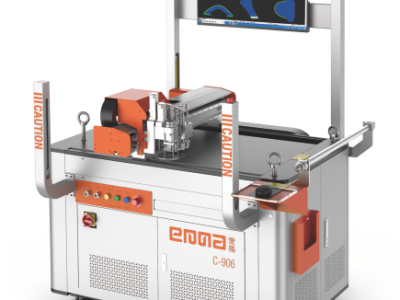
Automated Cross-Hemming and Folding The conversion of fabric rolls into individual towels is historically the most labor-intensive part of the process. Smart longitudinal and cross-hemming robots now use infrared sensors to align the fabric edges with sub-millimeter accuracy. These units are linked to automated folding machines that use vacuum-assisted plates to ensure every towel is folded to the exact dimensions required for retail or hospitality packaging.
The Role of IoT and Edge Computing in Textile Plants
In 2026, the textile factory is a giant data generator. Edge computing allows for the processing of sensor data locally on the factory floor, preventing the latency issues associated with cloud-only solutions.
For a towel manufacturer, this means the dryer “talks” to the weigher. If the fabric entering the stenter is slightly wetter than the previous batch, the dryer automatically adjusts its temperature and conveyor speed to maintain the target moisture regain. This level of synchronization prevents “over-drying,” which makes fibers brittle and reduces the lifespan of the towel—a critical factor for hospitality clients who demand a high number of launderings per unit.
Sustainable Circularity through Automation
Environmental compliance is no longer optional. Smart automation facilitates “Circular Manufacturing” by tracking the origin and journey of every yarn lot.
- Water Recovery: Automated filtration systems in the dye house monitor turbidity and pH levels, recycling up to 80% of process water back into the bleaching range.
- Yarn Tracking: RFID tags on yarn cones ensure that organic or recycled fibers are never mixed with virgin polyester, providing a verifiable “green” trail for European and North American regulators.
- Waste Capture: Automated vacuum systems at the shearing machines capture lint and micro-fibers, which are then compressed and sold back into the non-woven textile industry, turning a waste stream into a secondary revenue line.
Strategic Implementation: The Texserco Approach
Implementing these technologies requires a modular strategy. You cannot simply “plug in” 2026 technology into a 1990s infrastructure without a transition plan. The focus should be on:
- Interoperability: Ensuring that new air-jet looms can communicate with existing ERP systems via standardized protocols like OPC-UA.
- Scalability: Starting with AI inspection on 10% of the looms and expanding as the ROI is proven.
- Skill Bridging: Training mechanical loom fixers to become electromechanical technicians capable of troubleshooting PLC controllers and sensor arrays.
By focusing on these technical nuances, towel manufacturers can insulate themselves against the volatility of the global market. The goal is a “Lights-Out” capability for specific shifts, where the machines manage the routine and humans manage the strategy.
FAQs: Navigating the Future of Towel Manufacturing
What is the primary difference between traditional and smart towel weaving? Traditional weaving relies on mechanical cams and manual tension settings, which drift over time. Smart weaving uses servomotors and electronic let-off/take-up systems that adjust in real-time to maintain constant yarn tension and pile height.
How does automation impact the GSM (Grams per Square Meter) consistency? By using electronic pile control, the loom maintains an exact loop length. This eliminates the 3-5% weight variance common in manual looms, ensuring the manufacturer doesn’t “give away” free yarn or produce underweight, low-quality towels.
Can AI inspection systems detect defects in dark-colored terry fabrics? Yes. Modern AI systems use specialized lighting (such as backlighting and high-angle LED arrays) and multi-spectral cameras to identify broken picks, stains, and pile irregularities even on deep black or navy blue fabrics where the human eye struggles.
Is it possible to automate the hemming of different towel sizes simultaneously? Yes. Advanced 2026 cross-hemming lines feature “Size Sensing” technology. As towels move through the line, sensors identify the dimensions and automatically adjust the cutting blades and folding plates without needing to stop the machine for a manual changeover.
What is the expected ROI period for a fully automated finishing line? While variables exist, most facilities see a full return on investment within 18 to 30 months. This is driven primarily by a 20% reduction in waste, lower energy bills, and the ability to fulfill high-margin, “just-in-time” orders for premium clients.
Does smart automation require a complete replacement of my current looms? Not necessarily. Many mid-generation looms can be retrofitted with IoT sensors, electronic let-offs, and AI camera systems. Texserco specializes in assessing which legacy assets are “automation-ready” and which require replacement.
How does automation help with sustainable certifications like GOTS or OEKO-TEX? Automation provides digital logging of every chemical input and water-use metric. This “digital audit trail” makes the certification process significantly faster and more transparent, as data is pulled directly from the machinery rather than manual logs.
What happens to the fabric if a sensor fails in an automated system? Most 2026 systems are designed with “Fail-Safe” redundancy. If a primary sensor fails, the system either switches to a secondary sensor or enters a “Safe Mode,” alerting the technician via a mobile app while maintaining a baseline production speed to prevent damage.
How does “Edge Computing” differ from Cloud Computing in a textile mill? Edge computing processes data on a local server within the factory. This allows for instantaneous machine adjustments (e.g., stopping a loom if a thread breaks). Cloud computing is used for long-term trend analysis and multi-factory benchmarking.
Are these automated systems difficult to maintain? They require a different skill set—specifically electronics and software troubleshooting. However, they are often more reliable than mechanical systems because they have fewer moving parts that are prone to frictional wear and tear.