
Towel production, particularly terry towels for bath, hand, and institutional use, faces mounting pressure from volatile raw material costs, skilled labor shortages, and demands for consistent absorbency and pile integrity. Manufacturers in regions like Pakistan, with its strong cotton base and export focus, encounter daily realities of variable GSM fabrics, edge fraying during high-volume runs, and the need to deliver uniform products to hospitality and retail buyers who reject batches over minor dimensional inconsistencies.
Rising energy and labor expenses compound these issues. Manual or semi-automatic hemming and slitting lines require constant operator intervention for length measurement, folding alignment, and label placement, leading to fatigue-induced errors. A single misaligned hem on heavy GSM towels creates rework that consumes additional thread, utilities, and machine time. Unplanned stops from mechanical wear or operator mistakes translate directly into missed shipping windows and strained client relationships. These are not abstract concerns but measurable drags on throughput and margin in a competitive export environment.
Operational Pain Points in Traditional Towel Finishing Lines
Consider a typical mid-sized terry towel line processing 30–100 cm widths in cotton or blended fabrics. Operators manually feed fabric, eyeball lengths, and manage cross-cutting while contending with loop distortion or tension variations that affect final softness and durability. Heavy GSM materials exacerbate handling difficulties, increasing the risk of fabric damage or inconsistent stitch quality. Labor-intensive processes also limit scalability when orders surge for bulk institutional towels or customized hospitality sets.
Downtime emerges as a silent cost multiplier. A jammed slitter or hemming station halts the entire downstream flow. Repair waits, spare parts sourcing, and recalibration eat into productive hours—facilities commonly lose dozens of hours monthly to such interruptions. Quality inconsistencies surface later in inspection or customer feedback, triggering returns, discounted seconds, or lost repeat business. Energy waste from inefficient older equipment further erodes competitiveness as utility rates climb. These complications directly impact the ability to maintain tight lead times while upholding the pile height, absorbency, and edge finish that differentiate premium towels.
Automation as a Strategic Response
Towel Automation machines address these bottlenecks by integrating precision cutting, hemming, stitching, and handling into continuous or high-speed lines. Systems equipped with auto-length detection, label dispensers, and servo-driven controls reduce reliance on manual measurement and alignment. For heavy GSM terry towels with hanging loops, dedicated models maintain fabric tension and loop integrity throughout the process, delivering clean, consistent edges without excessive operator oversight.
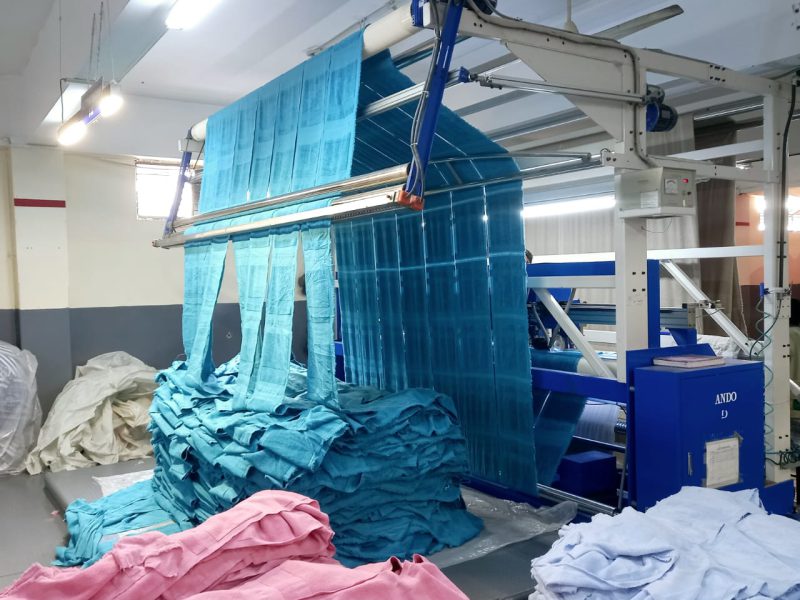
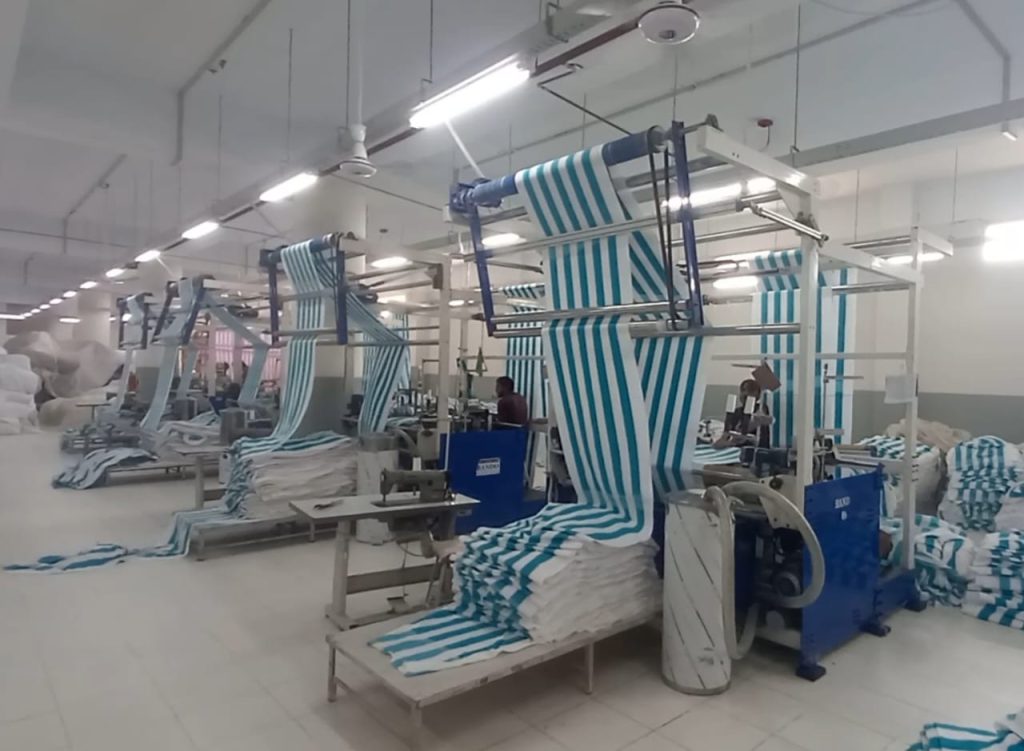
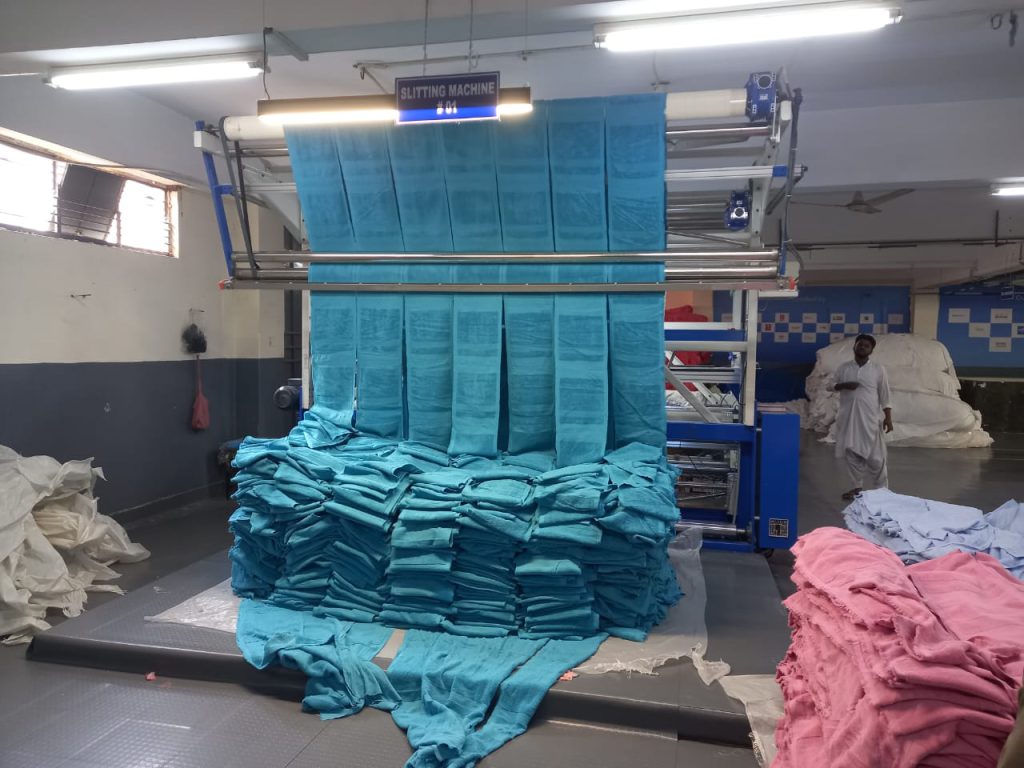
Texserco supplies specialized solutions in this space, including the Bando Auto Length Slitting Machine for precise division of towel and bed sheet fabrics, and the ALPHA Auto Length Hemming Machine with label dispenser capabilities. The ALPHA series supports fully automatic cross-cutting and hemming in a single pass for sizes ranging from 30 to 100 cm, with reported outputs reaching up to 14,000 pieces per shift under optimal conditions. These machines handle the mechanical stresses of dense terry constructions while minimizing waste from overcuts or misfeeds. Integration with existing weaving or finishing setups allows manufacturers to target specific pain points—whether slitting efficiency or hemming consistency—without full line replacement.
Technical Advantages in Production Flow
Modern towel automation incorporates servo motors, sensors for edge guiding, and programmable logic for variable batch sizes. Auto-length slitting eliminates cumulative measurement errors that plague manual operations, ensuring dimensional accuracy across thousands of units. In hemming, overlock or coverstitch heads combined with automatic folding stations produce reinforced edges that resist fraying during repeated laundering—a critical factor for hotel and spa towels expected to withstand hundreds of wash cycles.
Predictive elements in newer setups monitor vibration, temperature, and stitch tension in real time. This shifts maintenance from reactive fixes after breakdowns to scheduled interventions based on actual component wear. For terry towel lines, where pile compression or yarn breakage can occur under high speeds, such monitoring preserves fabric quality and extends needle and looper life. Reduced human intervention also lowers exposure to repetitive strain injuries, helping retain experienced staff for higher-value tasks like quality auditing or process optimization.
Quantifiable Gains from Implementation
Operators report efficiency improvements through higher throughput and lower defect rates. A well-calibrated auto hemming line can process heavy GSM towels with minimal variance in stitch density, directly supporting absorbency and softness specifications. Waste reduction stems from precise cutting that optimizes fabric utilization—important when cotton prices fluctuate. Labor reallocation becomes possible: fewer workers needed for repetitive feeding and measuring means redeployment to inspection or packaging, improving overall line balance.
Energy and maintenance costs trend downward with continuous operation designs that avoid frequent start-stop cycles. Consistent output quality reduces the volume of rework or seconds, protecting margins on export orders where buyers enforce strict AQL standards. For Pakistani manufacturers serving European or Middle Eastern markets, these metrics translate into reliable on-time delivery and stronger positioning against competitors still reliant on manual finishing. Over a production year, cumulative savings in labor, materials, and downtime often offset initial capital outlay within 18–30 months, depending on utilization rates.
Integration Considerations for Existing Facilities
Successful deployment requires more than purchasing equipment. Site assessment evaluates current fabric flow, power stability, and operator skill levels. Texserco supports clients with installation, training, and ongoing technical assistance to ensure smooth ramp-up. Machines like the Bando slitter integrate upstream of hemming stations, creating a streamlined finishing cell. Compatibility with various GSM ranges and towel constructions prevents the need for multiple specialized lines.
Maintenance protocols shift toward lubrication schedules, sensor calibration, and software updates. Spare parts availability and local service response directly influence long-term uptime. Manufacturers who plan for these elements minimize the learning curve and maximize return on investment. Digital interfaces on modern units allow supervisors to track output, downtime reasons, and efficiency metrics without constant floor presence.
Sustainability and Quality Consistency
Automation aligns with growing buyer expectations for traceable, resource-efficient production. Precise cutting and stitching reduce fabric offcuts and thread waste. Optimized machine cycles can lower per-unit energy consumption compared with older mechanical systems running at inconsistent speeds. For terry towels, uniform loop handling during finishing preserves the pile structure essential for water absorption and quick drying—attributes that influence consumer perception and repeat purchases.
Consistent edge finishing also supports downstream processes such as dyeing or printing, where uneven hems can cause shade variations or tension issues. In markets demanding OEKO-TEX or GOTS compliance, repeatable processes aid documentation and audit readiness. While automation does not replace responsible raw material sourcing, it amplifies efforts to minimize environmental footprint at the finishing stage.
Future Outlook for Towel Production Lines
Industry 4.0 elements—IoT connectivity, real-time data logging, and basic AI-driven alerts—are entering towel finishing equipment. These features enable remote monitoring of key parameters and faster troubleshooting. For manufacturers balancing domestic and export orders, flexible automation that switches between sizes and constructions with minimal changeover time becomes a competitive edge.
Investment decisions should weigh current pain points against projected order volumes and labor availability. A phased approach, beginning with high-bottleneck processes like hemming or slitting, often delivers quicker wins than full-line overhauls. Partnerships with suppliers offering local support, training, and spare parts inventories reduce risk and accelerate ROI.
Implementation Roadmap
- Map current line bottlenecks through time-motion studies and defect tracking.
- Define target metrics: pieces per hour, defect rate, labor hours per shift, and downtime percentage.
- Evaluate equipment options against fabric types, GSM range, and space constraints.
- Plan for operator training and maintenance team upskilling.
- Monitor post-installation performance with clear KPIs and adjust parameters iteratively.
Key Benefits Summary
- Throughput: Higher continuous output with reduced manual handling.
- Consistency: Uniform dimensions, stitch quality, and edge finish across batches.
- Labor Efficiency: Reallocation of workforce from repetitive tasks to value-added roles.
- Waste Reduction: Precision cutting and minimized rework or scrap.
- Uptime: Shift from unplanned stops to predictive maintenance practices.
- Quality Assurance: Better alignment with buyer specifications for absorbency, durability, and appearance.
Texserco’s focus on towel-specific automation—through Bando and ALPHA technologies—provides practical tools for manufacturers seeking measurable improvements in finishing operations. These solutions target real production floor challenges rather than theoretical ideals.
10 Frequently Asked Questions
1. What types of towels can towel automation machines process effectively? Towel automation machines, including auto length hemming and slitting systems, handle terry towels in various GSM weights, from lighter hand towels to heavier bath sheets. Models like the ALPHA series accommodate 30–100 cm sizes and manage heavy GSM fabrics with hanging loops while maintaining loop integrity.
2. How much production increase can be expected after installing automated hemming machines? Outputs vary by configuration and fabric, but integrated auto cross-cutting and hemming lines can reach up to 14,000 pieces per shift. Gains come from reduced manual intervention and consistent cycle times compared with traditional setups.
3. Are these machines suitable for small or medium towel manufacturers in Pakistan? Yes. Modular designs allow integration into existing lines without complete factory redesign. Texserco supports clients with installation and training tailored to local operational realities and power conditions.
4. What maintenance is required for Bando or ALPHA towel automation equipment? Regular lubrication, sensor calibration, and stitch head checks form the core routine. Predictive monitoring on advanced units helps schedule interventions before failures occur, minimizing unplanned downtime.
5. How do automated machines improve towel edge quality and durability? Precise tension control and consistent stitching produce reinforced hems that resist fraying. Uniform handling preserves pile structure in terry fabrics, supporting long-term absorbency and softness after repeated washes.