
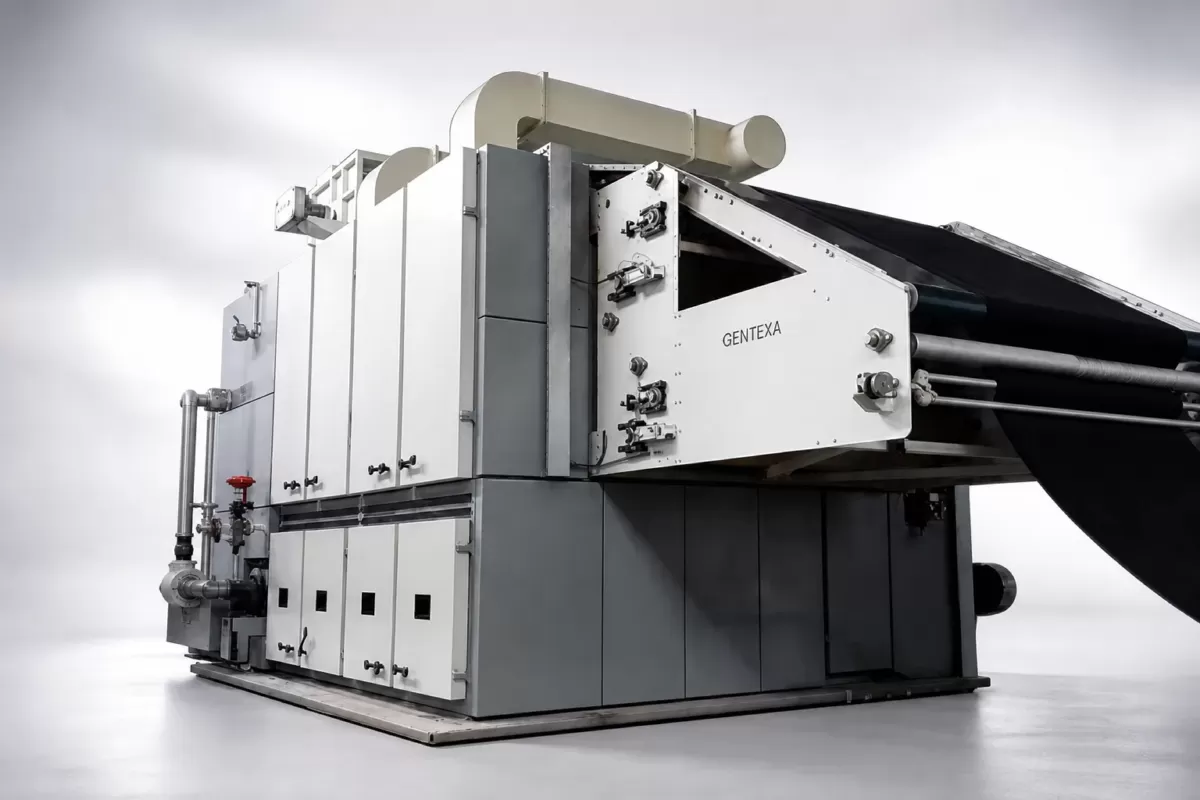
A continuous tumbling machine for carpet finishing is designed to help carpet producers refine the final look and feel of a product before it moves to packing or downstream processing. For buyers evaluating finishing equipment, the key question is not just what the machine does, but how it affects softness, durability, stain resistance, and workflow consistency.
In practical terms, continuous tumbling supports a more uniform finish by moving carpet through a controlled treatment process rather than handling it in isolated batches. That can be useful when you want repeatable results across production runs and a finishing step that fits into an industrial line. If you are comparing options, the Swellsoft Continuous Tumblers product page is a good starting point for reviewing the solution and deciding whether it matches your operation.
This guide explains what the machine does, how it supports carpet finishing outcomes, and what to ask before you invest in one. It is written for carpet manufacturers, textile processors, and procurement teams that need a practical evaluation framework rather than a sales pitch.
What is a continuous tumbling machine?
A continuous tumbling machine is a finishing system that processes carpet in a steady flow instead of one load at a time. In carpet finishing, tumbling helps the material move and flex so treatments can be distributed more evenly across the surface and structure of the carpet.
That matters because carpet finishing is not only about appearance. It is also about hand feel, surface uniformity, and how the finished carpet performs during use. A well-designed continuous tumbler can support a soft finish, help the carpet feel more consistent from roll to roll, and reduce the chance of uneven treatment application.
For buyers, the value is often in process control. When a finishing step is repeatable, it becomes easier to maintain product quality and align the machine with production targets. That is why many teams review continuous tumbling as part of a broader textile finishing line rather than as a standalone unit.
How continuous tumbling affects carpet softness and durability
Softness is one of the most visible benefits buyers look for in carpet finishing. Continuous tumbling can help create a softer hand feel by allowing the carpet fibers to move and settle in a controlled way while finishing agents are applied or distributed. The goal is not to change the carpet beyond recognition, but to improve comfort and surface quality without compromising appearance.
Durability is the other side of that equation. In carpet treatment, durability usually means helping the finished product hold up better under regular use. When finishing is consistent, the fibers and surface structure are less likely to show uneven wear caused by poor treatment distribution or inconsistent processing.
It is important to be precise here: a tumbler does not magically make every carpet stronger. Actual results depend on carpet construction, fiber type, process settings, and maintenance discipline. But in the right production setup, continuous tumbling can support a finish that feels softer and performs more consistently over time.
Buyers should treat softness and durability as process outcomes, not guaranteed claims. The best results come from matching the machine settings to the carpet type and verifying performance on real production samples.
Why stain resistance matters in carpet treatment
Stain resistance is a major reason many manufacturers add a finishing step after carpet production. In simple terms, a stain-resistant treatment is meant to help reduce how quickly liquids and dirt penetrate the surface, giving operators and end users more time to clean spills before they set.
Continuous tumbling can support this goal by helping treatment reach the carpet more evenly. That matters because uneven coverage can lead to inconsistent protection across the product. A well-controlled finishing process can improve the likelihood that the surface receives a uniform application, which is especially important for commercial carpets and home furnishing products.
Product-positioned claims such as eco-friendly formula, non-toxic treatment, or being safe for children and pets should always be verified against your own compliance requirements and local regulations. Those attributes may be part of the supplier’s offering, but the buyer still needs to confirm documentation, handling procedures, and suitability for the intended market.
What to look for in a carpet finishing system
When evaluating a continuous tumbling machine for carpet finishing, buyers should look beyond the headline benefit and review how the system fits into the production line. The right machine should support your carpet type, output needs, and quality standards without creating bottlenecks.
Material compatibility and finish consistency
Start with carpet construction. Ask which materials, pile types, and backing structures the machine is designed to handle. Some carpets respond better to tumbling than others, and the finishing effect can vary depending on fiber composition and thickness.
Consistency is just as important as compatibility. A good system should help produce the same finish across repeated runs, with minimal variation between lots. If your current line struggles with uneven softness or inconsistent stain treatment, ask how the machine controls exposure, movement, and finishing distribution.
Also confirm how quality is checked. Does the supplier recommend sample testing, visual inspection, or process validation before full-scale use? That answer will tell you a lot about how practical the machine will be in real production.
Maintenance and workflow considerations
Maintenance affects both uptime and finish quality. A carpet finishing machine should be easy to clean, straightforward to inspect, and practical for operators to service without unnecessary downtime. If a machine is difficult to maintain, production teams often end up compensating with extra labor or inconsistent operating habits.
Workflow integration matters too. Ask how the tumbler fits into your current line: where the carpet enters, how it exits, how much floor space is required, and whether the machine can work with existing upstream and downstream equipment. If your operation already includes drying, cooling, or warehousing steps, the finishing system should support that sequence instead of complicating it.
For buyers comparing options, it can help to see the product specifications and map them against your production volume, operator skill level, and available space. That comparison is often the fastest way to determine whether a machine is a realistic fit.
Eco-friendly and safety considerations
Industrial finishing equipment should be evaluated for both performance and workplace safety. If a supplier positions a solution as eco-friendly or non-toxic, ask what that means in practice. Is the finishing chemistry intended to reduce harsh handling? Does it require special ventilation? What protective measures are recommended for operators?
Safety considerations should include guarding, emergency stop access, training requirements, and cleaning procedures. Even when a product is designed for safer use, the plant still needs proper operating discipline. That includes standard operator training, maintenance routines, and compliance checks aligned with local rules and internal safety policies.
It is also wise to ask how the machine handles dust, residue, and cleanup. Carpet finishing environments can become messy if process controls are weak, and a cleaner line usually supports better consistency as well as a safer workplace.
When to consider Swellsoft Continuous Tumblers
If your team is evaluating a continuous tumbling machine for carpet finishing, the Swellsoft line from TEXTILE SERVICES Co. is worth reviewing when you want a practical balance of finish quality, production flow, and supplier support. The product positioning emphasizes softness, durability, cleanliness, and stain resistance, which aligns with the core needs of many carpet finishing operations.
This is especially relevant if you are looking for a finishing solution that can support repeatable results and fit into a broader textile processing workflow. Texserco’s role as an engineering partner also matters here: installation, training, spare parts, and free consultancy can be as important as the machine itself when you are planning a production upgrade.
Before moving forward, use the product page to confirm the details that matter most to your operation: supported carpet types, maintenance expectations, space and power requirements, and the exact configuration offered. If those points line up with your production goals, the machine may be a strong candidate for the next stage of evaluation.
Questions buyers should ask before purchasing
- What carpet constructions are supported, and which are not recommended?
- How does the machine help distribute finishing treatment more evenly?
- What finish outcomes should we expect for softness, durability, and stain resistance?
- How much operator training is needed for safe and consistent use?
- What are the cleaning and maintenance routines, and how often are they required?
- How does the machine integrate with our current finishing, drying, or cooling line?
- What documentation is available for safety, compliance, and product handling?
- Can the supplier help with installation, commissioning, and after-sales support?
FAQ: Continuous tumbling in carpet finishing
Is continuous tumbling suitable for all carpet types?
Not necessarily. Suitability depends on carpet construction, fiber type, thickness, and the finish you want to achieve. Buyers should test sample materials and confirm compatibility before committing to a full production setup.
How does it differ from other finishing methods?
Continuous tumbling processes carpet in a steady flow and is designed to support more uniform finishing. Other methods may rely on batch handling or different surface treatment mechanics. The best choice depends on your quality target, throughput needs, and line layout.
What should buyers ask before purchasing?
Ask about compatibility, finish consistency, maintenance, safety, and line integration. Also confirm what support is included after