
Industrial textile printing operations run on slim margins and demanding production schedules. In a high-throughput environment, the printhead is both the most critical component and the most frequent single point of financial failure. When a printhead suffers from premature degradation, the true cost extends far beyond the price of a replacement part. It includes ruined fabric rolls, hours of labor spent diagnosing misfiring nozzles, and the catastrophic timeline delays that damage B2B client relationships.
For commercial textile printers, printhead failure is rarely a sudden mechanical breakdown. Instead, it is a slow process of micro-fluidic degradation caused by ink drying inside the nozzles, friction from improper wiping, and voltage instability. Managing these variables requires moving away from reactive troubleshooting and toward a precise, chemically sound maintenance protocol.
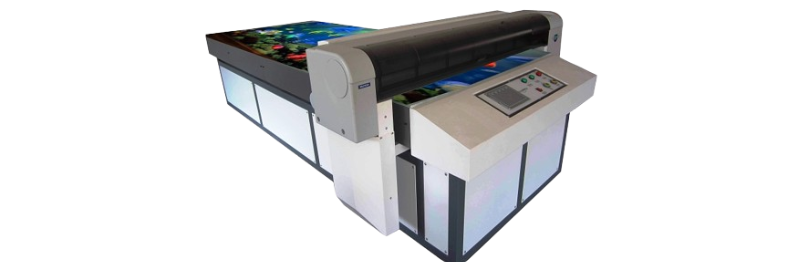
Understanding the interaction between specific fluid dynamics and mechanical components is essential for optimizing the service life of industrial printheads. This is especially true when deploying high-performance industrial equipment. Implementing precise operational parameters for Flatbed Digital Printers ensures consistent droplet placement, prevents premature piezo element burnout, and maintains peak production velocity without risking sudden output failures.
The True Cost of Micro-Fluidic Failure
A common misconception in textile production lines is that printhead wear is an unavoidable cost of doing business. While physical components do have a finite lifespan, the vast majority of industrial printheads are retired early due to preventable chemical clogs and physical abrasions. When reactive maintenance is the norm, printhead replacement cycles can accelerate by up to 40%, draining operational budgets and creating unpredictable bottlenecks.
The problem begins at the microscopic level. Digital textile inks whether reactive, acid, disperse, or pigmented—are dense suspensions of solid colorant particles. When a machine sits idle, or when localized temperatures fluctuate, the carrier fluid evaporates at the nozzle plate interface. This creates a skin of concentrated pigment that distorts the meniscus, the curved upper surface of the liquid column within the nozzle. Once the meniscus is compromised, the printhead’s firing voltage can no longer eject a perfect spherical droplet. The result is misdirected firing, banding lines across the fabric, and eventually, a completely dead nozzle.
Furthermore, mechanical wear during cleaning cycles often does more damage than the ink itself. Using the wrong wiper blade material or applying excessive pressure during a wipe creates microscopic scratches on the specialized non-wetting coating of the nozzle plate. Once this hydrophobic layer is scratched, ink begins to pool on the plate surface instead of cleanly ejecting. This pooled ink acts as a magnet for airborne fabric lint and dust, leading to chronic weeping and continuous nozzle dropouts.
Quantifiable Gains of Proactive Optimization
Transitioning from reactive troubleshooting to a technically precise maintenance protocol yields measurable operational and financial returns:
- Component Lifespan Extension: Proper voltage calibration and chemical maintenance extend printhead operational life by 35% to 50%, saving thousands in annual capital expenditure.
- Ink Consumption Efficiency: Eliminating excessive, aggressive purging cycles reduces ink waste by up to 15% across a standard fiscal quarter.
- Reduced Production Downtime: Shifting to structured preventative maintenance cuts unscheduled machinery stops by 22%, protecting tight production deadlines.
- Yield Improvement: Minimizing banding errors and shade variations reduces fabric scrap rates, improving net profitability per production run.
Ink Chemistry and Viscosity Control
Textile digital printing requires precise control over ink viscosity, which is highly sensitive to temperature variations within the print carriage. Industrial printheads rely on a specific viscosity window typically measured between 3 to 12 centipoise (cP) depending on the architecture to achieve clean droplet break-off without creating satellite drops.
When sub-carriage temperatures drop, ink viscosity rises. A thicker fluid requires more energy to push through the nozzle chambers. If the internal printhead heaters are not precisely calibrated to compensate for ambient room variations, the internal piezoelectric actuators must work harder, causing thermal stress and eventual element burnout. Conversely, if the ink becomes too thin due to overheating, the internal pressure drops, causing ink to droop or weep from the nozzle plate, which leads to immediate fabric staining.
To counteract this, facilities must implement dual-layer thermal regulation. This means maintaining a stable ambient humidity level of 50% to 60% and a room temperature of 22°C to 25°C, while monitoring the sub-carriage heating elements. Consistent viscosity ensures that the acoustic wave generated inside the ink chamber behaves predictably, yielding uniform drop volume and flawless color replication.
Managing Negative Pressure Dynamics
Industrial flatbed systems utilize a negative pressure ink delivery system to prevent ink from spontaneously leaking out of the downward-facing nozzles. This meniscus vacuum must be balanced precisely. If the negative pressure is too weak, ink drips onto the substrate; if it is too strong, air is sucked backward into the printhead chambers, causing immediate firing failure.
Air bubbles inside a printhead act as shock absorbers. When the piezo crystal flexes to eject a drop, the energy is absorbed by compressing the trapped air bubble rather than moving the ink. This results in an entire section of nozzles suddenly firing blanks.
Maintaining negative pressure equilibrium requires regular inspection of the digital pressure gauges and checking for microscopic air leaks in the fluid lines, dampeners, and manifold seals. A variance of even 0.1 kPa from the manufacturer’s specified setting can cause widespread nozzle dropouts during high-speed printing.
Precision Cleaning Mechanics
Cleaning a high-performance printhead requires chemical compatibility and minimal physical force; aggressive scrubbing will destroy the component. The wiping mechanism must be treated as a precision tool. Polyurethane or specialized rubber wiper blades must be inspected weekly for edge degradation or embedded particulate matter. When a wiper blade drags accumulated textile dust across a nozzle plate, it acts like sandpaper, stripping the hydrophobic coating. Wiping should only occur when the nozzle plate is sufficiently lubricated with a approved flushing solution to minimize friction.
Purging routines should also be carefully optimized. Instead of relying on high-pressure manual purges that can rupture internal printhead membranes, use timed, low-pressure automated pulses. This clears out settled pigments without straining the delicate internal geometry of the fluid chambers.
Automated Capping and Hibernation Protocols
The most dangerous period for an industrial flatbed printhead is when it is idle. Without active fluid movement, the highly volatile solvents in textile inks evaporate rapidly, leaving behind crusts of dried polymer and pigment. The capping station is the primary defense against atmospheric drying. It must form a perfect, airtight seal around the printhead perimeter when the machine is homed. If the capping rubber is deformed, cracked, or caked with dried ink residues, air will infiltrate the station, drying out the entire nozzle array overnight.
During extended closures or weekend shutdowns, a dedicated capping solution or wet-capping protocol must be initiated. This involves flooding the capping pads with a slow-evaporating humectant-rich solution that keeps the nozzle plate humidified. For long-term storage, the entire ink system must be completely flushed with specialized cleaning solvents until the fluid runs completely clear. The system should then be charged with a dedicated storage fluid to prevent internal component drying.
FAQ’s
What are the primary indicators that a printhead is beginning to fail?
Initial signs include chronic lines or banding across the fabric, individual nozzles consistently dropping out during a print run despite repeated purges, and ink weeping or pooling on the bottom plate surface.
How often should manual printhead wiping be performed?
Manual intervention should be kept to a minimum. Rely primarily on the system’s automated cleaning cycles. Manual wiping should only be done when troubleshooting specific nozzle deflections, using approved lint-free microfiber swabs and flushing fluid.
Why does ambient humidity directly impact printhead performance?
Low humidity accelerates ink evaporation at the nozzle face during printing gaps, leading to skinning and clogs. High humidity can cause condensation on the nozzle plate, disrupting droplet ejection trajectories.
Can third-party inks affect the lifespan of a flatbed printhead?
Yes. Third-party formulations often deviate from required viscosity and surface tension specifications. They may also contain larger pigment particle sizes or aggressive solvents that degrade internal filters, adhesives, and internal acoustic chambers.
What is nozzle deflection and how can it be corrected?
Nozzle deflection occurs when a partial blockage or scratch on the nozzle rim misdirects an ink droplet. This is corrected by applying a chemical soak to dissolve the partial blockage or by replacing worn wiper blades that may be spreading debris.
How does incorrect voltage setting damage a piezoelectric printhead?
Every ink batch has an ideal firing voltage profile. Setting the voltage too high overheats and overstrains the internal piezo crystals, causing mechanical fatigue and premature electrical failure.
What is the function of the damper in the ink delivery system?
The damper filters out microscopic particulates and dampens hydraulic pressure spikes caused by the rapid acceleration and deceleration of the print carriage, ensuring steady fluid flow.
How do you remove air bubbles trapped inside the printhead manifold?
Air bubbles are cleared by performing a controlled, low-pressure ink purge combined with a temporary adjustment of the negative pressure system to force the trapped air out through the nozzles.
Why is flushing necessary before changing to a different ink type?
Different ink chemistries can react adversly when mixed, causing immediate coagulation, curdling, or precipitation of solid matter that permanently blocks the internal micro-channels.
How long can a textile printhead remain idle safely without flushing?
Depending on ink type and environmental conditions, pigment inks can begin to dry skin within 15 to 30 minutes of complete idleness. For gaps longer than a few hours, the machine must cap the printheads automatically to prevent drying.
Summary
Optimizing printhead longevity is not a matter of intensive, emergency troubleshooting; it is the result of rigid, daily operational parameters. Every variable in a digital textile workflow—from room humidity and carriage temperature to negative pressure increments and wiper blade elasticity—directly dictates the service life of your primary revenue-generating asset. Treating printhead maintenance as a precise chemical and mechanical discipline rather than an afterthought alters the financial trajectory of production facilities.
By enforcing standardized thermal regulations, preserving the integrity of non-wetting nozzle coatings, and ensuring airtight capping execution, commercial printers can systematically eliminate premature component degradation. In an industrial landscape where production speed and color consistency determine market competitiveness, safeguarding the printhead ensures your operations run continuously, predictably, and profitably.