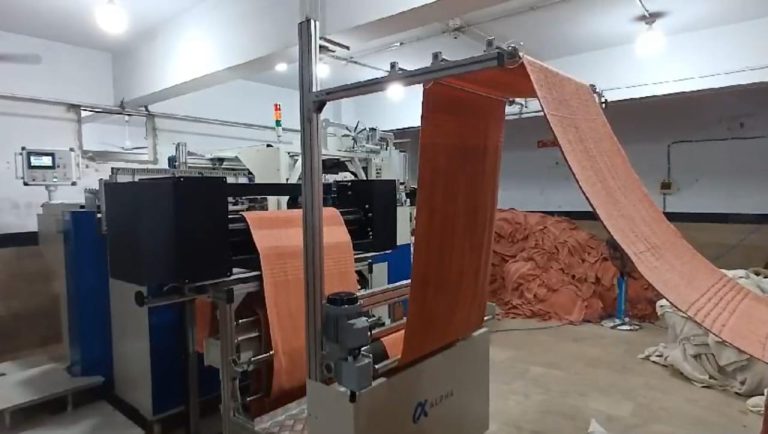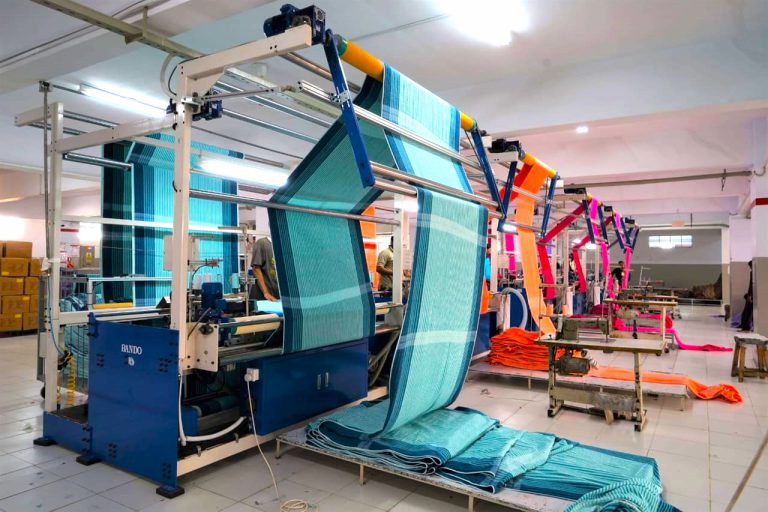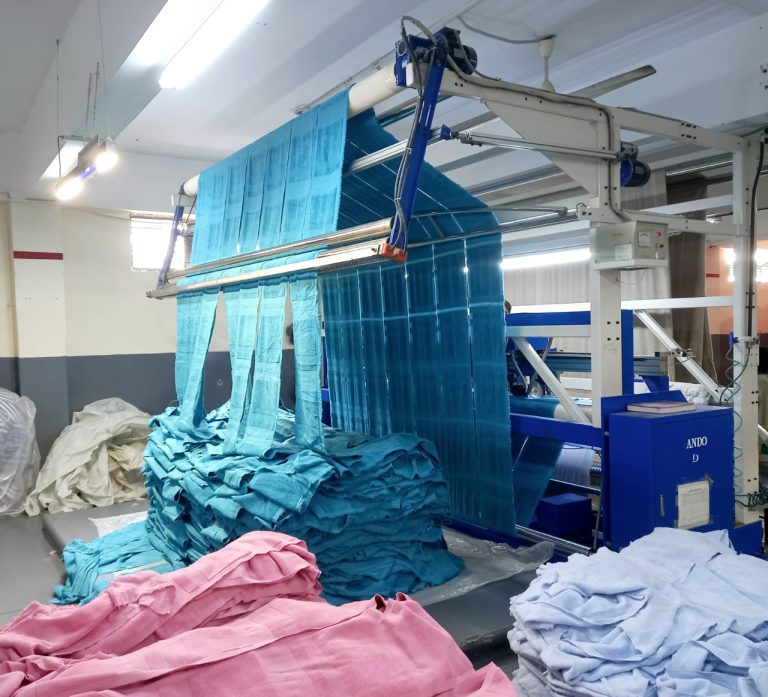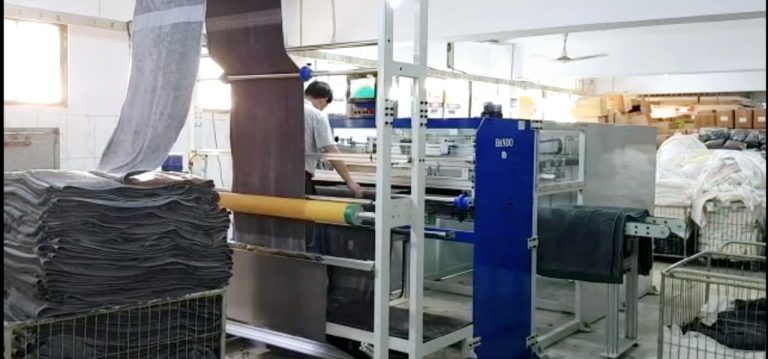

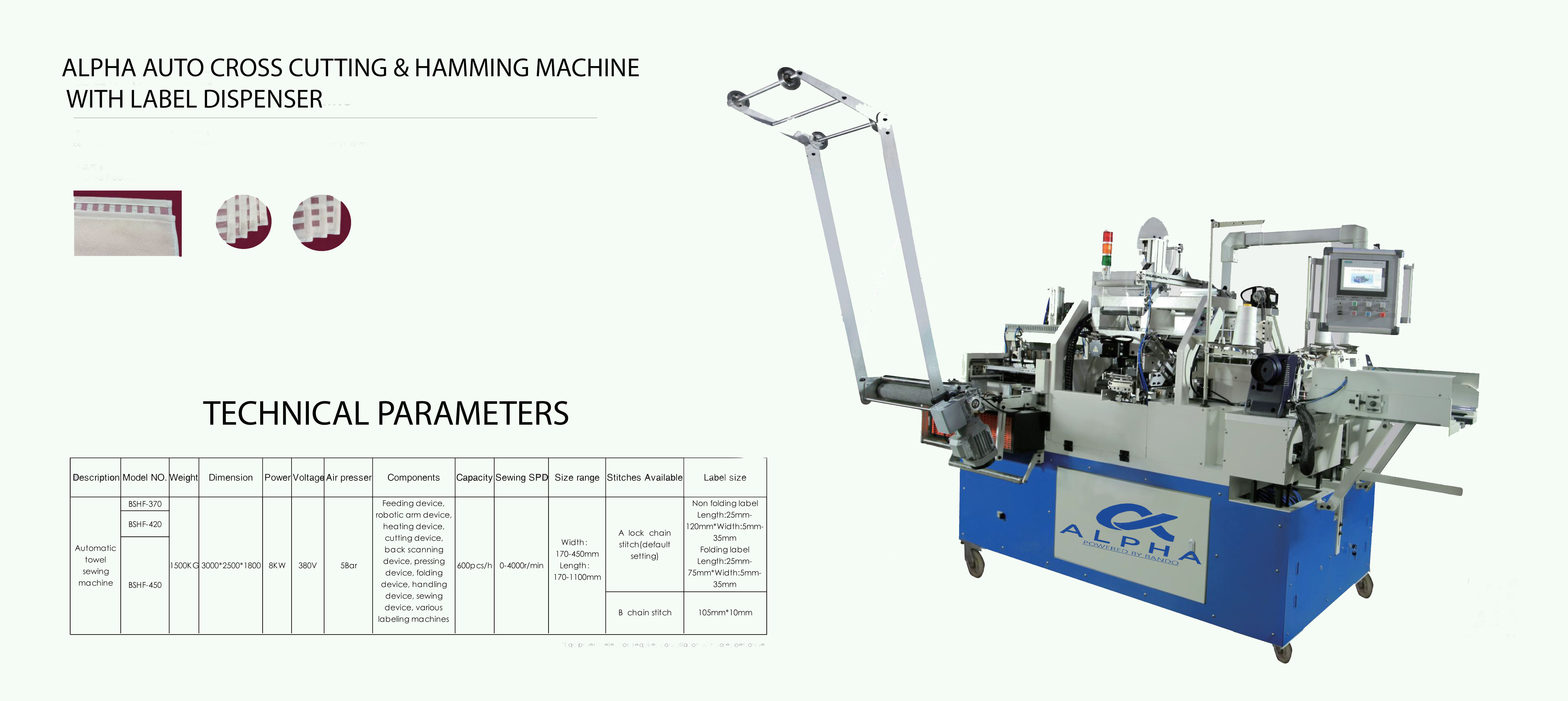
In high volume terry towel manufacturing, cross hemming represents one of the most labor intensive and quality critical processes on the factory floor. Finishing individual towel ends requires folding thick terry loop selvages, positioning brand labels, executing tight lockstitch or chainstitch seams, and backtacking seam ends to prevent unraveling during commercial laundering. When performed manually on conventional sewing pedestals, cross hemming creates massive labor bottlenecks, inconsistent hem widths, and high operator fatigue. Investing in an Alpha Auto Cross Hemming Machine automates this entire sequence, delivering blistering cycle speeds, flawless stitch uniformity, and automated label insertion across hundreds of dozens per shift.
Automated Transverse Fabric Clamping and Transport Dynamics
The operational cycle of the Alpha Auto Cross Hemming Machine begins as cut towel blanks enter the infeed station. Motorized vacuum belts and mechanical positioning fingers square each towel blank against mechanical reference stops, eliminating diagonal skewing before folding begins. A pair of high precision servo driven transport belts clamp the towel body securely across its full width, advancing the fabric edges toward the folding stations with zero longitudinal stretching.
Specialized pneumatic folding blades and mechanical curling spirals fold the raw cut edges into double folded or single folded hems. The folding mechanism accommodates varying terry fabric densities, adjusting folding cavity clearance automatically whether handling lightweight three hundred grams per square meter guest towels or ultra plush eight hundred grams per square meter luxury bath sheets. Continuous optical sensors monitor fold consistency along the entire hem length, ensuring uniform hem widths from corner to corner.

High Speed Synchronized Sewing Heads and Stitch Integrity
Once folded, the towel edges pass beneath heavy duty industrial sewing heads running at speeds exceeding four thousand stitches per minute. Depending on buyer technical specifications, the machine can be configured with high speed lockstitch heads for clean luxury aesthetics or multi thread chainstitch heads for high elasticity and tensile strength. Direct drive servomotors eliminate mechanical belts and clutches, delivering instantaneous acceleration and needle positioning precision down to fractions of a millimeter.
To prevent seams from unraveling during repeated industrial laundering, the sewing heads execute automated backtacking or high density stitch condensing at both the entry and exit corners of the towel. Integrated pneumatic thread trimmers sever needle and bobbin threads flush against the seam, producing clean, finished edges that require zero manual scissors trimming. Active thread tension regulators modulate tension dynamically, preventing seam puckering along thin plain weave borders while avoiding thread breaks across thick terry piles.
Automated Label Dispensing and Ultrasonic Welding Integration
Modern retail brands require care labels, country of origin tags, and brand logos sewn securely into towel corner seams. Manually placing miniature fabric labels into moving hems is notoriously slow and causes frequent sewing needle strikes. The Alpha cross hemming system incorporates an automated label dispenser that cuts, folds, and inserts labels into the hem fold with microsecond timing.
A high capacity label magazine accommodates rolled woven or printed labels, cutting individual tags with cold knives or heated ultrasonic sealing blades to prevent edge fraying. Pneumatic vacuum transfer arms swing into the open hem cavity immediately ahead of the sewing needle, depositing the label at the exact programmed distance from the towel edge. The sewing needle stitches through both the folded hem and the label tab in a single continuous pass, ensuring permanent attachment and pristine presentation.
Optical Photocell Sensing and Border Width Compensation
Woven terry towels often feature decorative flat weave borders, dobby patterns, or jacquard headers near towel ends. Due to variations in yarn tension during weaving and wet finishing shrinkage, the distance between the decorative border and the raw cut edge can vary by several millimeters between consecutive towels. Conventional fixed position hemming machines would sew crooked hems that cut into the decorative border.
The Alpha machine utilizes high resolution optical contrast sensors that detect the precise boundary where thick terry loop pile transitions into flat woven borders. The digital control unit measures this distance in real time and commands micro stepping servo motors to adjust the trimming knife and folding guides dynamically. The resulting hem runs perfectly parallel to the decorative border, maintaining impeccable visual symmetry across every single towel in the production run.
Automated Stacking and Downstream Packaging Integration
Following transverse hemming, towels discharge onto an integrated automated stacking conveyor. High speed pneumatic flapper arms or vacuum lift bars transfer finished towels onto stacking tables, grouping goods into precise dozen or half dozen bundles. Once a bundle reaches the programmed piece count, the stack advances automatically onto downstream packaging conveyors, feeding directly into automatic folding and polybagging machines.
A single machine operator oversees the entire cross hemming and stacking installation, primarily replenishing thread spools and label magazines. Factory production audits demonstrate that one Alpha automated cross hemming installation matches the daily output of eight to ten manual sewing operators, slashing per unit manufacturing costs while elevating product consistency to world class export standards.
To review available sewing head brands, cycle times, and electrical power ratings, visit the official Alpha Auto Cross Hemming Machine product catalog page for expert technical consultations and production simulations.
Preventive Maintenance Schedules for Cross Hemming Automation
Sustaining four thousand stitch per minute sewing speeds requires rigorous daily and weekly maintenance routines:
- Daily hook race and bobbin case blowdown: Clear compressed cotton lint from sewing hook races and bobbin cases twice per shift using clean, dry compressed air.
- Daily trimmer knife sharpness inspection: Inspect upper and lower trimmer blades for edge burrs or nicks, replacing or resharpening blades to prevent frayed hem edges.
- Weekly needle bar clearance and timing check: Check needle to hook clearance and needle bar height using precision feeler gauges to prevent skipped stitches or needle deflections.
- Monthly automatic oil lubrication reservoir check: Inspect central pressurized oiling reservoirs, verifying that fresh white mineral sewing oil circulates freely through all clear oil lines.
- Quarterly servo drive timing belt tensioning: Verify belt tension and inspect teeth on transport conveyor servo drives to ensure zero slippage during rapid indexing cycles.
- Biannual optical sensor calibration and cleanout: Clean optical contrast lenses and calibrate photo sensor sensitivity thresholds to maintain reliable border detection.
Operator Ergonomics and Digital Touchscreen Management
The Alpha cross hemming system is controlled through a centralized industrial color touchscreen interface mounted on an articulated operator arm. Operating technicians select pre programmed towel styles with a single touch, adjusting towel dimensions, hem widths, stitch densities, and label positions in seconds.
Comprehensive on screen diagnostics monitor thread sensors, pneumatic pressures, and servo drive states continuously. If a thread break occurs, the machine halts instantaneously, illuminates an overhead signal tower, and displays the exact thread break location on screen, allowing operators to re thread and resume production within seconds. This intuitive human machine interface minimizes training requirements and maximizes plant operational uptime.
Electronic Thread Tension Profiling and Active Looper Trajectory Synchronization
Industrial sewing machines operating across variable terry pile heights face continuous stitch tension challenges. Transitioning from a flat woven border to a dense three dimensional terry loop pile alters the thread consumption rate instantaneously. The Alpha cross hemming system employs electronic thread tensioners controlled by direct current solenoids.
The numerical controller modulates needle thread and bobbin tension dynamically based on real time optical loop density feedback. As needles enter thick terry loops, tension relaxes slightly to prevent loop pinching and puckering. Conversely, when sewing across thin border headers, tension tightens automatically to form crisp, tight lockstitches. Rotary looper shafts are balanced dynamically to eliminate micro vibrations, ensuring that loopers capture needle loops cleanly without skipped stitches, even during rapid acceleration to maximum operating speeds.