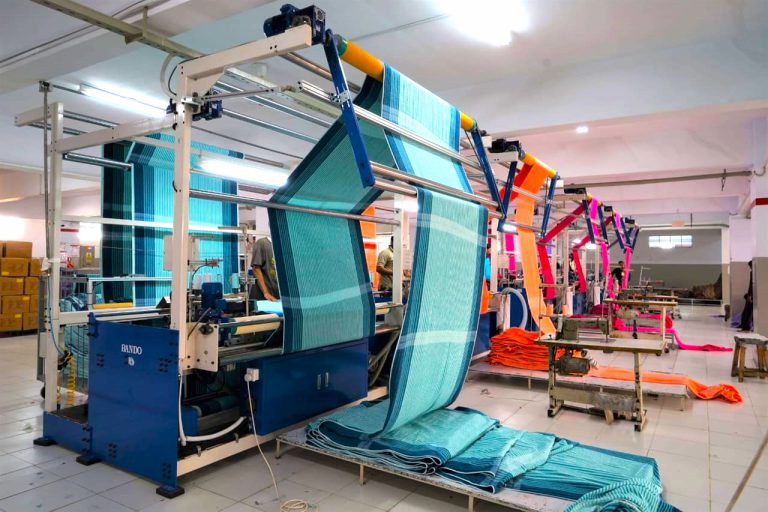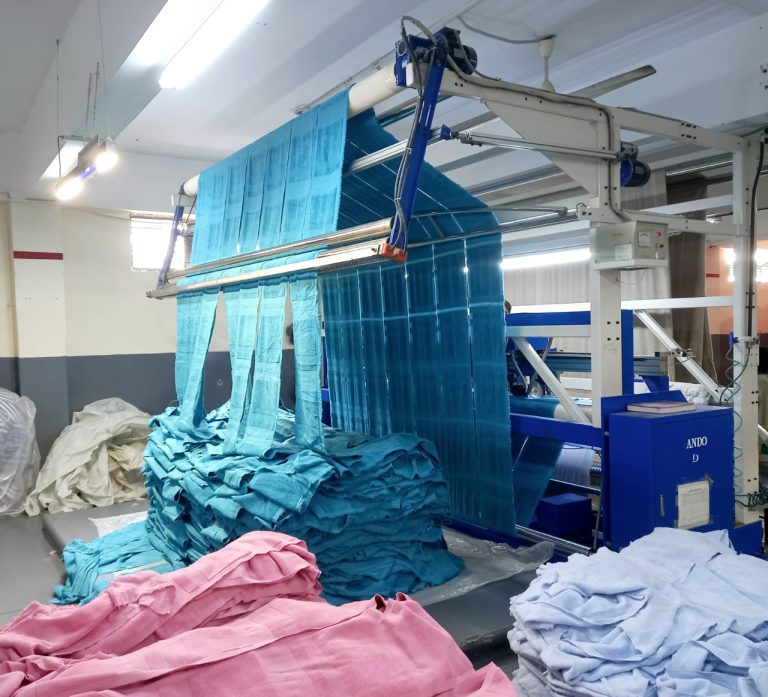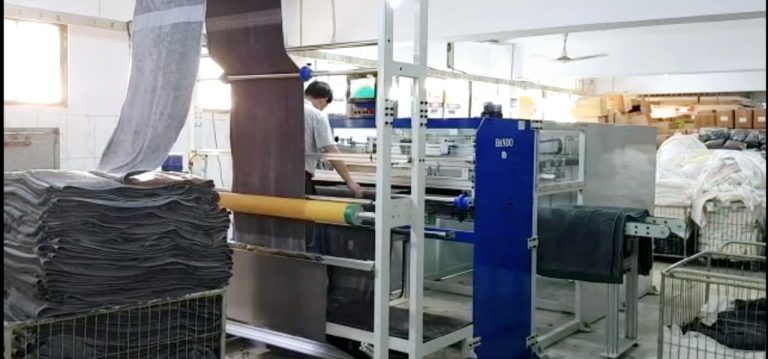

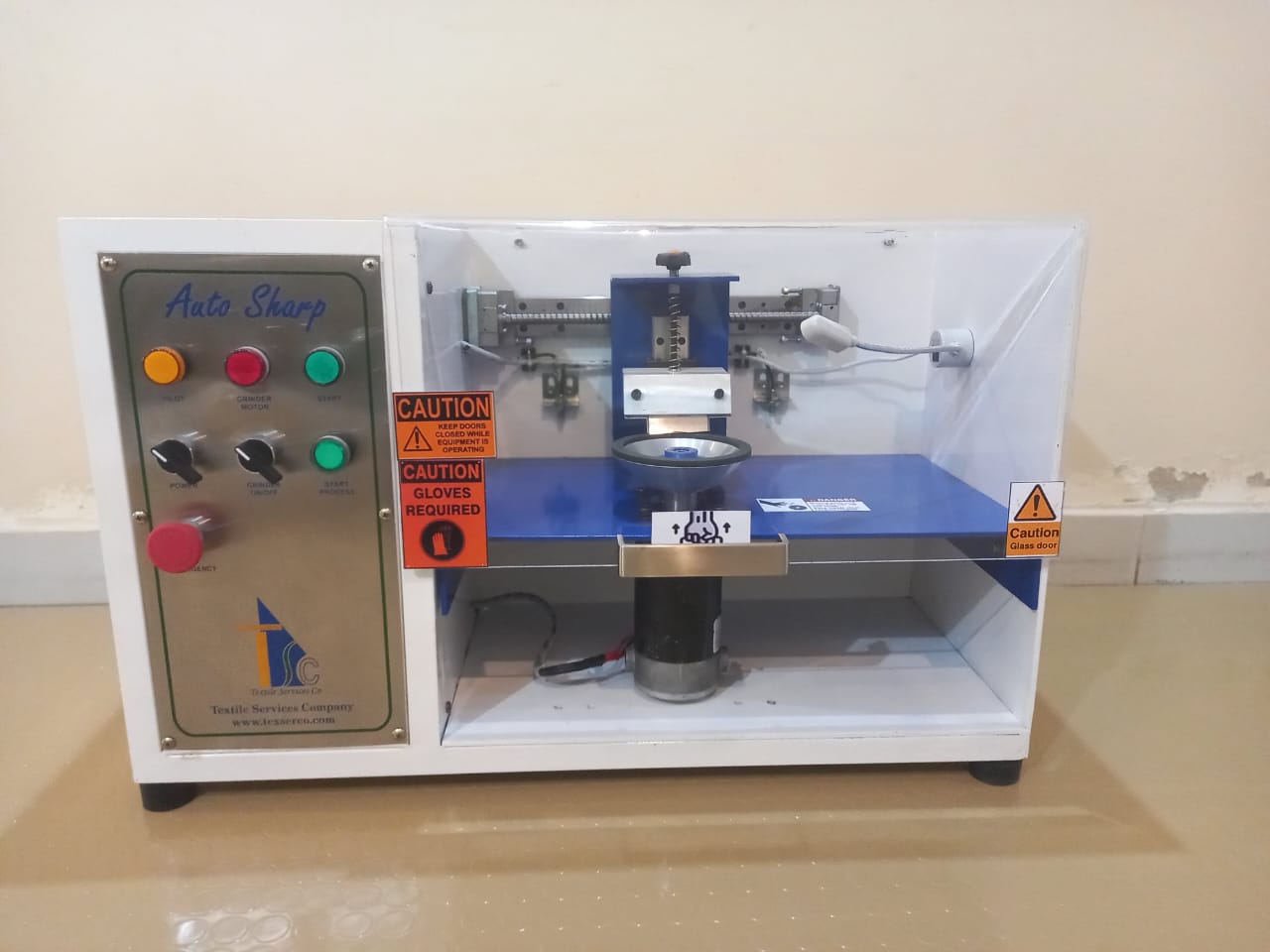
In automated home textile manufacturing, industrial terry towel hemming, and commercial bed linen assembly lines, automated sewing machines operate at blistering speeds exceeding four thousand stitches per minute. These automated sewing units feature integrated high speed mechanical trimmer knives that continuously trim raw fabric edges immediately ahead of sewing needles and folding folders. As trimmer blades slice through thousands of meters of thick terry loops, dense border weaves, and multi layer selvages, edge sharpness degrades rapidly. A dull hemming trimmer knife pinches fabric rather than cutting, pushing loose threads into needle holes, causing frequent thread breaks, skipped stitches, and expensive machine stoppages. Installing a dedicated Hemming Machine Knife Sharpener ensures continuous razor sharp trimmer performance, cuts sewing downtime, and maintains pristine seam aesthetics.
The Critical Mechanics of Trimmer Knives in Automated Sewing
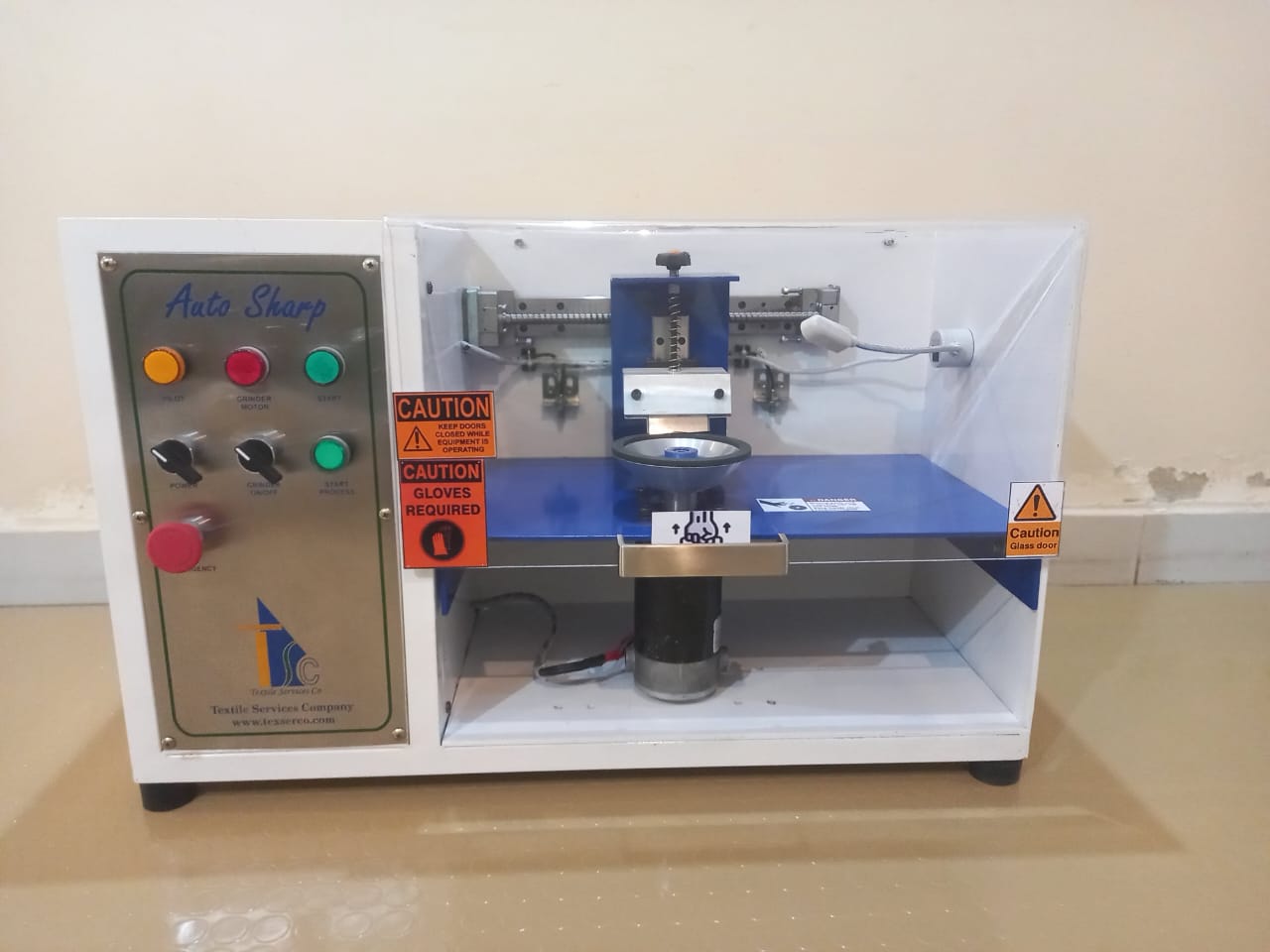
Automated hemming units, such as cross hemming and longitudinal hemming machines, depend on synchronized pairs of upper and lower trimmer blades. The upper knife reciprocates vertically or rotates at high velocity, shearing against a stationary lower carbide counter blade. The clearance tolerance between these two blades is measured in microns. When blades are perfectly sharp, excess fabric trims cleanly, leaving a crisp edge that folds effortlessly into the hemming folder for flawless lockstitch or overlock stitching.
When trimmer knives become dull, the mechanical shearing dynamics collapse. Instead of cleanly shearing yarn fibers, dull blades pinch the fabric into the throat plate slot. This pinching action exerts backward drag on the fabric web, pulling seams crooked and throwing stitch tension out of balance. Thread breaks skyrocket, sewing needles strike pinched fabric bulges, and automated optical seam sensors trip emergency stops. Maintaining razor sharp trimmer knives is therefore the single most cost effective preventative action a sewing factory can take.
Precision Multi Axis Clamping Fixtures and Bevel Angle Retention
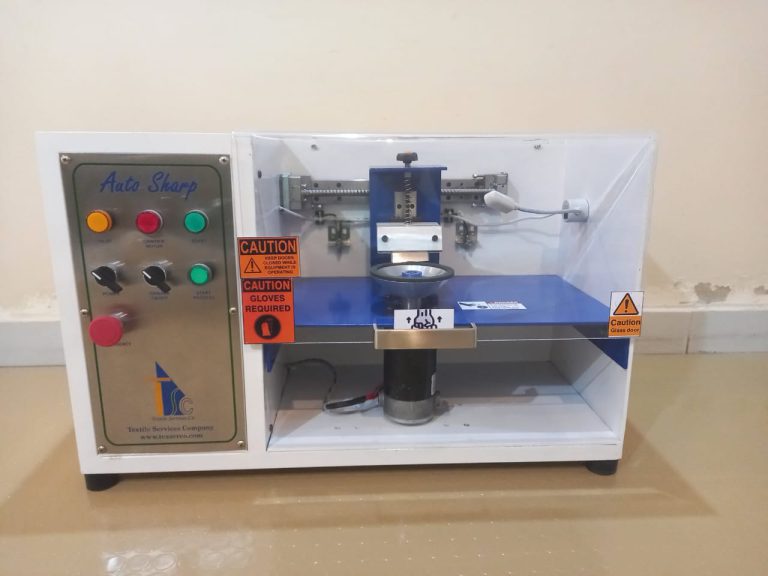
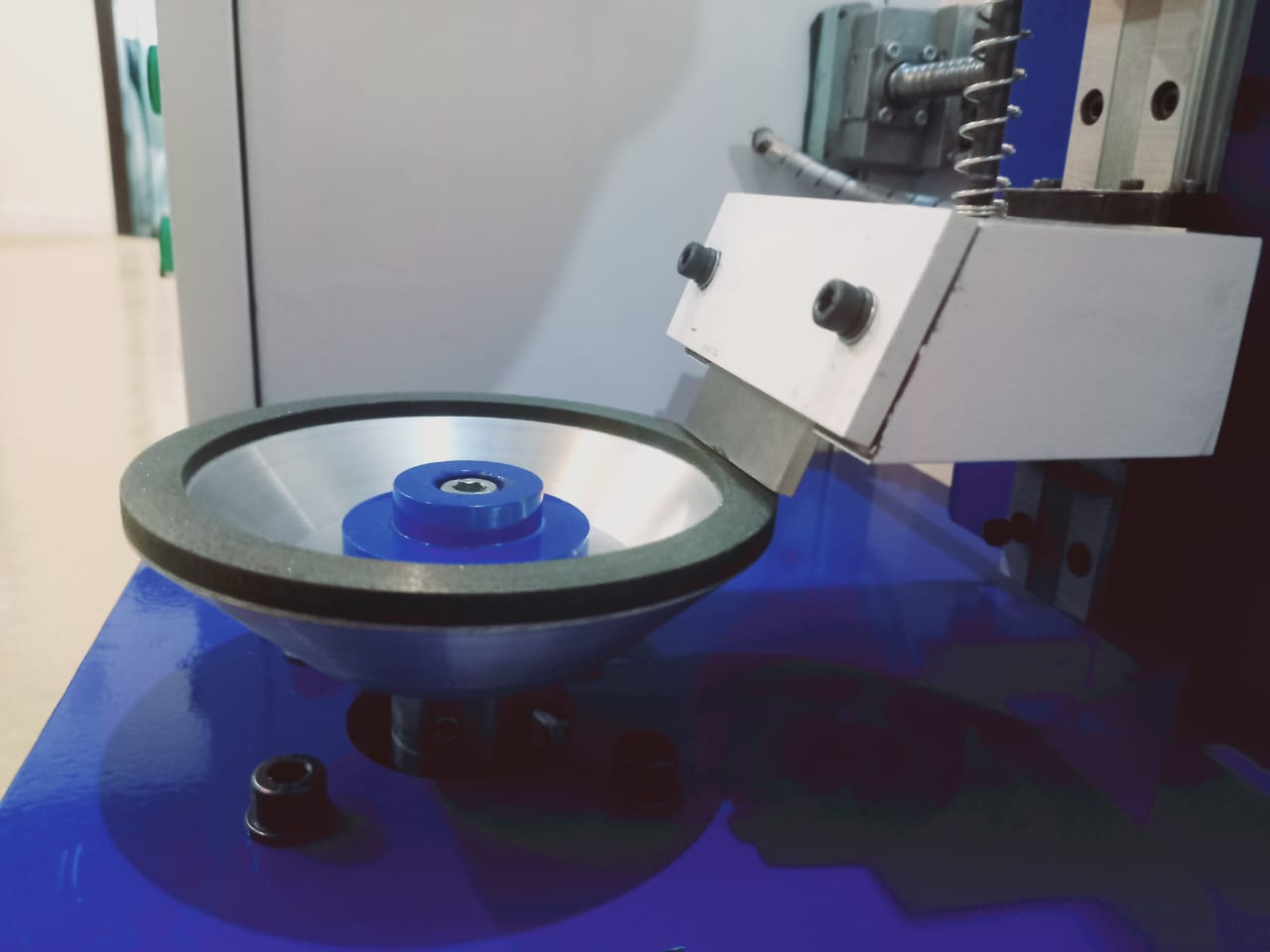
Industrial sewing trimmer knives come in diverse geometric shapes, ranging from flat rectangular shearing dies to curved guillotine blades and small circular rotary trimmer discs. Hand grinding these miniature, intricate blades on coarse workshop wheels destroys their factory geometry and renders them useless. The Hemming Machine Knife Sharpener incorporates quick change multi axis clamping fixtures specifically designed to cradle genuine trimmer knives from leading sewing machine manufacturers.
Rigid mechanical indexing protractors allow technicians to dial in exact factory bevel angles, typically between twenty degrees and thirty five degrees, with absolute repeatability. The blade locks firmly in place with uniform clamping pressure that prevents vibration during grinding. High precision micro feed thumbscrews allow operators to feed the blade against the sharpening wheel in five micron increments, removing worn metal smoothly and preserving original blade thickness and clearance profiles.
Ultra Fine Cubic Boron Nitride Grinding Wheels and Mirror Edge Finishing
Industrial trimmer knives are manufactured from hardened high speed tool steel or solid tungsten carbide to resist rapid wear from tough cotton terry yarns. Grinding these ultra hard materials requires specialized super abrasive wheels. The Hemming Machine Knife Sharpener is equipped with high precision cubic boron nitride and diamond bonded grinding wheels mounted on dynamically balanced electric spindles.
The high thermal conductivity of cubic boron nitride wheels dissipates grinding heat rapidly away from the cutting zone, eliminating the risk of micro cracking or localized annealing in carbide inserts. The ultra fine grit matrix grinds smooth, uniform bevel surfaces free of deep scratches or ragged micro serrations. A secondary fine honing pad removes any residual microscopic wire burrs, leaving a polished cutting edge that shears through dense terry loops effortlessly.
Minimizing Machine Downtime and Operator Frustration
In high output towel finishing mills, automated hemming lines represent major capital investments. When a multi workstation hemming line halts due to thread breaks or ragged edge trimming, factory overhead accumulates while output drops to zero. Having an in house hemming knife sharpener located directly in the sewing maintenance workshop changes the entire operational paradigm.
Technicians can resharpen a complete pair of trimmer knives in under five minutes. Operators swap in reconditioned knives during scheduled bobbin changes or shift changeovers, eliminating waiting time for outside toolmakers. Thread breakage rates decrease by up to seventy percent, needle lifespans extend dramatically, and automated hemming machines operate continuously at peak rated production speeds.
Substantial Tooling Savings and Inventory Reduction
Purchasing original equipment manufacturer replacement trimmer knives is expensive, particularly for specialized tungsten carbide cutting blades. A sewing plant running dozens of automated hemming stations can easily spend tens of thousands of dollars annually on replacement blades. Most discarded blades have only lost a fraction of a millimeter of steel at the cutting tip and can be restored to factory sharpness a dozen times or more.
The Hemming Machine Knife Sharpener slashes new knife purchases by more than eighty percent. Furthermore, factories reduce their expensive spare parts inventory, as only a small stock of rotating knives is needed to keep all production lines fully operational. The sharpener pays for itself within months through direct tooling savings alone.
To view fixture compatibility charts, motor electrical ratings, and tabletop mounting dimensions, explore the official Hemming Machine Knife Sharpner product catalog page for detailed engineering consultations and custom blade fixture sets.
Preventive Maintenance Schedules for Hemming Knife Sharpeners
Maintaining peak grinding precision and extending sharpener component life requires disciplined maintenance routines:
- Daily grit removal and work table wipe down: Brush away fine metallic grinding dust from clamping fixtures and sliding ways using soft bristle brushes after each sharpening session.
- Daily clamping fixture inspection: Check fixture locking screws and alignment dowels to ensure zero mechanical play when blades are clamped.
- Weekly diamond wheel dressing: Lightly clean super abrasive grinding wheels using specialized aluminum oxide dressing sticks to remove embedded metal loading and restore cutting aggressiveness.
- Monthly spindle runout verification: Use dial test indicators to confirm that the grinding motor spindle maintains radial runout below zero point zero zero five millimeters.
- Quarterly linear slide lubrication: Apply light synthetic machine oil to dovetail slideways and feed screw threads to ensure smooth, stick free feed travel.
Dynamic Clearance Calibration and Counter Blade Lap Finishing
Achieving flawless shear trimming requires precise alignment between the moving upper trimmer knife and the stationary lower counter blade. Beyond sharpening the cutting bevel, the planar mating face of the lower counter blade must be maintained flat to within two microns. If the counter blade develops hollows or grooving from abrasive cotton dust, even a razor sharp upper knife will pinch threads rather than cutting cleanly.
The Hemming Machine Knife Sharpener features an auxiliary rotary lapping plate charged with micro fine diamond abrasive paste. Technicians lap counter blade mating faces smooth and flat in minutes, eliminating grooving and restoring crisp ninety degree shearing corners. When reassembled on the sewing machine, the upper and lower blades interact with light, uniform scissor contact that requires minimal spring tension, reducing machine drive motor friction and eliminating premature blade wear.
Compact Tabletop Ergonomics and Simple Operation
The Hemming Machine Knife Sharpener is engineered with a compact, vibration dampening cast iron tabletop chassis that fits conveniently on any standard workshop workbench. Operating on standard single phase electrical power, the machine requires zero dedicated three phase wiring or heavy air compressors.
Intuitive mechanical adjustment dials and clear angle scales make operation straightforward, enabling sewing machine technicians and line mechanics to sharpen blades with professional toolmaker precision after minimal training. Protective transparent polycarbonate eye shields, integrated dust collection ports, and illuminated work zones ensure safe, comfortable operation across all factory shifts.