

In continuous textile manufacturing, nonwoven fabric slitting, paper converting, and technical film processing, slitting knives perform one of the most critical mechanical operations on the production line. High speed longitudinal slitting units utilize rotating circular top knives and driven bottom anvil rings to slice moving fabric webs into precise narrower widths. Over hundreds of production hours, friction abrasion from abrasive synthetic fibers, cotton dust, and titanium dioxide delustrants inevitably rounds keen cutting edges. Operating with dull slitting knives produces ragged selvages, loose edge threads, high shearing dust, and tension instability. Investing in a dedicated Slitting Machine Knife Sharpener restores razor sharp cutting geometry in house, extends blade operational lifespan by up to ten times, and eliminates expensive knife replacement costs.
The Physics of Rotary Shear Slitting and Blade Wear Mechanics
Rotary shear slitting functions through the precise intersection of a rotating dished top knife and a cylindrical bottom anvil ring. As the textile web passes between the intersecting blades, localized shear stresses exceed the ultimate tensile strength of the fibers, severing the material cleanly. For optimal shearing action, the top knife must maintain an exact bevel angle, typically between thirty degrees and forty five degrees, paired with a minute shear overlap and lateral side loading force.
As blades dull, the keen cutting apex rounds from a microscopic radius below two microns up to twenty microns or more. Instead of cleanly severing yarn loops, dull knives pinch and drag fibers through the shear gap. In knitted fabrics, this pulling action tears knit loops, creates frayed fringes, and causes curling selvages that jam downstream automated hemming machines. In synthetic geotextiles and nonwovens, dull blades generate excessive melt beads and airborne particulate dust that contaminate plant environments.

Automated Multi Angle Grinding Spindle and Bevel Restoration
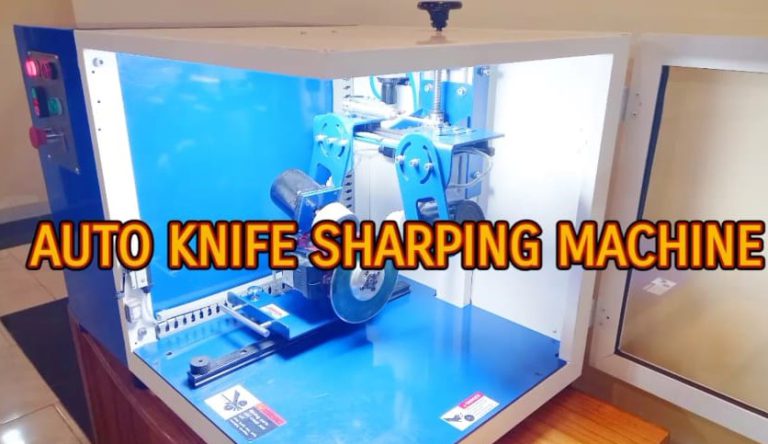
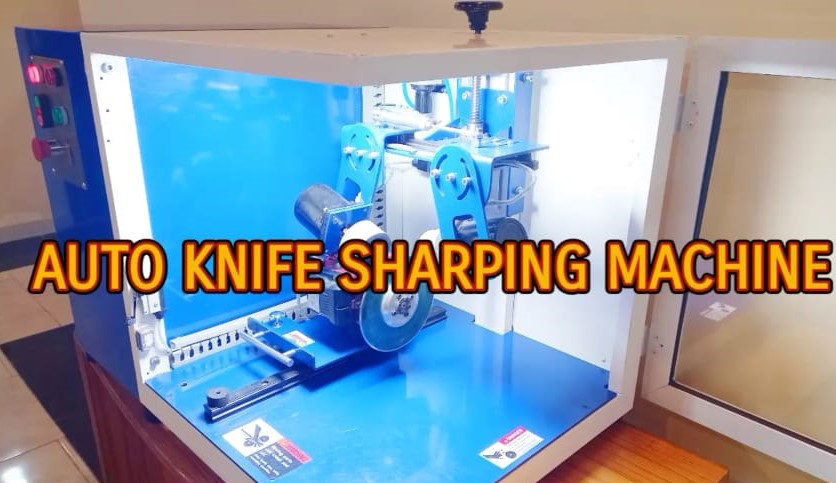
Manually sharpening circular slitting blades using off hand bench grinders is disastrous for precision cutting tools. Free hand grinding creates uneven bevel angles, flat spots along the circumference, and severe blade runout that destroys slitting precision. The Slitting Machine Knife Sharpener features a heavy duty motorized workhead spindle mounted on a swiveling graduated base that sets exact bevel angles with angular precision within a fraction of a degree.
The dull circular knife mounts onto a high precision magnetic chuck or expanding pneumatic mandrel that guarantees zero radial or axial runout. A secondary motorized grinding spindle carrying an ultra fine diamond or cubic boron nitride grinding wheel advances toward the rotating blade. Micro stepping feed screws advance the grinding wheel in micro increments down to zero point zero zero five millimeters, removing the minimum possible amount of tool steel while fully restoring a pristine cutting bevel.
Flood Coolant System and Metallurgical Temper Preservation
High speed industrial slitting blades are manufactured from premium alloy tool steels, such as high carbon high chromium D2 steel, high speed M2 steel, or solid tungsten carbide. These specialized metallurgy alloys achieve their exceptional hardness, between sixty and sixty five Rockwell C, through precise thermal heat treatment and tempering. If grinding generates excessive friction heat, localized temperatures quickly exceed the tempering threshold, annealing the steel and leaving a soft cutting edge that dulls in minutes.
The Slitting Machine Knife Sharpener incorporates a high volume closed loop flood coolant system. Adjustable articulated nozzles direct pressurized synthetic grinding coolant directly onto the contact interface between the grinding wheel and blade edge. The coolant stream carries away friction heat instantaneously, keeping blade temperatures cool and preserving original metallurgical hardness. Multi stage magnetic and paper cartridge filters separate fine metallic swarf from the coolant fluid, ensuring clean coolant delivery and pristine ground surface finishes.
Blade Concentricity and Dynamic Runout Elimination
In high speed continuous slitting operations running at web speeds up to eight hundred meters per minute, slitting knives rotate at thousands of revolutions per minute. Any eccentricity or runout along the blade circumference causes the knife to wobble laterally. This wobble leads to intermittent scissor contact against the bottom anvil ring, producing scalloped cut edges, premature blade chipping, and severe bearing wear on slitting shafts.
The sharpening machine maintains total radial and axial blade runout below zero point zero zero three millimeters. By rotating the knife on its true central mounting axis during grinding, the machine creates a perfectly concentric circular cutting perimeter. Sharpened knives remount onto slitting production lines without requiring extensive shim adjustments, running with whispering quietness and delivering perfectly straight, mirror smooth fabric edges.
Massive Operating Cost Reduction and Tooling Independence
Discarding dull slitting blades and purchasing new replacements represents an enormous recurring operating expense for textile mills. Premium high speed steel and tungsten carbide circular knives cost substantial sums per unit, and supply chain delays can idle entire slitting lines. A typical high quality slitting blade can be resharpened fifteen to twenty times before its minimum usable diameter is reached.
By sharpening knives in house, manufacturing plants recover their machinery investment in a matter of months. Sharpening takes less than ten minutes per blade, allowing maintenance teams to recondition full sets of slitting tools during routine line changeovers. Tooling independence eliminates dependence on external grinding services and guarantees that slitting machines always operate with peak cutting sharpness.
For complete clamping capacity ranges, grinding wheel specifications, and dimensional floor layouts, consult the official Slitting Machine Knife Sharpner product catalog page for detailed engineering consultations and custom tooling adapters.
Preventive Maintenance Schedules for Slitting Knife Sharpeners
Sustaining sub micron grinding accuracy requires regular preventive maintenance across all sharpening workshop shifts:
- Daily coolant tank cleaning and swarf removal: Clear metallic grinding swarf from the coolant settling tank and check coolant fluid levels, refilling with fresh synthetic coolant emulsion as needed.
- Daily magnetic chuck cleaning and demagnetization: Wipe the magnetic chuck face completely clean of grinding grit and verify smooth mechanical clamping and release operation.
- Weekly grinding wheel dressing: Dress diamond and cubic boron nitride grinding wheels using rotary diamond dressing sticks to expose fresh abrasive grains and restore true wheel flatness.
- Monthly spindle runout and bearing check: Check workhead and grinding spindle runout using digital dial indicators to verify that spindle bearings maintain zero play.
- Quarterly linear slideway wipe down and lubrication: Clean hardened cross slideway guide rails and apply high film strength machine way lubricant to prevent slideway stick slip.
- Biannual electrical grounding and motor inspection: Verify electrical motor grounding and inspect spindle drive belts to eliminate motor vibration transfer to grinding contact zones.
Deburring and Fine Honing Architecture
The grinding phase naturally creates a microscopic wire burr along the reverse face of the blade bevel. If a sharpened knife is placed into service with this burr intact, the burr quickly rolls over during cutting, dulling the edge within the first few meters of slitting. The Slitting Machine Knife Sharpener integrates a dedicated motorized honing station equipped with ultra fine leather or composite polishing discs charged with diamond compound.
The rotating blade passes across the polishing disc, gently peeling away the microscopic wire burr without altering the ground bevel angle. The resulting cutting edge exhibits a mirror finish with zero micro serrations or burrs. Knives cut through abrasive multi layer fabrics, technical canvas, and delicate nonwovens with minimal cutting resistance, producing pristine edges that elevate product quality across every production run.
Blade Dimensional Inspection and Optical Runout Verification
Verifying reconditioned slitting blades before returning them to production lines ensures total quality compliance. The sharpening machine features an integrated magnetic mounting post with a digital dial micrometer or optional non contact laser optical sensor. Line mechanics measure finished blade outside diameter, bevel angle accuracy, and total radial runout directly on the sharpening spindle, logging tool reconditioning data for comprehensive tooling lifecycle tracking.