
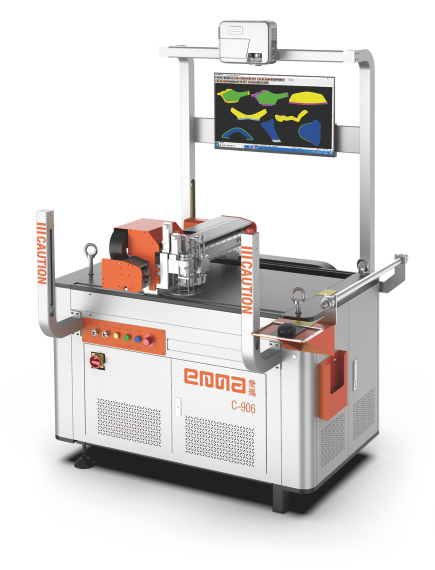
In high end footwear manufacturing, luxury automotive upholstery, and premium leather goods production, raw leather hides represent the single most expensive material input. Unlike uniform rolls of woven textile fabrics, every individual genuine leather hide is unique, featuring irregular contours, natural stretch gradients, thickness variations, and unavoidable surface defects such as healed tick bites, barbed wire scratches, and horn brands. Manually cutting leather using heavy iron dies and hydraulic press machines results in disastrous hide wastage, sluggish design prototyping, and high die storage costs. Investing in an Emma CNC Leather Cutting Machine provides a digital manufacturing solution that maximizes hide yield, accelerates production turnaround, and delivers flawless cutting precision.
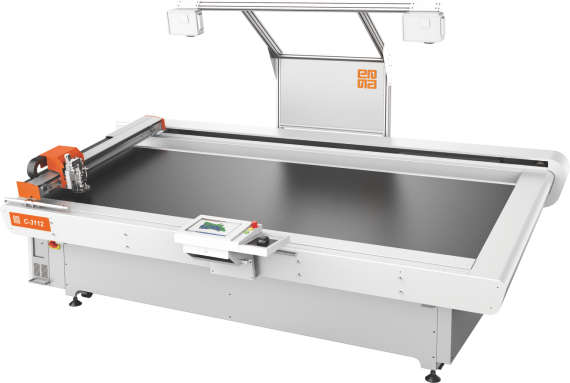
Digital Hide Scanning and Defect Classification
The operational workflow of the Emma CNC Leather Cutter begins with high resolution digital hide inspection. Operators spread raw leather hides across the inspection table beneath an overhead multi megapixel optical camera scanning system. High intensity LED color balanced illumination arrays illuminate the hide surface from multiple oblique angles, casting subtle micro shadows that reveal surface defects invisible under standard ambient factory lighting.
Using digital marking styluses or automated optical defect recognition algorithms, inspectors outline and classify surface flaws into four distinct quality grades. Natural grain scars and healed scratches located near hide perimeters are designated for interior, non visible garment linings or internal shoe stiffeners. Pristine, unmarked central butt sections are reserved for prime visible panels, such as shoe vamp fronts, automotive headrests, and luxury handbag faces. The scanning software digitizes the exact outer perimeter and all internal defect zones in seconds.
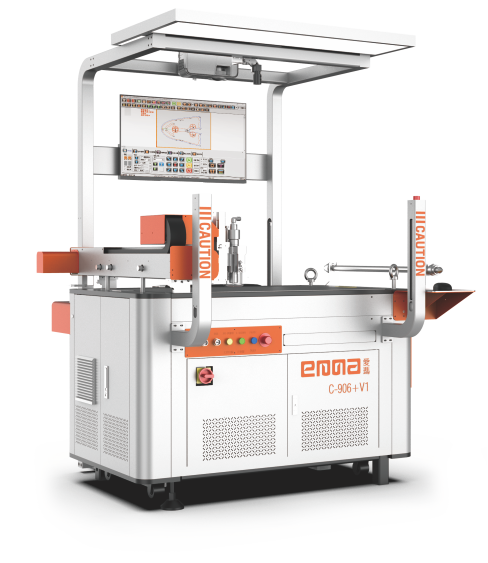
High Frequency Oscillating Knife Cutting Mechanics
Cutting thick, tough shoe sole leather or fibrous automotive upholstery hides requires clean, perpendicular cutting forces that prevent edge fraying or leather stretching. The Emma CNC machine utilizes a high frequency electric oscillating knife tool oscillating at up to eighteen thousand strokes per minute. This rapid vertical reciprocating motion slices through dense leather fibers effortlessly without dragging or distorting the hide contour.
Dual AC servo motors driving precision helical rack and pinion gantry systems propel the cutting tool head at rapid traverse velocities across the worktable. High precision linear guide rails maintain tool positioning accuracy within plus or minus zero point one millimeters. Sharp internal corners, micro perforations, and intricate curved contours cut cleanly with mirror smooth edges that require zero manual post processing or trimming.
Multi Function Tool Head Versatility
Beyond blade cutting, industrial leather fabrication requires multiple supplementary operations before components move to sewing benches. The Emma CNC Leather Cutter features a modular multi tool head that houses an electric oscillating knife, rotary punch tools, crease wheels, and high speed ink marking pens simultaneously on a single gantry carriage.
Rotary punch modules carry interchangeable punch dies ranging from zero point five millimeters up to five millimeters in diameter, executing decorative brogue perforations, stitch guide holes, and hardware eyelet openings at speeds exceeding three hundred punches per minute. Integrated ink marking pens draw internal assembly lines, part reference numbers, and stitching alignment notches directly onto component backs, providing sewing machine operators with perfect guidance during final assembly.
High Resolution Hide Surface Digitization and Defect Zoning
Optimizing leather usage requires matching specific pattern pieces to appropriate hide grain characteristics. Leather exhibits significant directional stretch, with high flexibility across belly and flank regions and rigid stiffness along the central backbone. The Emma CNC system allows engineers to assign directional grain constraints and quality zone priorities to every individual pattern piece within the CAD pattern database.
When the nesting engine executes, it aligns long shoe straps and structural belt components along the low stretch backbone axis, while positioning flexible side gussets on softer flank sections. High resolution digital projectors project the nested pattern contours directly onto the physical leather hide in real time. Operators visually verify piece placement against natural grain textures, making instant manual adjustments with digital styluses before authorizing the high speed cutting cycle.
Integration with Enterprise Resource Planning and Tannery Traceability
Modern luxury brands require strict traceability for every animal hide used in production. The Emma CNC system connects directly to factory enterprise resource planning software via standard network protocols. Every leather hide is scanned with a barcode or RFID scanner upon loading, logging tannery batch origin, hide square footage, leather thickness, and defect density into the central database.
During the cutting sequence, automated inkjet printing heads print unique alphanumeric tracking codes or micro QR codes on the non grain side of cut components. This digital tracking enables complete manufacturing traceability, allowing quality control teams to trace any finished luxury handbag or automotive seat back to the exact leather hide and tannery batch from which it originated. Real time production analytics dashboards report instantaneous yield percentages and material savings across every shift.
For detailed tool head options, table cutting dimensions, and vacuum pump specifications, review the official Emma CNC Leather Cutting Machine product catalog page for expert engineering consultations and trial cutting demonstrations.
Preventive Maintenance Schedules for CNC Leather Cutters
Sustaining sub millimeter cutting accuracy requires disciplined daily and monthly machine maintenance:
- Daily felt bed and vacuum channel cleaning: Vacuum the high density porous conveyor felt bed to remove fine leather dust and leather shavings that reduce vacuum holding power.
- Daily blade wear inspection and replacement: Inspect oscillating knife blade tips for dullness or chipping, replacing worn tungsten carbide blades to maintain crisp cutting edges.
- Weekly linear guide rail wipe down and lubrication: Clean linear guide rails using lint free cloths and apply high quality synthetic lubricant to circulating ball bearings.
- Monthly rotary punch die sharpening: Inspect punch die cutting edges, dressing punch hollows with diamond sharpening cones to prevent ragged hole perimeters.
- Quarterly gantry drive belt and rack backlash calibration: Check tension on servo timing belts and verify mechanical backlash on helical rack and pinion drives to preserve precision repeatability.
Vacuum Hold Down Zoning and Energy Efficiency
Unsecured leather hides shift instantly under cutting tool forces, destroying dimensional accuracy. The Emma CNC cutter incorporates an intelligent segmented vacuum bed divided into dozens of independent suction zones. High capacity regenerative vacuum blowers generate immense suction pressure through high density porous conveyor belts, locking the leather firmly in place during cutting.
Pneumatic valves activate vacuum suction exclusively beneath the active cutting tool zone, concentrating holding force where it is needed most while shutting off suction across empty table areas. This zoned vacuum management prevents vacuum leakage around irregular hide edges, holds curled edges flat, and cuts blower electrical consumption by up to forty percent compared to non zoned vacuum tables.
Drastic Material Savings and Eliminating Steel Dies
The economic impact of transitioning from manual die cutting to Emma CNC cutting is transformative. Sophisticated automatic nesting algorithms evaluate millions of spatial pattern combinations in seconds, interlocking complex irregular pieces tightly across the digitized hide boundary. Hide utilization rates increase from sixty percent with manual die cutting to over eighty percent with digital CNC nesting.
Eliminating physical steel cutting dies cuts months off new product development cycles. Designers create digital pattern revisions in CAD software and cut working prototypes immediately without waiting weeks for die fabrication. Factories eliminate thousands of square feet of die storage racks, liberate floor space, and save hundreds of thousands of dollars annually in steel die tooling expenses.
Optimized Cutting Trajectories and Vacuum Sequencing Control
Beyond mechanical blade actuation, cutting speed is governed by intelligent numerical control path algorithms. The motion controller analyzes complete nested hide layouts, calculating optimized cutting vector sequences that minimize non cutting gantry travel distances. Sharp corner deceleration and acceleration profiles are calibrated automatically based on leather thickness and blade hardness ratings, preventing corner rounding or momentary blade dwell burning.
Dynamic vacuum sequencing works in tandem with tool motion. As the cutting head advances across different worktable quadrants, high response pneumatic solenoid valves open suction only within active vacuum zones directly beneath the cutting blade. This concentrated downward pressure eliminates edge curling in lightweight garment leathers while allowing operators to comfortably offload previously cut components from inactive table zones without pausing the active cutting cycle.