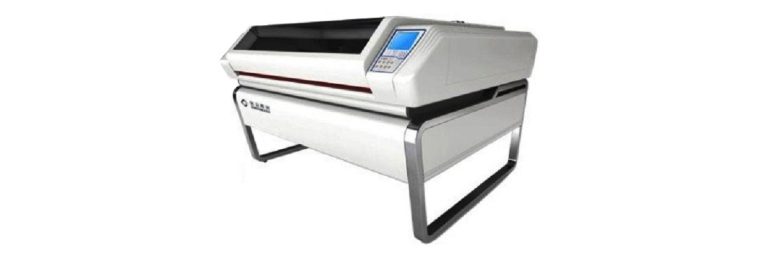

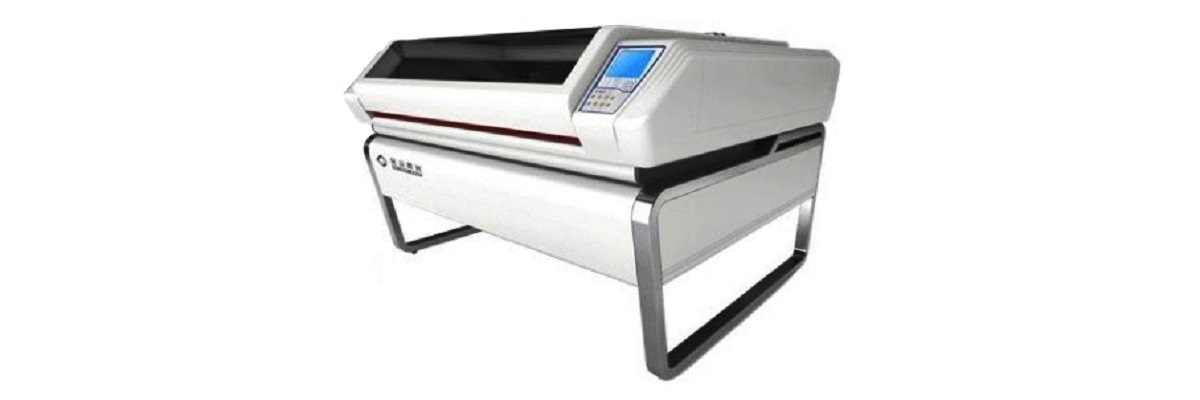
In technical textile manufacturing, synthetic activewear cutting, automotive airbag production, and sublimation sportswear printing, traditional mechanical cutting methods face severe physical limitations. Rotary knife blades and reciprocating mechanical cutters exert lateral dragging forces that distort stretchy spandex and fine chiffon fabrics, causing dimensional errors. Furthermore, cutting woven synthetic yarns with cold blades leaves frayed, unraveling yarn ends that require costly overlock stitching. Installing an industrial Fabric Laser Cutter solves these manufacturing bottlenecks by harnessing high precision laser thermal energy to cut intricate pattern geometries while simultaneously heat sealing synthetic fabric edges in a single, lightning fast operation.
The Physics of Laser Vaporization and Thermal Edge Sealing
The cutting mechanism of an industrial textile laser cutter relies on high power carbon dioxide laser beams focused onto a microscopic spot diameter below zero point two millimeters. High density infrared photonic energy vaporizes polymer fibers instantaneously at temperatures exceeding five hundred degrees Celsius, transitioning the solid textile material directly into gas.
As the laser beam travels along the programmed cutting trajectory, thermal energy melts the microscopic tips of adjacent synthetic fibers such as polyester, nylon, and polypropylene. The molten polymer tips fuse together instantly upon cooling, forming a microscopic sealed bead along the cut edge. This non contact thermal edge seal prevents weave fraying and yarn slippage permanently. Garments cut by laser can proceed directly to flatlock assembly or ultrasonic welding without requiring preliminary overlock edge binding, reducing garment assembly labor significantly.
Contactless Cutting Mechanics and Distortion Free Processing
Mechanical cutting machines rely on sharp blades pressing against fabric webs, introducing friction drag and pulling forces that distort flexible knit textiles. When cutting elastic four way stretch fabrics used in yoga apparel, cycling kits, and swimwear, mechanical knife pressure stretches the fabric unevenly, resulting in distorted, mismatched pattern pieces.
Because laser cutting is entirely contactless, zero mechanical force is exerted upon the fabric web. The fabric rests completely undisturbed upon the cutting table throughout the entire cutting sequence. Delicate sheer silks, stretchy elastane knits, sticky laminated membranes, and heavy ballistic Kevlar fabrics cut with flawless dimensional fidelity. Pattern pieces cut from opposite ends of a fifty meter fabric roll match each other with mathematical precision.
Continuous Conveyor Bed and Automated Roll Feeding
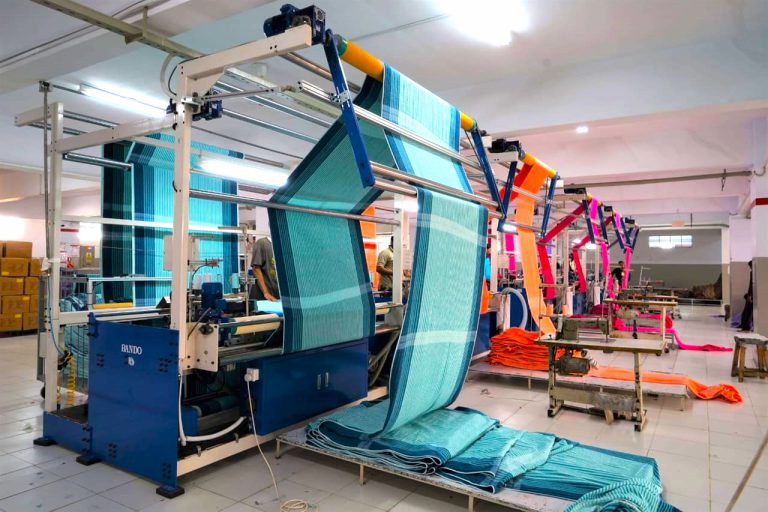
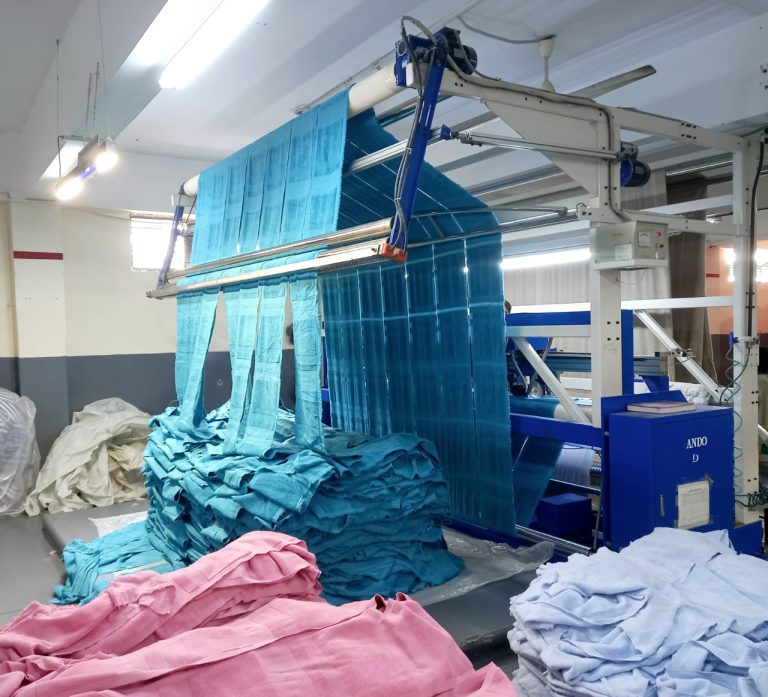
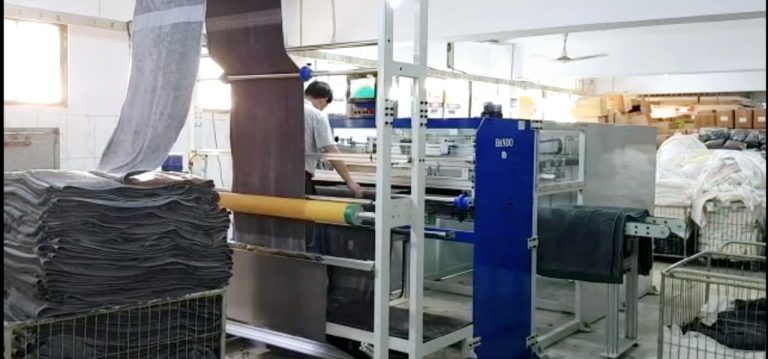
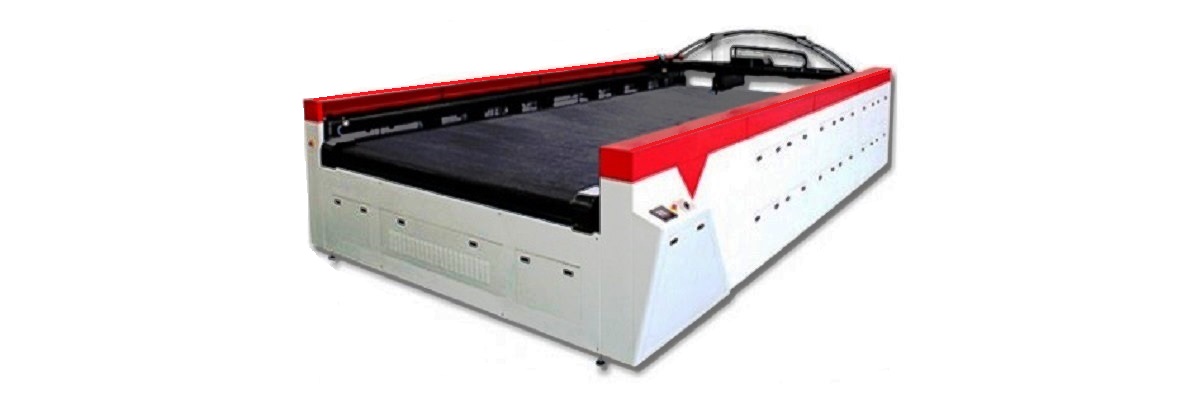
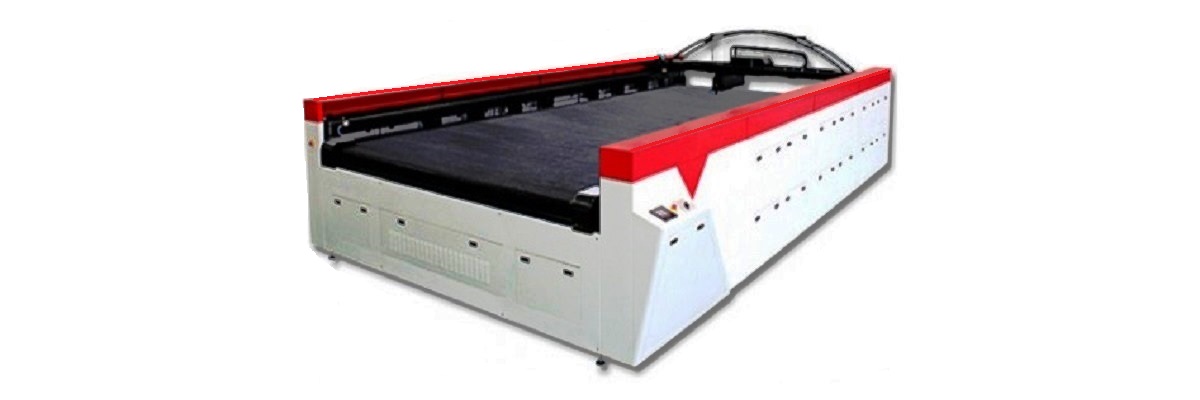
Achieving high throughput in industrial cutting rooms requires seamless material transport. Industrial fabric laser cutters feature automated conveyor bed tables synchronized with motorized roll unwinding units. Large textile rolls mounted on rear unwinding cradles feed fabric continuously across tension leveling guide bars onto the honeycomb conveyor cutting bed.
Integrated edge tracking sensors and pneumatic fabric centering guides maintain straight fabric alignment as rolls unroll. Once a nest of pattern pieces completes cutting, the conveyor bed advances automatically, transporting cut components onto an extended front collection table while pulling fresh fabric into the laser cutting zone. This continuous auto feeding workflow eliminates loading pauses and enables a single machine operator to manage high volume cutting outputs effortlessly.
Sealed Carbon Dioxide Laser Resonator Mechanics and Optical Beam Delivery
The optical core of an industrial textile laser cutter features an advanced radio frequency excited carbon dioxide laser tube operating at a wavelength of ten point six microns. This specific infrared wavelength aligns perfectly with the absorption spectrum of organic polymers, enabling maximum energy coupling with synthetic and natural textile fibers while requiring minimal input electrical wattage.
High purity molybdenum and gold coated silicon mirrors reflect the laser beam through an enclosed gantry flight path to a high resolution zinc selenide focusing lens. Pressurized coaxial air assist nozzles blow dry, filtered compressed air or inert nitrogen gas directly through the nozzle tip along the optical axis. This high velocity gas jet blows molten vapor away from the cutting zone instantly, quenching heat affected zones and preventing smoke discoloration or charring along delicate white fabric edges.
Vision Registration Alignment for Printed Sublimation Textiles
Sublimation printed apparel manufacturing introduces severe fabric shrinkage and print distortion during high temperature heat press calendering. Pre printed graphic patterns rarely match original CAD digital geometries perfectly, making traditional fixed coordinate cutting impossible without severe graphic cropping.
Industrial fabric laser cutters solve this challenge with wide format panoramic vision camera systems mounted above the cutting bed. As the printed fabric rolls onto the conveyor, the high speed vision camera scans the entire bed in one single pass, identifying printed registration marks and distorted contour outlines. Advanced image processing algorithms stretch, scale, and rotate the digital cutting vectors dynamically to align flawlessly with the physical printed fabric, eliminating print misalignment errors completely.
To inspect laser power ratings, optical lens focal lengths, and conveyor table widths, consult the official Laser Cutter product catalog page for detailed engineering consultations and custom machinery sizing.
Preventive Maintenance Schedules for Industrial Laser Cutters
Ensuring maximum laser beam power and cutting accuracy requires disciplined daily and monthly maintenance practices:
- Daily optical lens and mirror inspection: Inspect the focusing lens and final deflection mirror every shift, cleaning optical surfaces with spectroscopic grade isopropyl alcohol and lens paper to prevent dust burning.
- Daily exhaust blower and honeycomb bed cleanup: Clear small fabric cutouts from the lower exhaust plenum and verify strong downward exhaust draft across the entire honeycomb table.
- Weekly water chiller temperature and fluid check: Verify that the industrial water chiller maintains closed loop laser tube cooling water at exactly twenty to twenty two degrees Celsius, checking distilled water levels and conductivity.
- Monthly air assist filter cartridge inspection: Replace coalescing filter elements on the compressed air assist line to prevent oil or moisture droplets from reaching the focusing lens.
- Quarterly linear guide rail cleaning and regreasing: Clean X and Y axis linear guide ways and servo drive belts, removing accumulated dust and regreasing guide blocks.
Intricate Filigree, Perforation, and Surface Etching Versatility
Beyond perimeter contour cutting, laser technology opens creative manufacturing capabilities impossible with mechanical blades. High speed digital galvanometer scanners or micro stepping cutting heads execute thousands of micro perforations per square meter for targeted ventilation zones in athletic apparel.
Intricate filigree lace cutouts, decorative applique shapes, and personalized brand logos cut with microscopic precision in seconds. By modulating laser power and frequency dynamically, the machine can also execute surface engraving and denim fading effects, vaporizing surface dye molecules without compromising base fabric tensile strength. This multi disciplinary versatility enables apparel manufacturers to create premium, value added fashion products on a single production platform.
Operator Safety and Fume Extraction Engineering
Thermal vaporization of synthetic polymers produces airborne fumes, volatile organic compounds, and micro particulate smoke. Industrial fabric laser cutters incorporate comprehensive environmental safety systems to protect factory personnel. High capacity downdraft vacuum plenums built beneath the honeycomb conveyor bed draw smoke and fumes downward instantly away from operator breathing zones.
Exhaust blowers direct contaminated vapors through multi stage industrial filtration units equipped with spark arrestors, HEPA filters, and thick activated carbon adsorption beds, discharging clean, odorless air. The machine chassis features safety interlocked protective acrylic view covers, laser safety warning beacons, and instant emergency stop buttons placed conveniently around the machine perimeter, ensuring full compliance with international laser safety standards.
Intelligent Nested Vector Paths and Acceleration Profiling
Executing ultra high speed cutting across large textile rolls requires sophisticated computer numerical control algorithms that balance velocity with geometric fidelity. When cutting intricate pattern pieces featuring dense radius corners and serpentine contours, the laser motion controller computes dynamic lookahead acceleration profiles. By modulating laser firing power in real time proportional to instantaneous gantry velocity, the system prevents localized heat accumulation during sharp turns.
If a cutting head slows down when negotiating a tight two millimeter internal corner, the controller automatically scales laser wattage downward to maintain constant energy density per millimeter of cut perimeter. Conversely, along straight highway vectors, the gantry accelerates to velocities exceeding one thousand millimeters per second under full laser power. This dynamic power frequency modulation guarantees completely uniform thermal edge sealing without discoloration, melt bead enlargement, or scorch marks across every square centimeter of finished fabric.