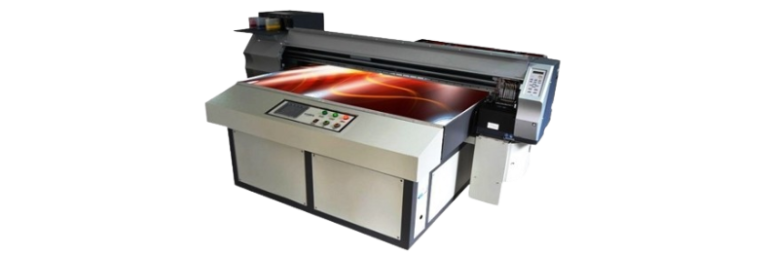


In modern industrial graphics, specialty textile signage, architectural interior panel manufacturing, and personalized product decoration, traditional screen printing faces severe economic limitations. Screen printing requires expensive screen exposures, complex mechanical registrations, toxic solvent washdowns, and massive setup times that make short production runs completely unprofitable. Investing in an industrial Flatbed Digital Printer unlocks high resolution on demand printing directly onto rigid, flexible, and heavy textured substrates without requiring preliminary plates or screens. By pairing high precision piezoelectric drop on demand printheads with instant ultraviolet curing technology, commercial printing operations produce vibrant, photorealistic prints with remarkable scratch resistance and outdoor longevity.
Industrial Piezoelectric Drop on Demand Printhead Architecture
At the technological heart of the flatbed digital printer lies an array of high frequency piezoelectric printheads. Inside each microscopic nozzle chamber, piezoelectric ceramic actuators deform instantaneously when subjected to calibrated electrical voltage pulses. This physical deformation generates acoustic pressure waves that eject microscopic ink droplets through precision laser drilled orifice plates at jetting velocities exceeding eight meters per second.
Advanced grayscale jetting algorithms modulate droplet volumes dynamically between three point five picoliters and fourteen picoliters. Ultra small droplets render silky smooth skin tones, subtle color gradations, and razor sharp alphanumeric micro text as small as two points. Concurrently, larger droplets lay down dense solid backgrounds and rich shadow regions rapidly. With native optical resolutions reaching one thousand two hundred dots per inch, printed outputs display breathtaking photographic clarity that surpasses conventional analogue offset printing.

Versatile Substrate Compatibility Across Rigid and Flexible Materials
Unlike roll to roll printers constrained to flexible web rolls, flatbed printers support an astonishing range of media types. The heavy duty granite or honeycomb aluminum print table accommodates media thicknesses up to one hundred millimeters and surface weights exceeding fifty kilograms per square meter. Operators print directly onto acrylic sheets, tempered glass panels, solid natural hardwoods, aluminum composite signage, corrugated packaging board, canvas, ceramic tiles, and thick genuine leather hides.
Integrated ultrasonic media thickness sensors measure substrate height automatically before printing commences, positioning the carriage gantry at the precise optimal focus distance. Automated anti collision sensors mounted on both sides of the printhead carriage detect warped substrate edges or foreign objects instantly, pausing carriage travel within milliseconds to protect delicate printhead nozzles from physical impact.
Ultraviolet Light Emitting Diode Curing Technology
Traditional mercury vapor ultraviolet curing lamps emit immense infrared heat that warps delicate plastic films, requires long warm up intervals, and generates toxic ozone gas that demands extensive ventilation ducting. Modern flatbed printers utilize cold cure ultraviolet light emitting diode lamp arrays mounted alongside the printhead carriage.
These solid state light emitting diode arrays emit monochromatic ultraviolet light at precise wavelengths that trigger instantaneous photo polymerization of liquid photo initiators within the ink formulation. Liquid monomers cross link instantly into durable, solid polymer matrices without transferring heat to the substrate. Heat sensitive substrates such as foamed polyvinyl chloride, thin polypropylene films, and corrugated fluted plastics remain perfectly flat without thermal distortion. Furthermore, light emitting diode lamps illuminate instantly without warm up delays and operate reliably for more than twenty thousand working hours.
White Ink Circulation and Tactile Gloss Varnish Layering
Printing vibrant graphics onto dark substrates, transparent acrylic, or textured wood grain requires an opaque white ink under base. Titanium dioxide pigments used in white digital inks are substantially heavier than standard color dyes, making them prone to settling and nozzle clogging in stationary fluid lines. The flatbed printer incorporates a continuous white ink recirculation system that pumps white ink continuously through the main reservoir, sub tanks, and internal printhead chambers.
This perpetual circulation keeps heavy pigment particles in uniform suspension, preventing nozzle starvation and drop deflection. In addition to standard cyan, magenta, yellow, black, and white channels, optional clear gloss varnish channels enable sophisticated tactile surface finishes. By depositing multiple layers of clear varnish with selective ultraviolet curing, operators produce high gloss spot highlights, matte textures, and three dimensional embossed tactile textures including authentic Braille signage compliant with accessibility standards.
Intelligent Zoned Vacuum Bed and Media Registration Alignment
Maintaining complete substrate flatness across large table formats is critical for uniform droplet trajectory accuracy. The flatbed printing table is engineered with a high capacity vacuum hold down system divided into multiple independent vacuum zones. Operators activate vacuum suction exclusively beneath the active media footprint using manual selector valves or digital software controls.
High pressure regenerative vacuum blowers pull dense suction through thousands of precision micro holes, flattening curled plastic sheets and holding lightweight corrugated boards immovable against gantry drag. Pneumatic retractable registration pins located along the table perimeter provide foolproof mechanical datum alignment. Operators butt rigid sheets against the alignment pins for rapid double sided printing registration with zero registration error between front and back graphics.
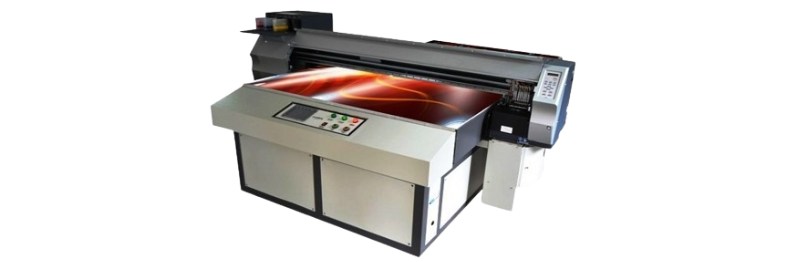
To inspect table dimensions, printhead configurations, and ink curing specifications, check out the official Flatbed Digital Printer product catalog page for detailed engineering consultations and machine configurations.
Preventive Maintenance Schedules for Industrial Flatbed Printers
Sustaining flawless droplet placement and preventing costly printhead nozzle blockages requires disciplined daily and monthly maintenance practices:
- Daily printhead nozzle check and purge: Perform an automated test pattern nozzle check every morning, executing positive pressure purges and wiping nozzle plates with lint free polyurethane swabs.
- Daily capping station and wiper blade cleanup: Clean residual cured ink deposits from silicone wiper blades and capping station rubber seals using specialized ultraviolet cleaning solution.
- Weekly ultraviolet lamp optical window inspection: Inspect the protective quartz glass windows of light emitting diode curing lamps, removing stray ink mist to preserve full ultraviolet irradiance.
- Monthly negative pressure ink meniscus calibration: Verify digital pressure transducers on ink sub tanks to ensure steady negative pressure meniscus prevents ink dripping from nozzle plates.
- Quarterly linear guide rail lubrication and encoder strip cleaning: Clean the optical linear encoder strip with optical grade isopropyl alcohol and lubricate gantry linear guide rails with synthetic grease.
- Biannual ink filter and degassing membrane replacement: Replace in line sub five micron ink capsule filters and check vacuum degassing pumps to eliminate micro air bubbles from ink lines.
Dynamic Motion Control and Helical Rack Propulsion
Printhead carriage stability across wide format printing spans requires uncompromising mechanical rigidity. The gantry carriage is guided by dual heavy duty linear guide rails and propelled by high torque brushless alternating current servo motors coupled to precision ground helical rack and pinion drives or linear magnetic induction motors.
This rigid propulsion architecture eliminates mechanical backlash and microscopic carriage vibrations during high speed bidirectional printing traverses exceeding one point five meters per second. Micro stepping electronic motion controllers synchronize ink droplet firing timing with carriage position down to sub micron tolerances, ensuring that every drop strikes the substrate with mathematical precision regardless of carriage acceleration or deceleration phases.
Color Management Architecture and Raster Image Processing
Translating digital designs into vivid, color accurate physical prints requires powerful raster image processing software. Professional raster image processors utilize advanced stochastic frequency modulation screening algorithms to eliminate moire interference patterns and visible droplet graininess. Specialized color management engines support custom international color consortium profiles for dozens of distinct substrate varieties.
Automated spot color matching tools convert specific brand Pantone colors into precise CMYK ink formulations, ensuring total color repeatability across repeat orders spaced months apart. Variable data printing capabilities allow each printed sheet to include unique serial numbers, personalized names, or dynamic barcodes in high volume industrial manufacturing environments without diminishing printing velocity.