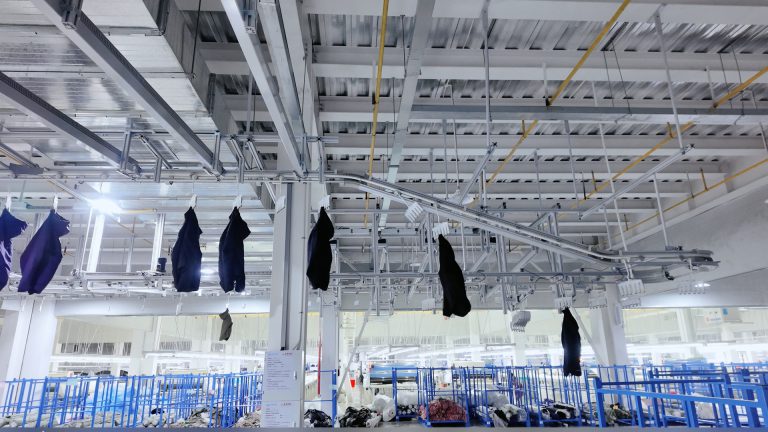

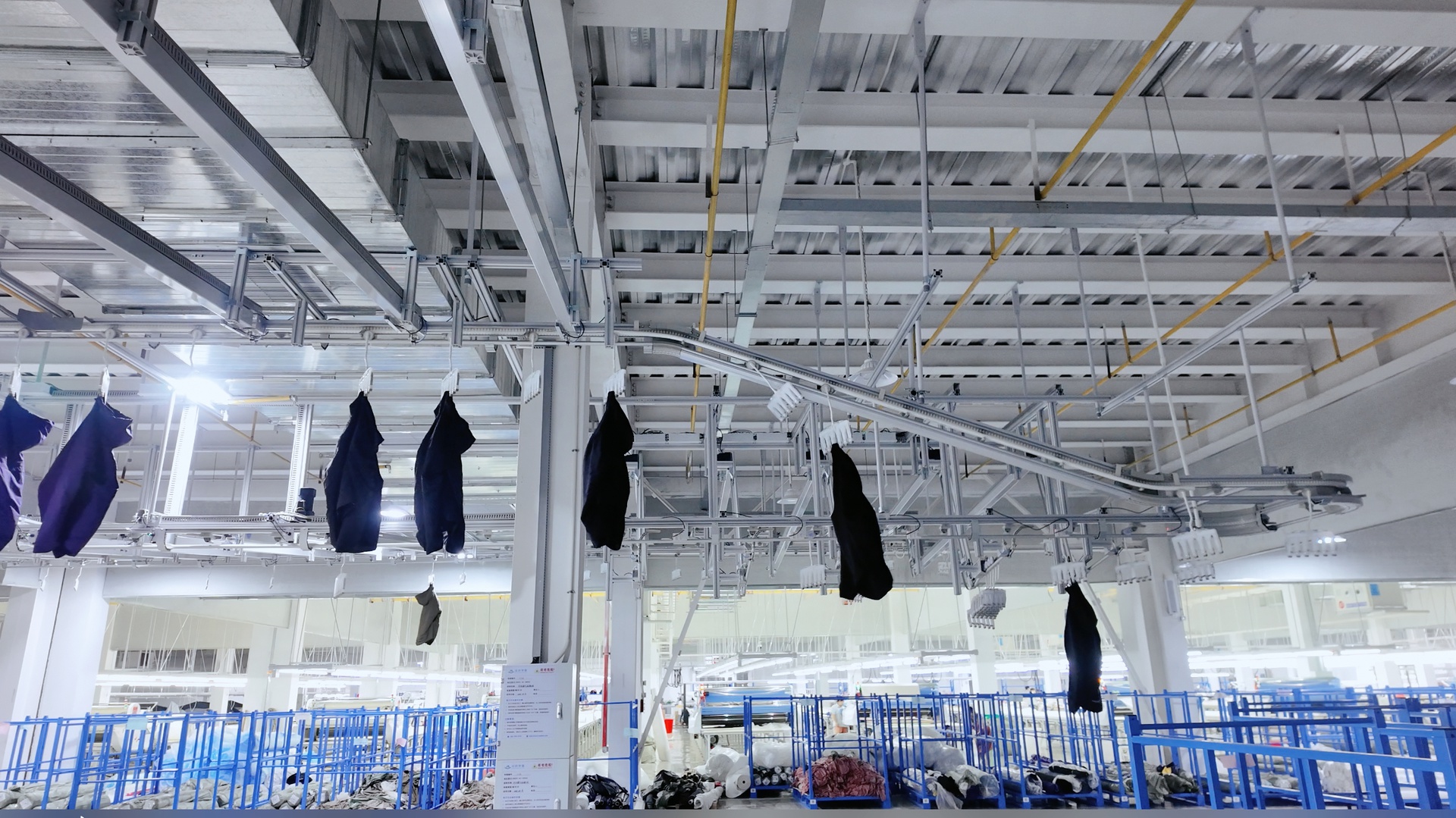
Traditional apparel manufacturing has long relied on bundle systems where large bundles of cut fabric pieces travel manually between individual sewing machine operators. Bundles sit on wooden tables, pile up on concrete floors, and accumulate dust while waiting for upstream workers to finish previous operations. This traditional flow creates massive work in progress inventory, prolonged lead times, and difficult quality traceability when defects occur. Implementing an overhead Chain IoT Hanger System transforms apparel assembly into a continuous single piece flow model with automated transit and live digital tracking.
Overhead Mechanical Engineering and Track Construction
The Maidi Intelligence Chain IoT Hanger System utilizes an enclosed tubular steel overhead track designed for ceiling suspended or freestanding modular support pillars. Within this track, an induction hardened alloy steel roller chain travels continuously, powered by precision geared electric drive motors. High strength garment carriers with rotating swivel hooks hang from the chain at calibrated intervals, each capable of supporting up to five kilograms of textile goods.
The enclosed track design protects moving chain links from ambient textile lint, yarn shavings, and lubricating mist, ensuring clean transit above high value white and pastel garments. Smooth radius curved sections enable track loops to navigate around building structural columns and link cutting tables on the ground floor with sewing stations on upper levels. Primary drive units feature electronic torque limiters that disengage automatically if any mechanical obstruction occurs along the overhead circuit.
Radio Frequency Identification and Real Time Process Control
Every individual hanger carrier incorporates a high frequency passive RFID chip embedded within its impact resistant composite housing. When a worker loads cut panels at the initial loading terminal, the terminal computer associates that specific carrier tag with the production order number, size, color code, and sequence of required sewing operations. As the hanger moves along the overhead chain circuit, directional diverter switches read the RFID tag and route the garment into the exact workstation assigned to perform the next stitching step.
Workstation diverters gently guide carriers from the primary moving chain onto stationary gravity drop rails situated directly at the sewing operator left hand. Once the operator completes the designated collar seam, sleeve hem, or pocket attachment, pressing a tactile button on the workstation terminal releases the hanger back onto the moving main chain. Central production management software records the completion time, operator identity, and piece count instantaneously, providing floor managers with minute by minute operational visibility.
Balancing Production Lines and Eliminating Bottlenecks
Sewing lines rarely feature identical cycle times across every process. Attaching a complex front zipper may require forty seconds, whereas stitching a side seam takes only twelve seconds. In conventional bundle setups, this imbalance causes massive inventory buildups in front of slower operations and leaves downstream operators waiting idly for work. The intelligent chain system resolves line balancing automatically through smart dispatch algorithms.
When the management system notices that a particular workstation gravity buffer holds three carriers, it automatically diverts subsequent garments to alternative qualified operators who currently have lower queue counts. This dynamic load sharing stabilizes throughput, minimizes operator downtime, and prevents frustrating production slowdowns. Garment factories converting from bundle setups to intelligent overhead hangers typically observe productivity increases ranging from twenty to thirty five percent within the first quarter of deployment.
To examine detailed layout schematics and drive specifications, consult the official Chain IoT Hanger System product page for engineering support and factory layout planning.
Quality Control and Defect Accountability
Early defect detection is essential when manufacturing garments for demanding international brands. In bundle systems, an uncalibrated sewing machine needle might skip stitches across an entire batch of two hundred polo shirts before an inspection table worker notices the fault hours later. By then, unpicking and repairing hundreds of sewn items creates massive labor loss and fabric damage.
With single garment single carrier transport, each garment reaches intermediate quality checkpoints minutes after assembly. If an auditor spots an uneven stitch or incorrect tension, the auditor scans the carrier tag, records the defect code on a touchscreen terminal, and routes the garment straight back to the responsible machine operator. Because the defect returns within five minutes of creation, the operator can adjust machine tension or replace a burred needle immediately, halting the error before additional garments suffer.
Reducing Work in Progress Inventory and Floor Congestion
One of the most dramatic transformations observed by factory directors upon commissioning an overhead chain hanger system is the immediate clearing of floor clutter. In conventional bundle sewing workshops, massive rolling carts and plastic hampers crowd every corridor, blocking emergency exits and requiring dedicated material handling crews just to move work between lines.
By elevating work in progress inventory into previously unused ceiling space, the factory floor becomes open, airy, and clean. Plant managers can inspect all sewing lines with an unobstructed view from one end of the building to the other. Furthermore, work in progress cycle times drop from several days down to a few hours, enabling factories to accept fast turnaround quick strike fashion orders that traditional bundle factories simply cannot fulfill.
Integration with Factory Enterprise Resource Planning Systems
Modern garment manufacturing requires tight integration between shop floor hardware and enterprise management software. The Chain IoT Hanger System communicates continuously with factory enterprise resource planning platforms via standard industrial protocols. When a sewing operator completes an assembly step, the transaction registers immediately in production databases, updating inventory records and generating real time efficiency reports.
Factory management gains instant visibility into work in progress valuation, order fulfillment milestones, and individual line throughput. If an export customer requests an expedited production status update, customer service teams can pinpoint the exact physical location of every garment in the order within seconds. This digital transparency eliminates manual tally sheets and guesswork, positioning the factory as a premier technological partner for demanding international apparel brands.
Essential Upkeep Schedules for Overhead Track Systems
Keeping overhead chain systems running silently and efficiently requires dedicated adherence to preventive maintenance guidelines:
- Daily optical sensor verification: Clean the photocells and optical proximity sensors on all workstation drop gates using dry compressed air to clear sewing fuzz.
- Weekly automatic lubricator inspection: Verify lubricant levels in the automated chain oiling unit, ensuring micro droplets reach internal roller pins without dripping onto garments below.
- Monthly chain elongation measurement: Check chain tensioner take up screws to verify wear limits and maintain correct track engagement around drive sprockets.
- Quarterly diverter solenoid testing: Test pneumatic diverter cylinders and electrical solenoids for rapid, positive gate opening and closing without mechanical hesitation.
- Biannual carrier hook inspection: Inspect carrier clamps, swivel bearings, and RFID housings for mechanical play, replacing worn components to preserve positioning accuracy.
Operator Ergonomics and Industrial Psychology
Worker satisfaction and ergonomic physical wellness are vital factors in sustaining high daily sewing efficiency. By delivering fabric panels directly to the sewing machine needle position, the Chain IoT Hanger System eliminates heavy lifting, awkward reaching, and repetitive twisting. Operators maintain an upright, comfortable posture throughout their working shift, significantly reducing musculoskeletal strain and physical exhaustion.
Moreover, transparent digital piece counting fosters a fair, motivated workplace culture. Operators view their exact completed piece counts in real time on workstation screens, eliminating paperwork disputes over piece rate bonuses. Management gains objective, verifiable production records, enabling merit based recognition for high performing sewing teams and targeted training support for newer operators.
Return on Investment and Export Competitiveness
Modern textile exporting requires tight lead times, flawless quality audits, and competitive unit costs. Investing in overhead smart hanger technology provides a demonstrable competitive edge during customer factory audits. Major international brands actively favor suppliers whose automated tracking guarantees zero garment mixups, rapid style changeovers, and certified worker ergonomic standards.