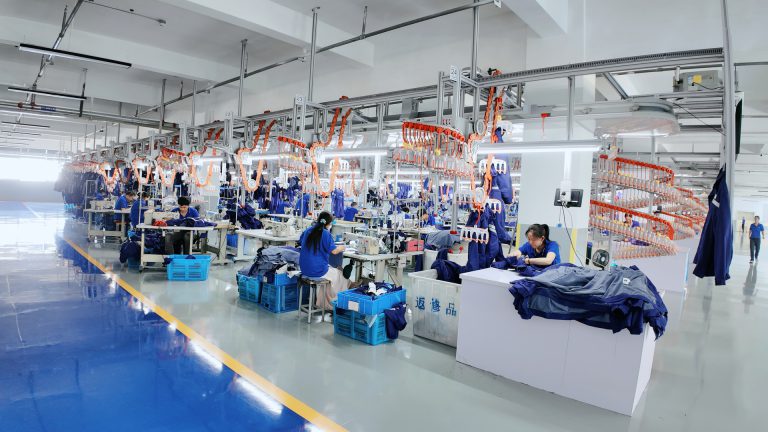

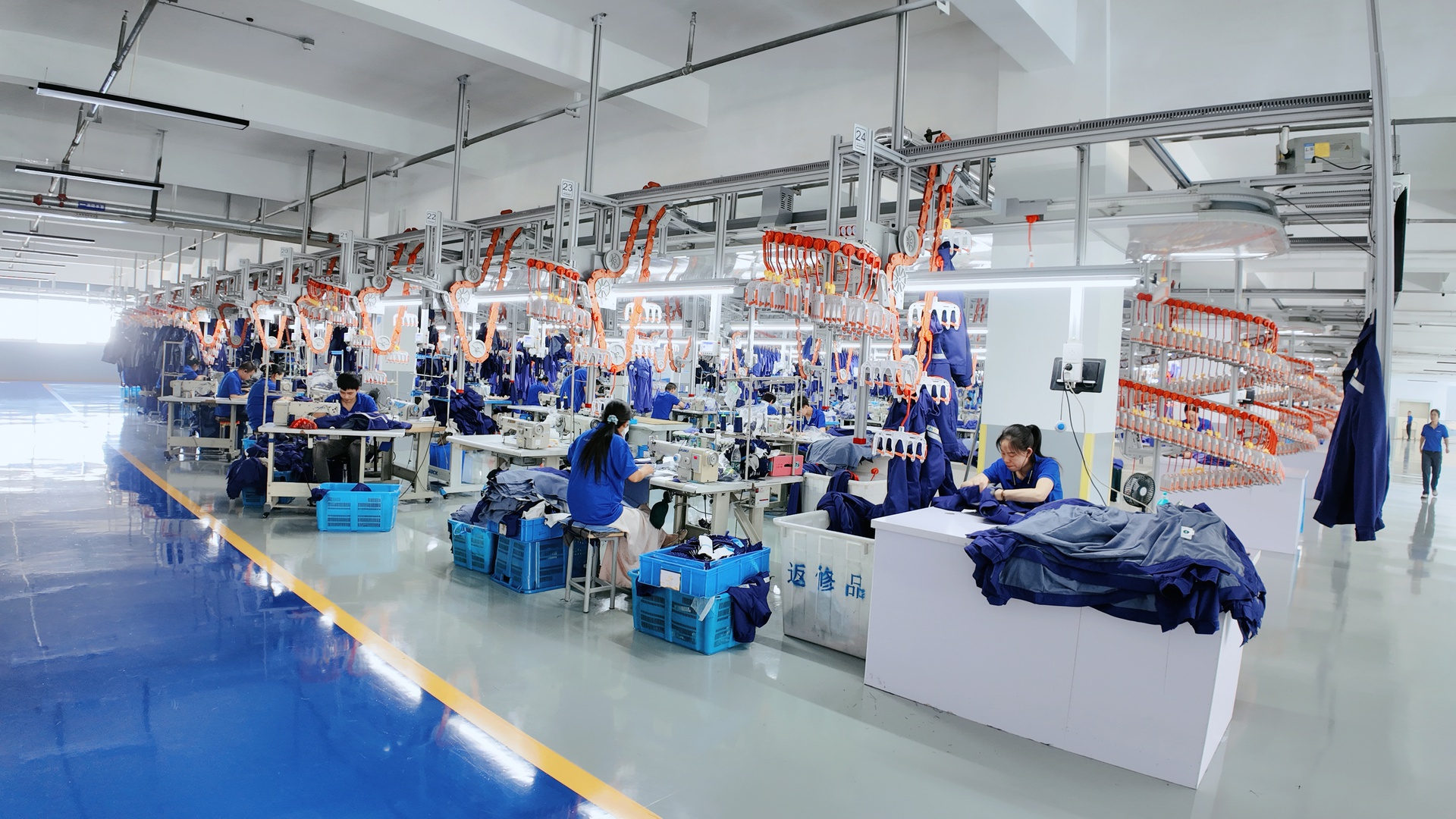
Garment sewing floors are fast moving manufacturing environments where thousands of pieces must travel between cutting tables, sewing machines, buttonholers, inspection stations, and packing areas every day. When factories manage this movement through manual handling, workers spend up to fifteen percent of their work shift walking across aisles, finding cut bundles, untying bundles, and stacking finished parts. The Standard IoT Hanger System by Maidi Intelligence eliminates this non productive handling by providing modular, electronically controlled overhead transport tailored specifically for high mix, export quality apparel production.
Modular Architecture Tailored for Flexible Plant Layouts
Unlike massive custom built transport loops that require rigid building modifications, the Standard IoT Hanger System employs an intelligent modular track architecture. Individual straight rail lengths, standardized ninety degree curves, motorized booster modules, and pneumatic diverter switches bolt together seamlessly. This modularity allows apparel plant managers to install, extend, or reconfigure transport lines within a single weekend shift when retooling for new product categories.
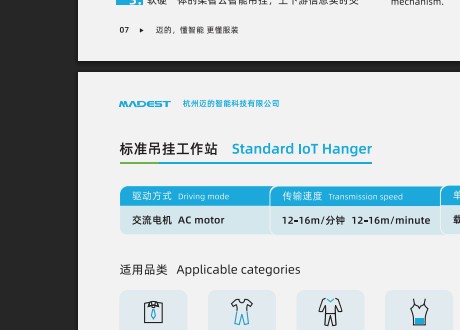
The standard system operates on standard factory electrical wiring with distributed low noise direct current drive units or compact three phase induction motors. Each workstation drop spur features an ergonomic gravity feeder rail positioned exactly at elbow height for seated or standing machine operators. Workers simply take the pre positioned garment piece from the hanger hook, feed it under the sewing machine needle, and hang the completed assembly back on the carrier without twisting their spine or leaving their chair.
Integrated Digital Control and Operator Terminals
At the center of every sewing workstation sits a compact digital operator interface equipped with an alphanumeric display, illuminated status buttons, and a barcode or RFID confirmation scanner. When a hanger enters the station buffer rail, the display screen informs the operator of the exact stitch count, thread color, and special operation instructions required for that specific unit. This immediate visual guidance minimizes human assembly errors during multi style production runs.
When the operator presses the release button upon finishing their sewing task, the terminal updates the central manufacturing execution system database over high speed industrial communications. Supervisors monitor a live floor plan display on office computer screens, observing real time cycle times, station efficiency percentages, and pending carrier quantities across every machine on the floor. If a sewing machine suffers needle breakage or thread snapping, the operator presses an assistance call button on the terminal, summoning a maintenance mechanic or floor supervisor immediately.
Reducing Soilage and Fabric Handling Losses
In conventional garment sewing rooms, fabric panels spend hours resting in plastic tubs or piled on wooden benches where oil drips, dust, and handling sweat can stain delicate light colored fabrics. Once stained, garments require manual spot cleaning with chemical solvents, which degrades fabric tensile strength and adds substantial labor expense. In severe cases, stained goods are rejected outright by foreign buyers, resulting in direct revenue losses.
Suspended transport keeps every garment piece elevated safely above the floor, completely isolated from oily drive belts, dirty floor mops, and footwear contact. Finished shirts, blouses, knitwear, and trousers retain their pressed shape throughout stitching, drastically cutting subsequent steam tunnel and flatbed pressing times. Factory managers report that cleaner handling alone reduces fabric scrap and washing rates by up to eighty percent.
To review detailed equipment specifications, station footprints, and controller software capabilities, visit the dedicated Standard IoT Hanger System catalog page for complete technical documentation.
Workstation Balancing and Real Time Data Visibility
Production supervisors in busy garment factories face continuous scheduling challenges when line balancing is disrupted by machine downtime, complex stitching steps, or absenteeism. In traditional workshops, supervisors spend hours calculating piece tallies by hand on clipboards, by which time production statistics are already obsolete.
The Standard IoT Hanger System changes this reality completely by providing live digital dashboards. A supervisor standing on the floor or seated in a control room views instantaneous cycle time graphs for every sewing station. If workstation number twelve falls behind schedule due to dense denim fabric resistance, the system alerts the supervisor to reassign a secondary station to share the task. This active balancing ensures continuous, smooth factory output and prevents stressful end of shift crunches.
Practical Upkeep and Floor Verification Routines
Maintaining peak operational efficiency across modular hanger systems requires a steady schedule of straightforward mechanical and electronic checks:
- Daily optical sensor lens inspection: Clean optical eye lenses at each workstation diverter gate with clean dry lint free cloths to ensure flawless carrier reading.
- Weekly air supply pressure verification: Check the central pneumatic regulator to ensure clean, moisture free compressed air reaches diverter cylinders at six bar pressure.
- Monthly carrier clamp tension testing: Verify that the spring loaded garment grip clamps hold lightweight silks and heavy denim fabrics securely without leaving fabric pinch marks.
- Quarterly drive roller and belt wear audits: Inspect polyurethane friction drive rollers for surface wear, adjusting drive tension or replacing rollers to prevent carrier slip.
- Biannual electrical grounding audits: Measure electrical continuity along all overhead track channels to verify grounding dissipation, preventing static buildup from synthetic fabrics.
Operator Ergonomics and Industrial Psychology
Worker satisfaction and ergonomic physical wellness are vital factors in sustaining high daily sewing efficiency. By delivering fabric panels directly to the sewing machine needle position, the Standard IoT Hanger System eliminates heavy lifting, awkward reaching, and repetitive twisting. Operators maintain an upright, comfortable posture throughout their working shift, significantly reducing musculoskeletal strain and physical exhaustion.
Moreover, transparent digital piece counting fosters a fair, motivated workplace culture. Operators view their exact completed piece counts in real time on workstation screens, eliminating paperwork disputes over piece rate bonuses. Management gains objective, verifiable production records, enabling merit based recognition for high performing sewing teams and targeted training support for newer operators.
Quality Audit Traceability and Rapid Defect Feedback
In conventional bulk sewing shops, sewing defects are often caught hours after completion during final inspection, when entire bundles must be opened and checked individually. The Standard IoT Hanger System eliminates this costly delay by routing garments through inline inspection stations where inspectors verify seam quality immediately after critical stitching operations. If an auditor identifies an uneven hem or mismatched thread tension, the carrier is redirected back to the original workstation within minutes.
Because the operator receives immediate feedback while their sewing machine is still threaded with the relevant lot, tension adjustments or needle replacements take place instantly. This short feedback loop prevents mass defect generation, saving hundreds of labor hours that would otherwise be wasted unpicking finished garments. Quality statistics by machine operator appear on plant dashboards, enabling targeted skills training rather than blanket disciplinary measures.
Calculating Production Velocity and Factory Cost Reductions
Financial returns from modernizing garment assembly flow emerge from multiple complementary directions. Eliminating manual bundle distribution recovers thirty to forty five minutes of productive sewing time per machine operator each day. Concurrently, reducing work in progress volume frees up operational working capital that was previously tied up in idle fabric piles across the plant floor.
Faster order turnaround also enables apparel exporters to meet strict shipping windows for fast fashion collections without incurring punitive air freight surcharges. When combined with substantial reductions in fabric dirt stains and sewing reworks, mid sized export factories routinely achieve full investment recovery within fourteen months of line commissioning.