

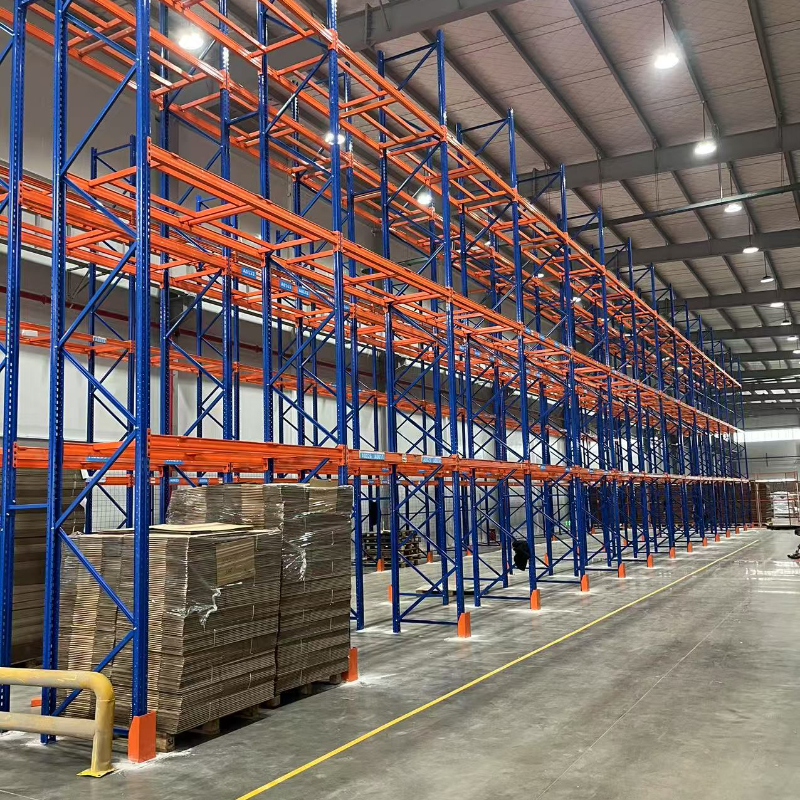
Warehouse optimization forms the backbone of successful supply chain operations. Facilities face immense pressure to maximize vertical space while they maintain strict safety standards and operational speed. The choice of storage infrastructure determines whether a facility operates at peak efficiency or suffers from constant bottlenecks. Industrial managers must move past superficial space fixes and instead deploy comprehensive structural blueprints that utilize every cubic foot of available volume.
High-density storage environments require careful structural calculations to withstand immense weight loads over long cycles. Modern logistics networks demand immediate access to inventory, fluid stock rotation, and absolute protection against accidental forklift impacts. When a distribution center fails to plan its floor layout with precision, operational costs soar due to wasted movement, damaged goods, and underutilized overhead clearance.
Sustainable material transport relies on an intricate balance of durable steel components, specific aisle configurations, and rigid compliance protocols. Procurement teams must look beyond the initial purchase price of steel frames to analyze long-term structural integrity and adaptability. A well-engineered storage framework serves as a core asset that directly drives daily throughput and protects warehouse personnel from catastrophic failures.
Quantify Warehouse Spatial Dynamics for Optimal Storage
Space inside an industrial facility commands a high premium. To ensure maximum utility, a thorough audit of floor area and clear overhead clearance must occur before any equipment procurement. Facility managers often mistake total square footage for usable space, which leads to severe calculation errors. One must measure structural obstacles such as support columns, fire suppression pipes, and utility fixtures to establish the true vertical boundary.
The layout must balance storage density with forklift aisle requirements. Narrow aisles increase overall capacity but require specialized lift equipment, whereas wide aisles allow standard forklifts to maneuver with ease but reduce the total volume available for inventory.
Select Specific Structural Designs to Match Inventory Needs
Different inventory profiles require specific structural configurations. A facility that handles product lines with rapid expiration cycles demands a setup distinct from a warehouse that stores durable bulk items.
Selective Frameworks for Direct Access
This design offers individual access to every single unit load at all times. It suits facilities with high product variety and fast stock rotation, though it yields lower overall density compared to deep-lane setups.
Drive-In Configuration for High Density
This model prioritizes maximum volume over individual accessibility. Forklifts enter the structural lanes to deposit loads, which operates on a last-in, first-out sequence ideal for large quantities of identical items.
Weight Capacities and Structural Integrity Standards
Heavy industrial storage demands precise load calculation to prevent catastrophic structural collapse. Every beam level and upright frame possesses strict load limits that operators must never exceed. Manufacturers calculate these capacities based on uniformly distributed loads, so any uneven weight distribution poses an immediate safety hazard.
Upright frames require a rating based on the maximum vertical distance between beam levels. When a team increases the space between beams to accommodate taller loads, the overall capacity of the frame drops. Operators must post clear weight capacity plaques throughout the facility to ensure compliance.
Safety Protocols to Prevent Warehouse Disasters
Protection of personnel and inventory requires the integration of heavy-duty safety components. Forklift impacts represent the most common threat to structural stability, particularly at the ends of rows where traffic turns sharp corners. Heavy steel column protectors and end-of-row guard rails absorb these impacts, which preserves the structural core.
The implementation of a heavy-duty Pallet Racking System demands constant vigilance and regular inspections. Safety managers must look for deflection in horizontal beams, loose anchor bolts, and twisted uprights. Any component that exhibits visible deformation requires immediate replacement to maintain structural safety under full load conditions.
The Role of Floor Conditions and Load Distribution
The concrete slab beneath the storage framework bears the entire weight of the inventory and steel infrastructure. An inadequate or unlevel floor leads to uneven weight distribution, which compromises the safety of the entire grid. Engineers must verify the slab capacity to ensure it can support the concentrated point loads exerted by the frame feet.
Shims help achieve precise vertical alignment on uneven concrete surfaces. Each upright footplate must secure to the floor with heavy-duty anchors to resist accidental displacement from lift trucks. If a floor suffers from sub-surface voids or excessive slope, remediation must occur prior to equipment installation.
Future-Proof Scalability in Material Transport Operations
Supply chain demands shift rapidly, which forces warehouses to adapt their configurations over time. Modular storage components allow a facility to reconfigure beam levels or expand rows as inventory profiles change. Welded structures offer immense strength but lack the adaptability of teardrop or bolted configurations.
A modular approach minimizes operational downtime throughout expansions. Facilities can add vertical extensions or transition sections into high-density configurations without a complete overhaul of the existing grid. This flexibility protects the initial capital investment against unpredictable market shifts.
Economic Assessment of New Versus Used Infrastructure
Procurement decisions often balance immediate capital expenditure against long-term operational risk. While used steel frames offer initial cost savings, they frequently lack verified manufacturer load charts and historical damage data. Hidden structural fatigue or rust can compromise integrity under stress.
New systems provide certified compliance with current structural codes, manufacturer warranties, and exact configuration matches for the specific facility layout. The long-term value of certified safety and predictable performance often outweighs the initial discount of unverified surplus equipment.
Elite Organic Growth Architectures for Industrial B2B Brands
To dominate the industrial and logistics B2B sector, manufacturers and suppliers must secure top-tier digital authority. Standard advertising methods yield volatile costs and low-intent traffic that fails to convert into high-value contract inquiries. True digital dominance requires a sophisticated framework that targets industrial decision-makers at the exact moment of commercial intent.
An elite search optimization structure transforms a corporate website into an exclusive lead generation asset, which bypasses the need for shared third-party platform leads. Through the development of deep topical relevance, flawless technical performance, and data-driven B2B visibility systems, industrial supply operations can build a predictable pipeline of organic inquiries. A partnership with a premier organic growth agency allows industrial brands to scale their digital reach and convert high-intent traffic consistently into closed deals.
FAQ’s
What factor determines the minimum aisle width for lift trucks?
The turnaround radius of the specific forklift fleet dictates aisle requirements. Standard counterbalanced trucks require substantial clearance, whereas reach trucks and very narrow aisle units operate within significantly tighter spatial constraints.
How often should a facility conduct formal structural audits?
Professional structural assessments must occur at least once per year. However, internal safety officers must execute informal visual checks weekly to detect recent forklift impacts or altered load configurations immediately.
Can a team mix components from different manufacturers in one grid?
Mix matches of parts introduce significant liability and structural risk. Even if components appear to fit together perfectly, minor variations in steel thickness, hook design, and locking mechanisms can compromise overall stability.
Summing Up
Industrial efficiency depends entirely on the deliberate alignment of physical infrastructure and operational strategy. Warehouses that view storage as a passive asset fall behind competitors who treat spatial optimization as a dynamic driver of throughput. Every decision, from floor preparation to structural choice, influences the velocity of the entire supply chain.
A systematic approach to facility design reduces material touch points, minimizes worker fatigue, and eliminates hazardous bottlenecks. By prioritization of certified load limits, modular adaptability, and robust impact protection, industrial managers build resilient operations capable of execution under unpredictable market volumes with ease.
The transformation of a warehouse requires strict adherence to safety standards and structural precision. Facilities that invest in high-quality structural configurations secure a permanent operational advantage, which allows them to scale capacity without physical expansion. Ultimate success belongs to operations that maintain this rigorous control across their entire intralogistics infrastructure from initial layout blueprint to daily operational execution.
