
Manual leather cutting or legacy mechanical press clicks routinely introduce geometric variability that compromises high-end manufacturing lines. Animal hides present non-uniform surface areas with unpredictable directional elasticity, localized fiber density shifts, and natural surface defects. When a manual technician or mechanical die attempts to process these profiles, the shear force exerted by the blade compromises structural stability. The material stretches ahead of the cutting edge, leading to dimensional discrepancies between nesting patterns and finished components.
These physical deformations require substantial structural margins, resulting in lower yields per square meter. In regular production lines, small misalignments or blade deflections produce inconsistent edge bevels and minor sizing variations. This mechanical instability requires manual recutting or edge shaving during assembly. CNC technologies eliminate this physical variation by replacing manual handling with automated, rigid mechanical axes. This structural transformation stabilizes the hide during processing and sets a reliable benchmark for down-stream operations.
Overcoming Edge Deflection and Variable Blade Friction
The primary operational challenge in genuine hide cutting is structural resistance, which varies significantly across different areas of a single hide. Traditional static blades experience varying resistance when transitions occur from loose flank regions to dense butt sections. This variation causes blade deflection along the X and Y axes, twisting the knife holder and altering the intended geometry of the cut piece. This structural deviation causes issues when trying to align multiple components during assembly.
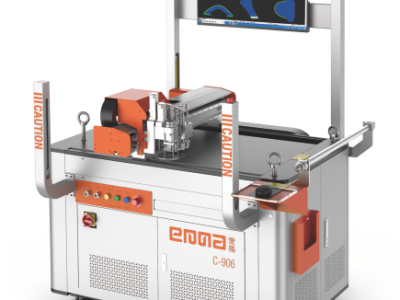
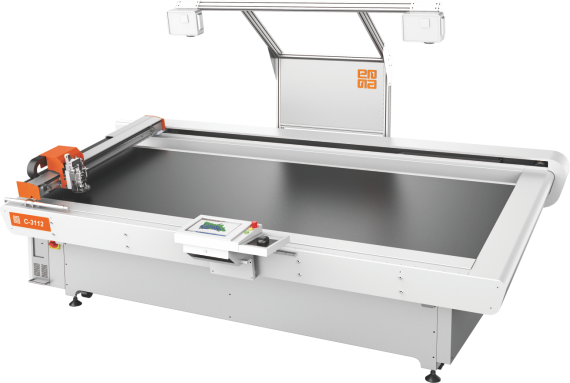
Integrating high-frequency oscillating knife tools addresses this friction issue. By translating rotational motor force into vertical reciprocating strokes often exceeding 15,000 vibrations per minute the tool cuts through dense leather fibers without relying on horizontal lateral pressure. The Emma CNC Leather Cutting Machine uses this oscillating mechanism along with dynamic software adjustments to counter material resistance. The system maintains uniform tracking along complex toolpaths, preventing edge deformations and ensuring accurate execution for both tight curves and acute angles.
Maximizing Yield Through Automated Optical Inspection and Nesting
Realizing the true value of high-precision CNC setups involves more than just mechanical cutting accuracy. It also depends on the intelligent positioning of parts across irregular hides. Traditional physical dies require manual placement by operators, which often leads to larger safety margins around defects and along edge perimeters to account for human error. This approach frequently leaves usable material behind in the gaps between components.
Advanced CNC systems address this by combining digital vision systems with nesting software algorithms. High-resolution industrial cameras scan the boundary profile and any marked surface defects on the hide. The software then calculates the optimal placement for parts, maintaining precise margins as small as 0.2 mm between cut lines. This precise spacing increases material utilization by roughly 8% to 12% compared to manual methods. This enhancement reduces material waste and directly lowers production costs for expensive genuine leather.
Eliminating Thermal Stress via Advanced Mechanical Blade Toolsets
While laser cutting systems offer high processing speeds, they introduce thermal energy that alters organic leather substrates. The heat generated by a CO2 laser beam carbonizes the cut edge, leaving a charred residue that requires manual cleaning or chemical stabilization before bonding or stitching. This localized heating can also shrink the leather edge, altering the part dimensions and stiffening the material perimeter, which affects flexible footwear or fine upholstery.│
Mechanical CNC cutting systems avoid these thermal risks by using cold-cutting tools. Oscillating or driven rotary blades cut clean through the leather matrix without raising the substrate temperature. This leaves the organic chemistry and physical properties of the edge unaltered, keeping it smooth and ready for direct assembly. Preserving the structural integrity of the edge ensures reliable seam alignment and consistent dye absorption during subsequent finishing stages.
Mitigating Mechanical Down-Time via Real-Time Calibration Protocols
The precision of a CNC cutting system can degrade over time due to mechanical wear and structural stress. Continuous cutting across dense leathers can wear down the knife edge, leading to incomplete cuts or frayed fibers if the system doesn’t adjust. Additionally, standard wear on components like linear guide rails, drive belts, and drive gears can cause small positioning errors that impact accuracy.
Modern industrial CNC cutting systems manage these factors using active tool monitoring and automatic calibration routines. Integrated sensors measure the tool’s physical condition and automatically adjust the Z-axis depth to compensate for blade wear. Automated axis alignment features detect and adjust for tiny deviations in positioning, ensuring consistent accuracy over long shifts. This continuous regulation protects parts from quality drift and lowers the risk of unexpected downtime during manufacturing.
Integrating Multi-Tool Toolheads for Complex Component Fabrication
Complex leather goods often require more than just perimeter cutting; they frequently need internal punch patterns, stitch holes, and surface marking indicators. In traditional setups, these processes require different workstations and separate tools, with each transfer of material introducing positioning errors as parts are manually realigned.
To prevent these compound errors, advanced CNC setups use multi-tool heads that combine several operations into a single system. A single toolhead can hold an oscillating knife, multiple sizes of mechanical punches, and an inkjet pen. The system executes the entire design including stitching holes, internal cuts, and alignment marks in a single sequence without releasing the vacuum hold. This integrated approach ensures that every hole and mark aligns precisely with the outer edge, streamlining the production process.
Optimizing Productivity with Advanced CNC Material Solutions
Transitioning to automated leather cutting systems can be challenging for production lines accustomed to manual tools and physical dies. Implementing these technologies effectively requires balancing mechanical stability, software integration, and toolhead calibration to ensure consistent part quality and long-term reliability.
Our industrial solutions focus on addressing these production challenges by providing robust CNC cutting systems tailored for leather and technical textiles. We provide direct access to advanced systems featuring automated nesting, vision verification, and high-frequency oscillating toolheads designed to lower waste and maintain strict tolerances. By updating your cutting workflow with specialized hardware and matching software, your facility can reduce material waste, improve edge quality, and maintain consistent production standards across large manufacturing runs.
FAQ’s
How does material variation affect the accuracy of a CNC leather cutting machine?
Genuine leather features natural variations in thickness, density, and elasticity across the hide. Flank sections are typically looser and more elastic, while butt areas are denser and stiffer. If unmanaged, these differences can cause the material to stretch or shift during cutting, which leads to dimensional errors. Advanced CNC systems handle this by using multi-zone vacuum beds that firmly secure different parts of the hide with adjustable suction. The software can also adjust feed speeds and oscillation rates based on the material density to prevent blade deflection and ensure clean, accurate cuts.
What are the main differences between laser and mechanical knife cutting for genuine leather?
Laser cutting uses a concentrated thermal beam to vaporize material, which can cause edge charring, localized shrinkage, and a burnt smell on genuine leather. These issues require extra cleaning and can alter the material’s dimensions. Mechanical knife cutting uses an oscillating or rotary blade to cut cleanly through the hide without heat. This approach avoids thermal damage, preserves the leather’s natural texture and flexibility, and delivers a clean edge that is ready for stitching or bonding without extra processing.
Why do high-frequency oscillating knives perform better on thick leather substrates?
Standard static blades rely on horizontal force to cut through material, which can push and deform flexible leather fibers and cause uneven cuts. High-frequency oscillating knives vibrate vertically at speeds up to 15,000 strokes per minute. This action allows the blade to cut cleanly through dense leather matrices with minimal forward pressure. This vertical cutting action prevents material deformation and maintains an even edge bevel, which is essential for thick or heavy-grade leathers.
How do digital nesting algorithms help reduce material waste?
Manual nesting relies on human judgment to place templates on a hide, which often leads to larger safety margins around defects and edges, resulting in material waste. Digital nesting software uses high-resolution camera scans to analyze the hide’s exact shape and locate any defects. The algorithm then automatically arranges part geometries to fit tightly together, sometimes keeping gaps as narrow as 0.2 mm. This automated optimization increases material yield by 8% to 12%, significantly cutting costs when working with premium materials.
What steps can be taken to prevent tool deflection during complex curve cutting?
Tool deflection occurs when the lateral resistance from dense leather fibers twists or bends the cutting blade out of alignment. To prevent this, CNC systems use rigid toolheads equipped with dual-axis servo steering that keeps the blade precisely aligned with the cutting path. Additionally, advanced control software automatically reduces feed rates when executing tight curves, giving the oscillating knife enough time to clear material without experiencing excessive side pressure.
How does automated tool depth calibration affect final product quality?
Inconsistent cutting depths can leave parts partially attached to the hide or cause excessive wear on the cutting mat underneath. Automated tool depth calibration uses contact sensors to measure the blade edge relative to the cutting surface down to the millimeter. This system automatically adjusts for blade wear over time, ensuring clean, consistent cuts through every layer of leather. This calibration reduces manual trim work and helps extend the life of your cutting mats.
What are the benefits of using a multi-tool head on a CNC cutting machine?
Multi-tool heads allow a single machine to cut shapes, punch holes, and add alignment marks in one continuous process. Without this capability, parts must be moved between separate machines for punching or marking, which introduces positioning errors and increases handling time. Combining these operations onto one toolhead ensures that all internal details and alignment marks remain perfectly aligned with the outer cut edge, improving overall accuracy and efficiency.
How do vacuum zones help hold leather securely on a cutting bed?
Leather hides rarely lie perfectly flat due to natural wrinkling and curling along the edges. A zoned vacuum system allows operators to focus suction directly under the area being cut while shutting off airflow to empty sections of the bed. This concentrated suction flattens out wrinkles and holds the leather securely against the cutting surface, preventing the material from shifting or lifting when exposed to high-speed cutting tools.
What maintenance steps are necessary to maintain precision during continuous production?
Continuous industrial use can lead to mechanical drift from component wear and debris buildup. Daily maintenance should include cleaning leather dust out of the guide rails, checking blade sharpness, and inspecting vacuum filters to maintain proper hold-down force. Weekly checks should confirm belt tension, verify axis alignment, and test emergency stops to ensure the system continues to operate within its specified tolerances.
How does CNC cutting technology integrate with existing CAD design workflows?
Modern CNC cutting systems use open software systems that accept standard DXF, ISO, and HPGL files exported from major CAD design software. This compatibility allows designers to transfer patterns, internal punch holes, and marking lines directly to the cutting system without manual conversion. The nesting software processes these digital files and matches them directly with scanned hide dimensions, helping to reduce setup times and eliminate manual data entry errors.
Summary
Transitioning from manual or legacy mechanical cutting systems to precision digital technology addresses structural variations inherent in processing genuine animal hides. By replacing manual layout processes and static blades with automated nesting software and high-frequency oscillating tools, manufacturers can eliminate edge deformation and spatial variations. These structural developments lower material waste, control operational costs, and establish repeatable assembly standards across large-scale manufacturing operations.
Maintaining long-term precision requires a consistent approach to machine calibration and ongoing tool maintenance. Implementing automatic depth adjustments, multi-zone vacuum layouts, and real-time tool tracking protects production lines from quality variations and sudden machinery failures. These technical steps ensure that complex patterns, stitching marks, and perimeter cuts align reliably, avoiding the production delays common in traditional setups.