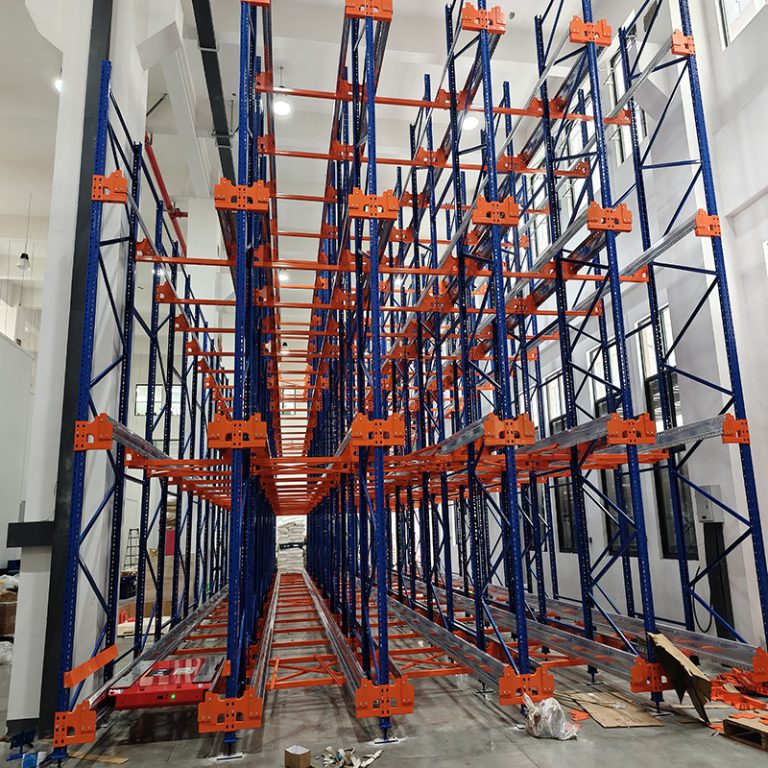


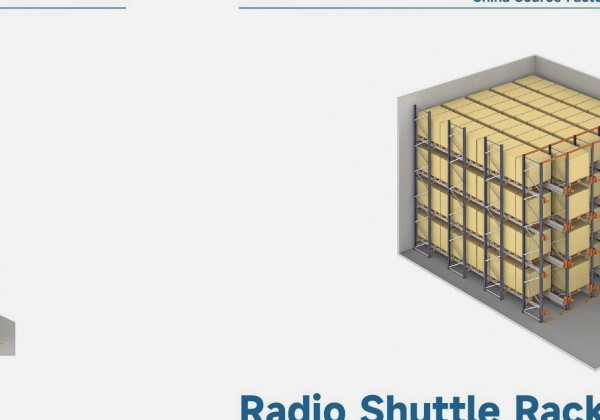
Textile chemical storage, bulk cotton yarn warehouses, and export distribution facilities frequently handle massive volumes of palletized goods with identical stock keeping units. When managing hundreds of pallets of uniform cotton yarn or finished terry towels, standard selective racking wastes enormous amounts of square footage on access aisles. At the same time, conventional drive in racking requires forklifts to enter deep channels slowly, which increases cycle times and raises the likelihood of rack collisions. Installing a semi automated Radio Shuttle Racking System eliminates these drawbacks by deploying intelligent robotic shuttles inside deep storage channels.
Operating Mechanics of Self Powered Radio Shuttles
The core innovation of the Suhong Radio Shuttle Racking System is the low profile, battery powered robotic carriage that travels independently on specialized galvanized steel rails running through each storage tunnel. A standard counterbalanced or reach forklift simply places the radio shuttle into the entrance of the desired channel. Next, the forklift deposits a loaded pallet onto the shuttle platform.
The forklift operator uses an industrial handheld radio remote controller or a vehicle mounted tablet to instruct the shuttle. Using optical distance sensors and magnetic track encoders, the shuttle lifts the pallet smoothly on hydraulic scissors, accelerates down the lane at speeds up to zero point eight meters per second, and lowers the pallet gently in the next available storage location. The shuttle then returns automatically to the lane entrance, ready to receive the subsequent pallet without requiring the forklift driver to enter the rack structure at all.
Channel Depth Capabilities and Space Utilization Gains
Conventional forklift access limits drive in racking lanes to five or six pallets in depth due to driver visibility restrictions and ventilation issues. In contrast, radio shuttle channels can extend twenty, thirty, or even forty pallet positions deep without difficulty. By eliminating intermediate forklift driving aisles, radio shuttle racking increases warehouse storage density by up to eighty percent compared to standard selective racking.
Facilities can configure shuttle systems for both Last In First Out inventory flow and First In First Out inventory flow. In First In First Out layouts, loading takes place from one aisle face while unloading occurs from the opposite aisle face. This arrangement is particularly valuable for time sensitive dye auxiliaries, seasonal fashion stock, and raw yarn lots that must be rotated systematically to prevent batch aging.
Lithium Battery Power and Rapid Recharging Protocols
Modern radio shuttles utilize high capacity lithium iron phosphate battery packs engineered for industrial longevity. These lightweight batteries deliver eight to ten hours of continuous heavy lifting under full load conditions. The intelligent battery management system monitors cell voltage and operating temperatures constantly, preventing overcharging and deep discharge degradation.
When battery levels decline toward fifteen percent, the shuttle sounds an audible chime and navigates automatically to the channel entrance. The forklift driver extracts the quick change battery module using a built in handle and inserts a freshly charged pack in less than thirty seconds. For facilities operating uninterrupted twenty four hour schedules across peak textile seasons, three battery packs per shuttle provide indefinite, round the clock material handling capability.
For complete technical specifications, shuttle lifting capacities, and rail channel profiles, consult the official Radio Shuttle Racking System catalog entry for customized warehouse layout engineering.
Preventive Maintenance Schedules for Shuttle Vehicles and Rails
Sustaining peak automated performance requires structured preventive upkeep for both the mobile robotic vehicles and the static rack infrastructure:
- Daily optical sensor and reflector wipe down: Clean front and rear photoelectric safety eyes and laser positioning sensors with clean dry optical cloths to clear airborne textile lint.
- Daily battery terminal inspection: Examine gold plated battery power contacts on shuttles and charging stations to confirm clean seating and zero carbon discoloration.
- Weekly channel track debris clearance: Inspect guide rails inside active storage lanes using long handled magnetic sweepers to remove loose pallet splinters, nails, and packaging bands.
- Monthly hydraulic lift scissor inspection: Check hydraulic fluid levels, hose fittings, and scissor pivot bushings, verifying smooth vertical lifting without pressure bleed.
- Quarterly drive wheel and polyurethane tire checks: Inspect polyurethane drive wheels and guide rollers for tread wear or flat spots, replacing worn rollers to maintain smooth track travel.
Safety Systems and Obstacle Detection
Safety is built into every aspect of radio shuttle operation. Each shuttle features front and rear ultrasonic distance sensors and mechanical safety bumper edges. If a fallen carton, loose pallet runner, or foreign object enters the travel lane while the shuttle is moving, the obstacle sensors detect the obstruction and engage electromagnetic fail safe brakes within fractions of a second.
Emergency stop pushbuttons located on the shuttle chassis and remote controller allow operators to freeze all movement instantly. Because forklift trucks remain in the main exterior aisles rather than driving inside narrow steel tunnels, rack upright collision risks drop by more than ninety percent. This structural protection drastically reduces maintenance repair budgets and safeguards warehouse personnel from catastrophic rack collapse hazards.
Integration with Warehouse Management Software
Advanced radio shuttle systems communicate directly with central warehouse management software through industrial Wi Fi or wireless mesh networks. When warehouse management software issues an order to dispatch a batch of dyed yarn, the system directs specific shuttles to retrieve designated pallet lots sequentially. Pallet tracking coordinates update automatically in real time, providing complete inventory visibility across high volume manufacturing operations.
Automatic channel reorganization routines can be executed overnight during off peak hours. Shuttles consolidate fragmented pallet lots, shifting remaining pallets toward the front discharge face so that morning shipping crews can begin loading export containers without initial retrieval delays. This intelligent material handling elevates textile mill operations to world class automation standards.
Cold Storage and Sub Zero Temperature Engineering
In addition to standard ambient temperature textile warehouses, the Suhong Radio Shuttle Racking System excels in temperature controlled cold storage facilities where raw synthetic filaments or specialized heat sensitive bonding adhesives are preserved. Standard forklifts operating in sub zero rooms suffer rapid battery drainage, hydraulic seal stiffening, and tire condensation slippage. Furthermore, driver comfort and safety deteriorate rapidly in freezing temperatures, necessitating frequent heated rest breaks.
The radio shuttle vehicle features specialized low temperature lithium battery cells equipped with internal thermal heating blankets and cold rated synthetic lubricants that maintain fluid viscosity down to minus twenty five degrees Celsius. The robotic shuttle works tirelessly inside the freezing storage tunnels while the forklift operator remains seated inside a heated forklift cabin in the main access corridor. This thermal separation prevents warm room air from entering cold storage tunnels, slashing refrigeration energy consumption by up to forty percent.
Emergency Recovery Procedures for Stranded Vehicles
While robotic shuttles are engineered for high mechanical reliability, industrial facilities must prepare for unexpected operational contingencies such as an uncharged battery left unattended inside a deep storage channel. The Suhong system includes a dedicated manual recovery kit consisting of an auxiliary recovery sled and high tensile recovery cable.
The forklift driver attaches the lightweight recovery sled to the forklift forks, introduces it into the channel, and engages the mechanical docking latch on the rear chassis of the stranded shuttle. The forklift driver then reverses slowly down the aisle, safely towing the shuttle back to the channel entrance without requiring any personnel to enter the overhead rack channels. Technicians replace the battery pack, run an automated diagnostic self test, and return the shuttle to active inventory duties in minutes.
Economic Calculations and Operational Payback
The capital expenditure for radio shuttle systems is quickly recovered through multiple operational savings. Labor productivity doubles because forklift operators complete pallet cycles in half the time required by traditional drive in systems. Reduced forklift fleet size translates into lower equipment lease costs, reduced battery charging infrastructure, and smaller equipment maintenance bills.
Moreover, the dramatic gain in cubic storage density frequently allows companies to consolidate offsite rented warehouse facilities back into their primary manufacturing footprint, eliminating recurring rent, external transportation costs, and double handling expenses. In typical five thousand pallet textile operations, complete capital payback occurs within eighteen to twenty four months.