
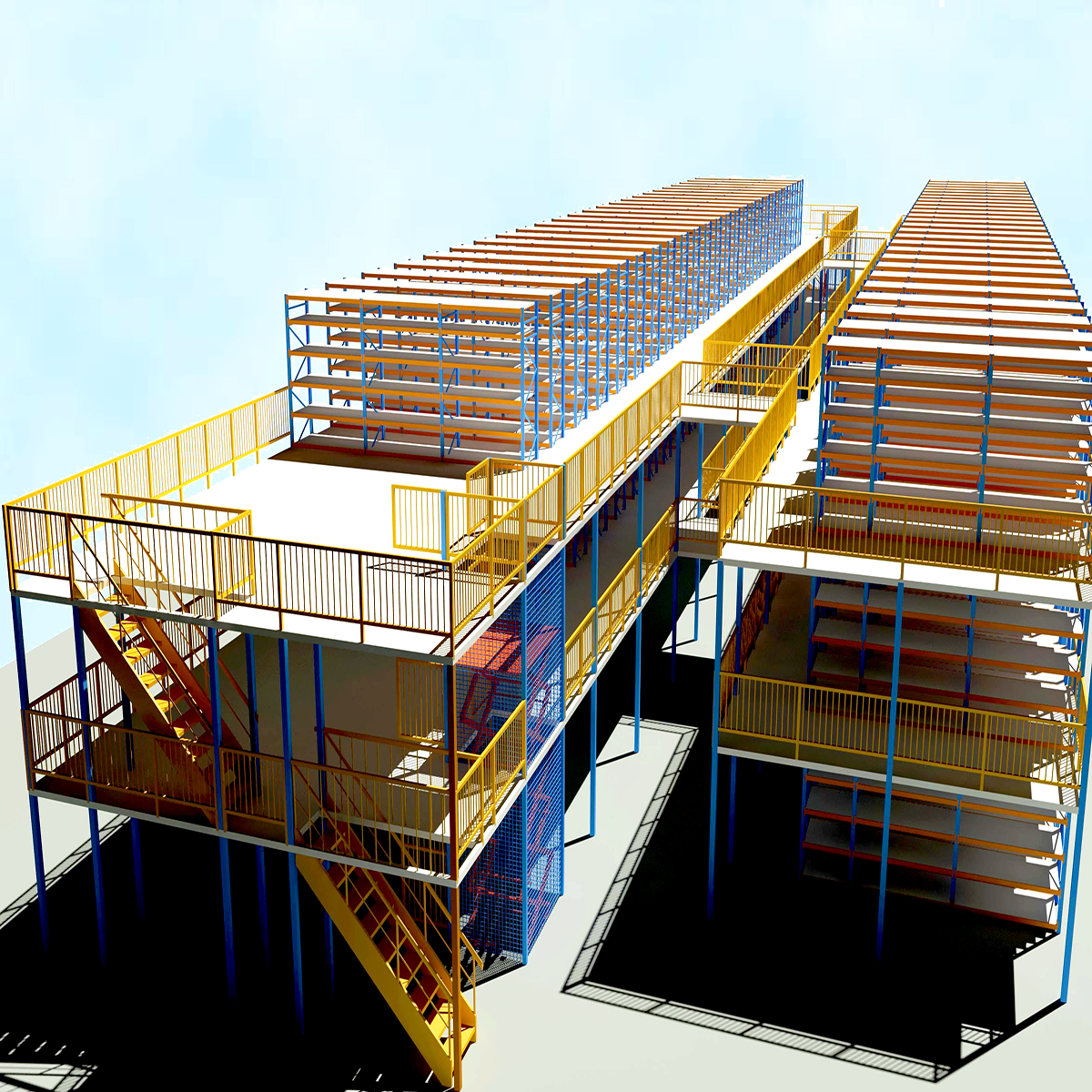
Industrial real estate and warehouse construction costs have risen dramatically across major manufacturing hubs. Textile and apparel companies that experience rapid business growth often discover that their existing warehouse floor space is completely exhausted, forcing executives to consider expensive commercial land purchases or offsite warehouse leasing. However, examining the vertical dimensions of modern factory buildings reveals that the upper two thirds of warehouse height often remains completely empty. Installing a Multi Tier Mezzanine Racking System unlocks this unused overhead space, effectively doubling or tripling floor area without costly civil construction.
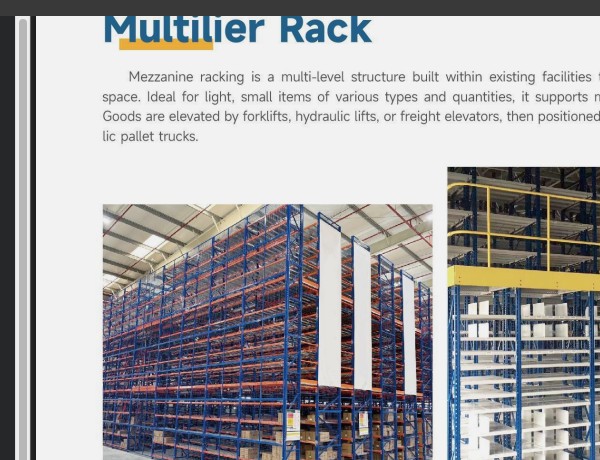
Engineering Principles of Rack Supported Mezzanines
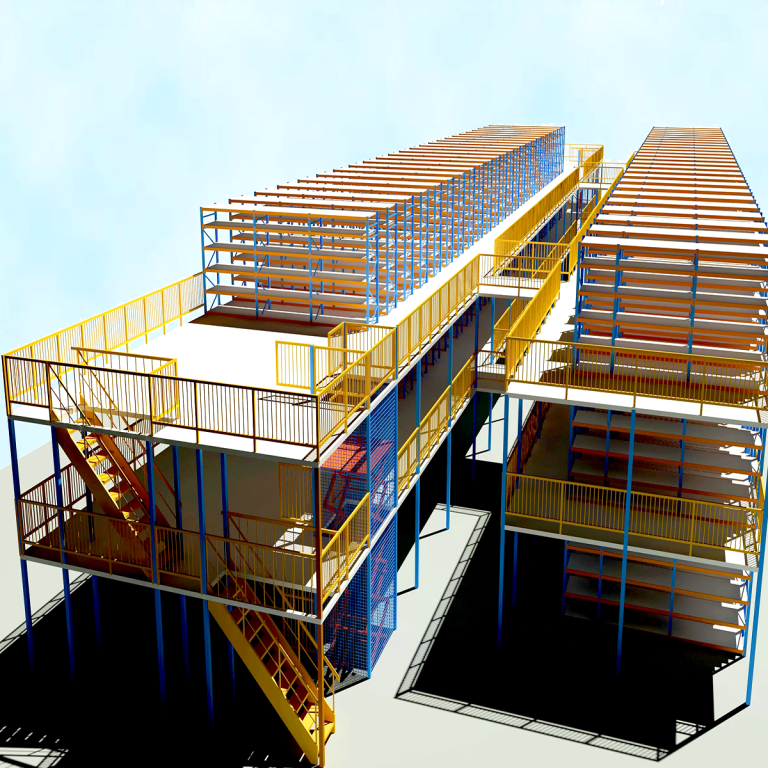
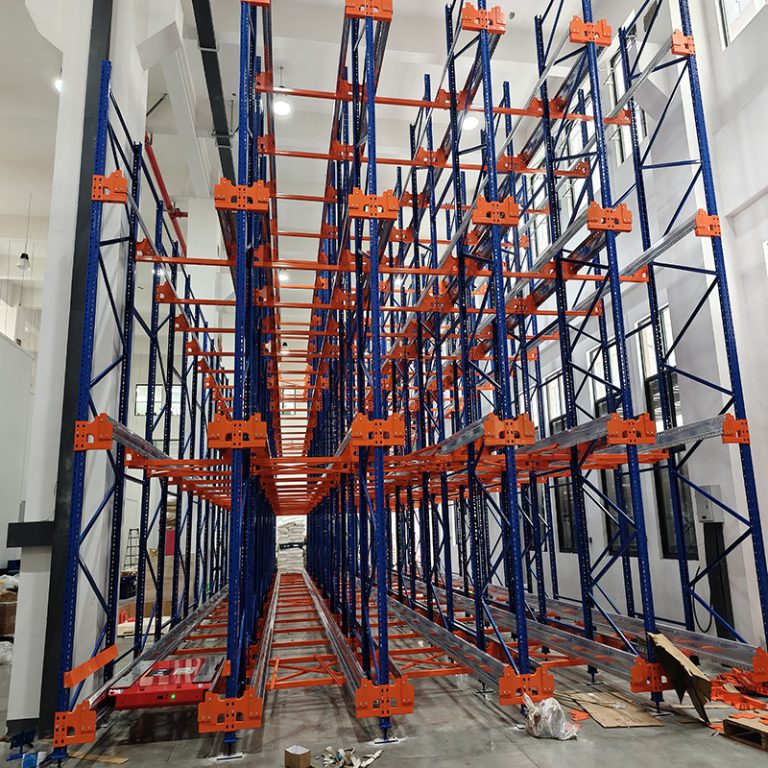
Unlike standalone structural steel mezzanines that rely on massive steel I beams and thick concrete columns, the Suhong Multi Tier Mezzanine Racking System utilizes heavy duty storage racking uprights as the primary load bearing support framework. This dual purpose design delivers outstanding structural rigidity and material efficiency. The shelving units below provide dense, organized storage for boxes and fabric accessories while simultaneously carrying the upper floor walkways, stairs, and intermediate storage tiers.
The system can be designed with two, three, or even four distinct vertical operating levels, depending on building clear height and ceiling clearance limits. Floor decking options include perforated galvanized steel grating, cold rolled steel checker plates, and high density tongue and groove resin wood panels. Perforated steel grating allows natural overhead illumination to filter down through lower levels and enables fire sprinkler water to penetrate seamlessly during emergency events, fulfilling municipal fire safety regulations.
Structural Load Ratings and Floor Safety Engineering
Designing a multi tier industrial mezzanine requires strict structural calculations regarding distributed static dead loads, dynamic moving loads, and concentrated forklift weights. Mezzanine floor decks are engineered to support live working loads ranging from three hundred kilograms per square meter up to one thousand kilograms per square meter, easily accommodating heavy carton inventory, hand pallet trucks, and order picking carts.
Heavy duty staircases with non slip diamond treads, continuous safety handrails, and four inch kickplates provide safe pedestrian access between levels. At the perimeter of upper walkways, heavy duty pallet drop gates allow ground floor forklift operators to hoist full pallets directly onto upper tiers. These self closing swinging or sliding gates protect warehouse staff from falling hazards while facilitating rapid stock replenishment on elevated walkways.
Dedicated Applications Across Textile and Apparel Mills
Textile mills handle a diverse spectrum of items with wildly differing physical dimensions. Heavy raw fabric rolls and bulk yarn pallets are best stored on ground floor selective racks where large forklifts operate safely. Meanwhile, high value apparel accessories, sewing threads, zippers, buttons, woven care labels, and polybags are small, lightweight, and picked in small piece quantities.
A multi tier mezzanine provides the ideal home for these small component inventories. Upper levels can be organized into hundreds of tidy bin locations where warehouse clerks walk short picking routes with rolling pushcarts. By separating small component order picking on upper levels from heavy forklift operations on the ground floor, factory managers eliminate dangerous pedestrian vehicle collisions and establish a calm, organized fulfillment environment.
To evaluate structural load options, floor deck materials, and custom staircase arrangements for your facility, check out the Multi Tier Mezzanine Racking product catalog page for detailed dimensions and engineering consultations.
Scheduled Safety Audits and Preventive Structural Care
Ensuring permanent structural integrity across elevated mezzanine platforms requires routine inspections by qualified facility maintenance personnel:
- Daily walkway and staircase cleanliness checks: Confirm that all elevated walkway corridors, stair treads, and pallet drop staging areas remain free of loose packing tape, pallet wrap, and tripping debris.
- Weekly safety gate and handrail audits: Test all perimeter pallet drop gates and handrail sections to confirm positive locking mechanisms and rigid structural anchoring.
- Monthly beam connector safety lock verification: Inspect locking pins on every horizontal support beam beneath mezzanine decks to confirm zero dislodgement from vibration.
- Quarterly floor decking deflection checks: Examine floor grating and wooden decking under peak storage loads to ensure surface deflection stays well within acceptable engineering limits.
- Biannual foundation bolt torque audits: Verify baseplate anchor bolt torque on all supporting vertical uprights, especially near high traffic ground floor forklift passageways.
Fire Safety Compliance and Environmental Integration
Building inspectors and industrial fire marshals require stringent safety safeguards before certifying multi tier elevated structures. Perforated steel floor panels provide over fifty percent open area, allowing existing ceiling mounted fire sprinklers to saturate lower storage levels effectively in case of fire. Smoke detectors and emergency exit illumination signs connect directly to integrated conduits along structural mezzanine beams.
Furthermore, energy efficient LED strip lighting mounted beneath upper deck beams illuminates lower aisles with bright, glare free illumination while consuming minimal electrical power. Strategically positioned industrial exhaust fans and ventilation ducts ensure that upper levels maintain comfortable ambient temperatures and fresh airflow for order picking staff during warm summer months.
Vertical Material Lifts and Automated Chute Integration
While stairways provide convenient personnel access between tiers, moving picking bins and packed cartons between levels requires efficient vertical transit. Multi tier mezzanines integrate seamlessly with vertical reciprocating conveyors, continuous spiral chutes, and electric chain hoists. Order pickers on the third level place completed accessory totes onto a spiral gravity chute, which delivers them smoothly to ground floor packing stations in seconds.
This automated vertical flow removes the need for workers to carry heavy boxes up and down stairs, cutting picking cycle times in half while eliminating slips and falls. Freight lifts positioned adjacent to pallet gates allow replenishment crews to transfer full skid loads of carton stock to upper aisles without relying on dedicated forklift operators throughout the shift.
Warehouse Management System Integration and Barcode Labeling
Maximizing fulfillment velocity across multi tier platforms requires systematic digital location management. Every upright column, shelf beam, and modular storage bin is assigned a structured alphanumeric location identifier indicating building zone, mezzanine level, aisle number, shelf bay, and vertical shelf tier. Handheld wireless barcode scanners guide pickers directly to the exact shelf coordinates along optimized walking routes.
When stock clerks replenish trim inventories or order pickers retrieve sewing thread boxes, instant barcode confirmation verifies that the correct item and color lot was selected. This digital confirmation eliminates shipping errors and enables automated reordering before critical sewing trims run out, ensuring uninterrupted garment production across all sewing lines.
Acoustic Dampening and Vibration Isolation
In large industrial facilities where heavy weaving looms, spinning frames, or rotary compressors operate nearby, continuous vibrations can transfer into warehouse structures. Rack supported mezzanines feature elastomeric isolation pads installed beneath upright footplates, dissipating harmonic ground vibrations before they reach elevated walking surfaces.
Additionally, choosing resin bonded composite wood decking or rubber underlaid steel decking significantly dampens footstep impact noise and rolling cart clatter. This acoustic dampening creates a pleasant, focused working environment on upper tiers, allowing stock counting clerks and inventory inspectors to complete demanding documentation tasks without fatigue.
Economic Advantages Over Building Expansion
The financial case for installing rack supported multi tier mezzanines is overwhelmingly compelling when compared to conventional civil building expansion. Building a new warehouse brick by brick requires expensive land acquisition, lengthy architectural permitting, costly foundation pouring, and months of disruptive civil construction. In contrast, a modular mezzanine racking system installs inside existing facility walls in a fraction of the time.
Because mezzanine racking is classified as demountable industrial equipment rather than permanent civil construction, companies benefit from favorable equipment depreciation tax schedules. If a manufacturing firm later relocates to a larger facility, the modular mezzanine can be dismantled, transported, and reassembled at the new site, preserving initial capital investment and delivering long term financial flexibility.