
Industrial textile production relies entirely on consistency, speed, and precision. Margins shrink exponentially when machines fail. To maintain profitability, textile plant operators are upgrading mechanical lines with intelligent programmable logic controllers and synchronized inverter drives. This transition from manual oversight to automated precision is redefining baseline quality standards across global manufacturing floors. Facilities that embrace deep-level automation shield themselves against the volatility of labor shortages and raw material costs. Legacy systems rely heavily on visual inspections and manual tensioning. These outdated methods inherently introduce human error into the production cycle. Modern manufacturing demands rigorous sensor-based validation, where localized sensors detect tension anomalies and adjust blade speeds in real-time. By eliminating guesswork, facility managers secure stable continuous operations and enforce strict dimensional tolerances across millions of production cycles. The physical limitations of operators no longer govern the speed of the output.
The focus is no longer just on keeping machines running. Plant managers must optimize every single cut and stitch for maximum yield. Industry engineers are actively analyzing How Smart Automation is Transforming Towel Manufacturing in 2026, recognizing that digital feedback loops directly dictate profit margins. Intelligent Human-Machine Interface (HMI) systems process localized data instantly, allowing operators to diagnose bottlenecks before they escalate into critical mechanical failures. Data is the new primary utility on the factory floor, driving decisions that keep production moving. Facility operators face severe real-world complications when relying on outdated machinery. The cost of unplanned downtime drastically outweighs the initial capital investment required to modernize equipment. Mechanical degradation in legacy sewing heads causes skipped stitches, uneven thread tension, and erratic hemming. This directly results in unacceptably high rejection rates at quality control checkpoints. When a continuous slitting machine falls out of alignment without an automated diagnostic system, the true cost is not merely the replacement part.
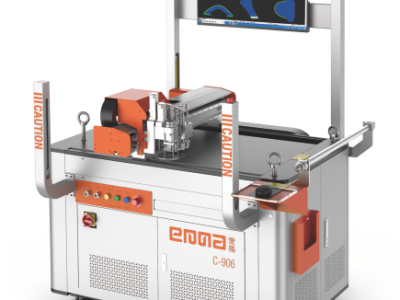
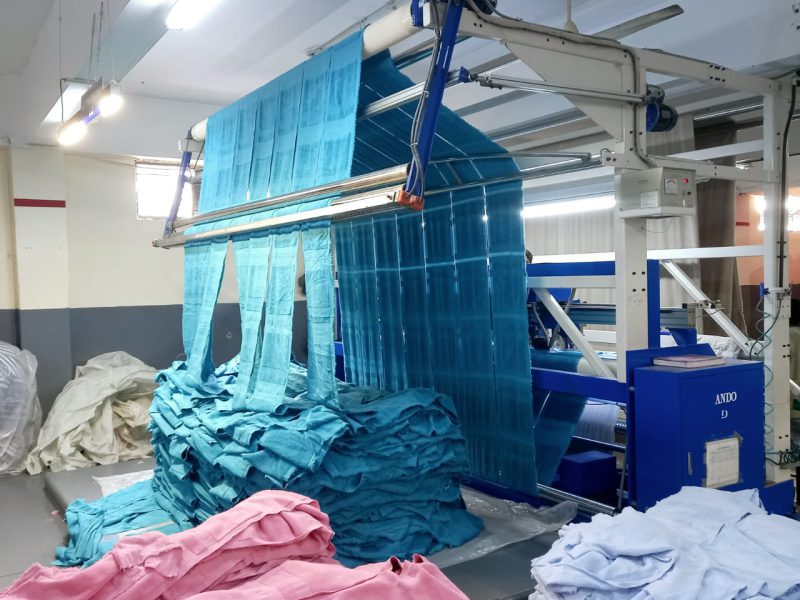
The real financial bleed comes from halted production lines, wasted raw cotton, and breached shipping contracts. Manual interventions and analog calibrations create persistent production bottlenecks that continuously erode operating margins. To eliminate these mechanical limitations, facilities are upgrading to advanced towel automation machinery engineered for heavy-duty, high-volume environments. Modern Bando and Alpha auto-length machines utilize synchronized variable frequency drives to maintain precise control across continuous operations. By integrating intelligent length slitting and auto-cross cutting capabilities, manufacturers routinely achieve sustained production speeds of up to 20 meters per minute while maintaining a strict standard of 8 stitches per inch. This automated precision stabilizes the production floor, effectively neutralizing the physical wear and tear that disables older, strictly mechanical equipment.
Synchronizing PLC and HMI for Floor-Level Control
Advanced textile machinery relies on the seamless integration of Programmable Logic Controllers (PLC) and highly responsive HMI touch panels. Operators command entire production lines through centralized, intuitive interfaces. This permanently eliminates the need for manual dial adjustments and inconsistent analog calibrations. The PLC acts as the central nervous system of the manufacturing cell. It translates operator commands into precise electrical signals that govern individual motor speeds, blade engagement timing, and pneumatic pressure. Real-time diagnostic overlays allow technicians to identify minor voltage drops or synchronization errors instantly. Immediate data access prevents minor mechanical misalignments from cascading into catastrophic equipment failures, ensuring the line stays active.
Precision Slitting and Automated Length Measurement
Accurate slitting defines the structural integrity and aesthetic value of the final textile product. Traditional mechanical slitting mechanisms drift over time due to operational vibration, causing width variations that ruin entire batches. Automated length slitting machines solve this by utilizing precision optical sensors to continuously measure and adjust fabric feed rates. If material tension increases, the synchronized inverter drives instantly compensate to prevent fabric stretching or warp distortion. This active tension management guarantees uniform towel widths across continuous, high-volume production runs. Minimal fabric waste translates directly into maximized material utilization and higher profit margins per batch.
High-Speed Hemming: The Mechanics of Japanese Sewing Heads
High-quality hemming requires absolute mechanical synchronization. High-speed operations generate intense internal friction and thermal buildup, which typically degrade standard mechanical components rapidly. Modern automated hemming machines bypass this limitation by utilizing robust Japanese sewing heads, engineered specifically to endure extreme continuous loads. Operating securely at 20 meters per minute requires complex inverter synchronization to ensure the needle penetrates the dense fabric precisely without lateral deflection. Maintaining 8 stitches per inch at these immense speeds guarantees long-term durability for the end user and structural consistency for the manufacturer. Quality control is effectively hardcoded into the machine’s fundamental operational parameters.
Managing Heat and Friction in Heavy-Duty Processing
Industrial textile manufacturing generates significant thermal output. Continuous operation creates friction, which accelerates mechanical degradation if not proactively managed. Integrating industrial cooling systems and heavy-duty heat exchangers directly into the manufacturing environment stabilizes ambient floor temperatures. Furthermore, post-sewing finishing requires exact environmental controls. High-capacity Relax Dryers and continuous tumblers optimize moisture removal without compromising the fabric’s engineered dimensional stability. Energy-efficient, 4-pass dryer designs ensure consistent, deep-penetrating drying across the entire material width. Controlled thermal management protects delicate textile fibers from scorching and shields the sensitive electronic components housed within the PLC cabinets from overheating.
Enhanced Productivity and Process Optimization
Investing in smart machinery produces immediate, measurable improvements across all vital operational metrics. Upgraded facilities experience drastic shifts in throughput and resource efficiency.
- Material Utilization: Precision automated cross-cutting algorithms minimize edge waste, routinely yielding substantial material savings across multi-ton production runs. Digital nesting protocols ensure every square inch of fabric is maximized.
- Production Velocity: Operating at sustained speeds of 20 meters per minute exponentially increases daily unit output. Facilities scale their production output without requiring additional labor shifts or physical footprint expansion.
- Defect Reduction: Sensor-validated stitching and automated slitting drastically lower batch rejection rates. Consistent stitch density ensures immediate compliance with strict international quality and export standards.
- Downtime Mitigation: Predictive maintenance capabilities housed within advanced HMI panels drastically reduce unplanned mechanical failures. Technicians swap wear parts before they break, keeping continuous production lines highly active.
Smart Warehousing Logistics Integration
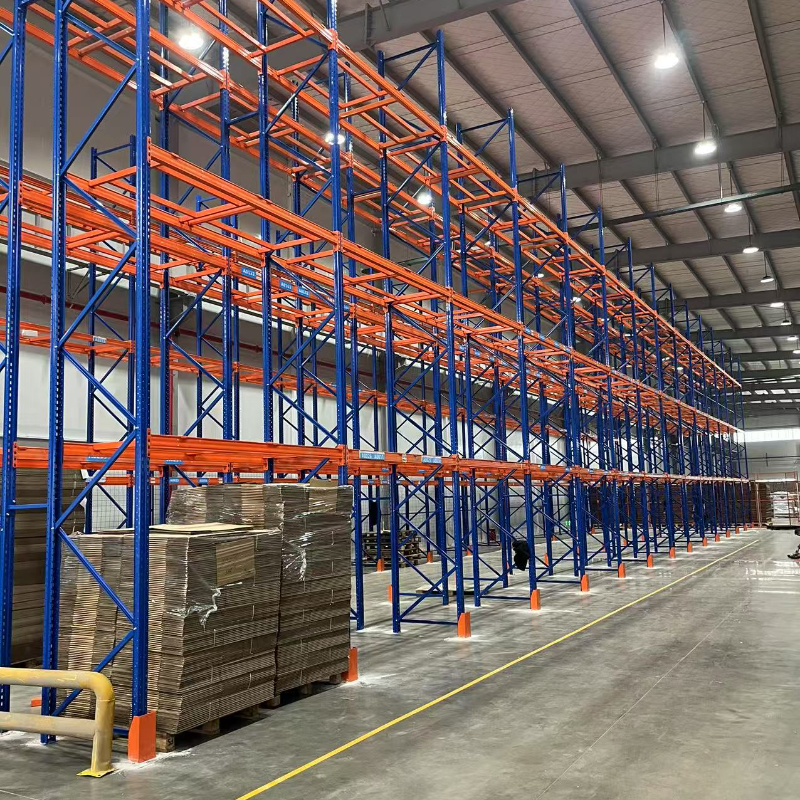
Production speed means nothing if finished goods bottleneck at the warehouse door. Intelligent warehousing solutions perfectly bridge the gap between high-speed automated manufacturing and outbound logistics. Radio shuttle systems, complex pallet racking configurations, and powered conveyor lines automate the storage and retrieval process. Automated material handling dramatically reduces manual forklift traffic on the production floor, decreasing the risk of accidental product damage and workplace injuries. Streamlining post-production logistics ensures that the increased throughput generated by automated hemming and slitting machines efficiently transitions into global shipping channels without delay.
Conclusion
The integration of programmable logic controllers, precision Japanese sewing heads, and synchronized variable frequency drives represents a fundamental necessity for survival in modern industrial textile manufacturing. Reliance on legacy equipment guarantees unacceptably high operational costs, massive raw material waste, and inevitable mechanical failure. By transitioning to intelligent, sensor-driven automation, facility managers permanently eliminate the variables of human error and manual tensioning. High-speed slitting and automated cross-hemming machines hardwire exact dimensional accuracy and uncompromising stitch integrity directly into the production cycle. The resulting quantifiable gains—measured in maximized throughput velocity, minimized unplanned downtime, and superior product consistency—create an undeniable, long-term competitive advantage. Modernizing the production floor with these heavy-duty, automated technologies secures immediate profitability while building a resilient, highly scalable infrastructure fully capable of meeting rigorous global demands.