
Modern textile manufacturing operates on exceptionally tight margins, where even minor inefficiencies can cascade into major financial losses. In high volume production facilities, plant managers consistently face a delicate balancing act: keeping cycle times low while ensuring stitch consistency, fabric integrity, and minimal material waste. Relying on legacy manual or semi automated machinery creates immediate friction. Variable stitch counts, irregular hem widths, unexpected fabric distortion during high speed feeding, and operator fatigue quickly accumulate into costly quality rejections and reduced throughput. Solving these operational hurdles requires shifting focus from basic mechanization toward high precision engineered automation designed specifically for industrial textile handling.
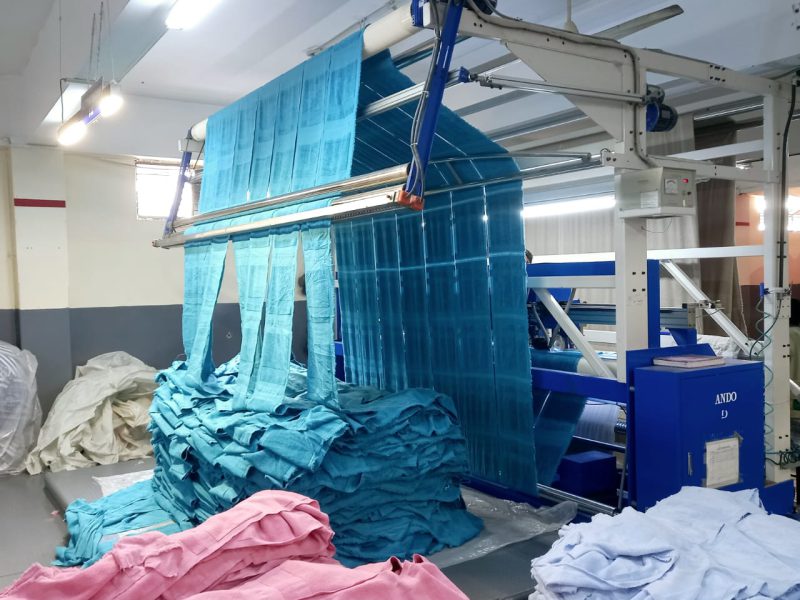
Achieving peak efficiency requires a granular look at the mechanics of material handling. Unlike rigid materials, textiles behave unpredictably under tension. As raw terry fabric passes through high speed slitting, longitudinal sewing, and cross hemming stages, structural elasticity causes edge curling, seam pucker, and dimensional misalignments. When operators manually adjust feeding rates or realign misaligned edges, line speed plummets and human error inevitably creeps into the process. Modern production philosophy prioritizes continuous motion, tensionless fabric transport, and synchronized optical sensing to maintain complete control over raw material from unrolling to final stacking.
To directly resolve these persistent operational bottlenecks, top tier manufacturers are turning to integrated Towel Automation systems developed by specialized engineering leaders like Texserco. By automating the delicate processes of longitudinal cutting, high speed edge folding, cross hemming, and automated stacking into a single continuous workflow, facilities eliminate the manual handling steps where defects most frequently originate. Eliminating touchpoints between processes dramatically improves dimensional uniformity across thousands of cycles while freeing skilled technicians to focus on quality oversight and preventative machine tuning rather than continuous manual feeding.
Mitigating Unplanned Downtime and Mechanical Degradation
In an industrial textile environment, the true cost of machinery is rarely defined by its initial acquisition price; it is defined by its operational reliability over time. Unplanned downtime, driven by mechanical degradation, quickly degrades facility profitability. High speed sewing heads operating at several thousand stitches per minute generate extreme friction, localized thermal expansion, and mechanical vibration. Left unmanaged, these forces accelerate needle deflection, cause timing belt slack, and wear out loopers—leading to skipped stitches, broken threads, and emergency shutdowns.
Advanced equipment designs mitigate mechanical wear through heavy duty frame construction, precision balanced drive shafts, and centralized, continuous loop oiling systems. By continuously circulating cooled, filtered lubricant through high friction kinetic zones, internal component degradation drops significantly. Furthermore, replacing mechanical cam driven linkages with multi axis brushless AC servo motors reduces overall mechanical friction. Servo driven architectures simplify the physical driveline, removing wearable belts, gears, and clutches while allowing operators to electronically adjust stitch lengths, feeding speed, and thread tension curves with absolute precision through intuitive digital interfaces.
Preventative maintenance shifts from reactive troubleshooting to predictive performance monitoring. Modern automated machinery incorporates onboard diagnostics that continuously evaluate motor load spikes, pneumatic pressure drops, and thermal thresholds. Detecting subtle mechanical strain before part failure allows maintenance teams to schedule targeted servicing during planned changeovers, eliminating line stopping failures and maintaining predictable daily throughput target schedules.
Overcoming Precision Bottlenecks in Cutting and Longitudinal Hemming
Longitudinal hemming presents unique mechanical challenges due to the directional elasticity of woven terry fabrics. In traditional operations, feeding heavy loop fabrics through fixed mechanical guides creates inconsistent drag across the left and right edges. This friction imbalance causes spiraling, uneven seam widths, and unequal stretch, forcing downstream operators to trim off excess material—directly eating into material yields.
Advanced automated longitudinal lines solve fabric drag using active dynamic tension management and optical edge detection. High resolution photo sensors track the incoming fabric selvage in real time, sending immediate positional feedback to lateral steering units. These steering systems make micro adjustments to alignment rolls prior to folding, ensuring that the fabric edge enters the folding shoes with zero variance.
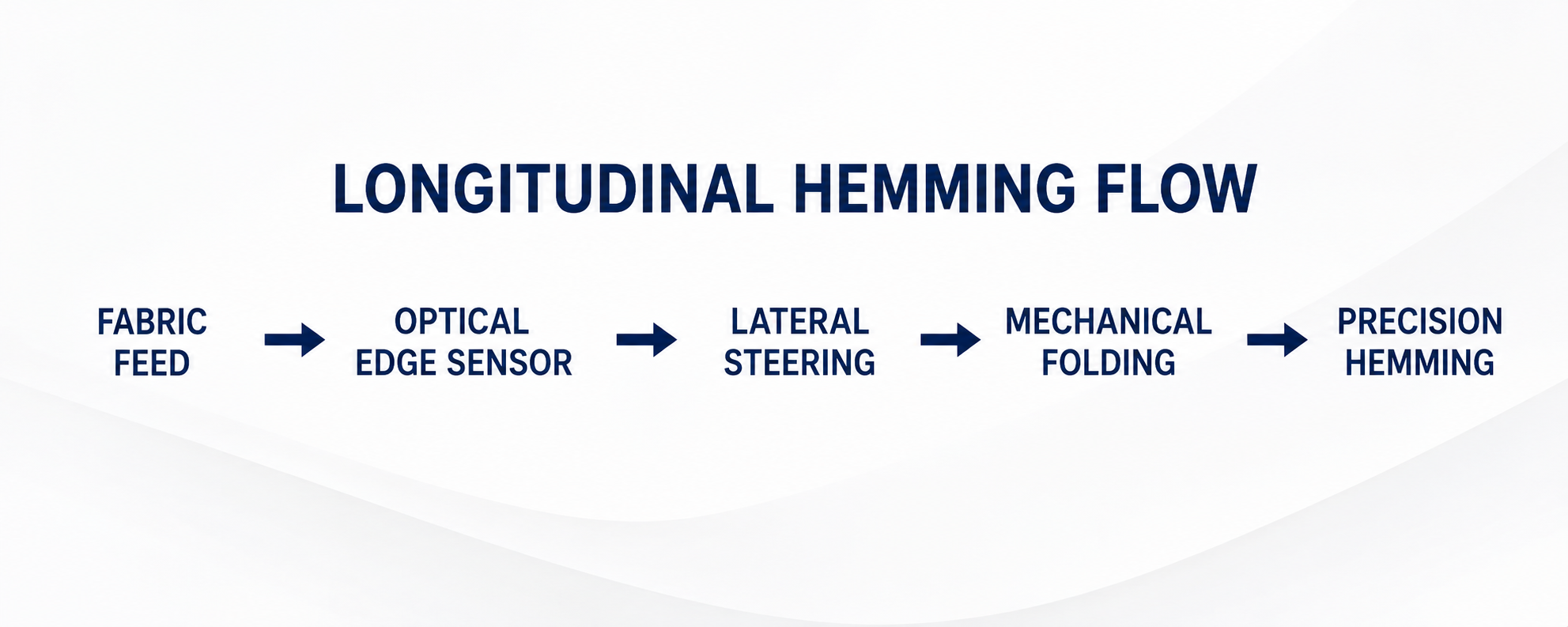
Simultaneously, the physical folding process relies on custom contoured pneumatic or low friction mechanical folding shoes engineered to form clean, uniform single or double folds without stretching the pile loops. Dual feed belt mechanisms support the fabric directly above and below the stitch line, pulling the material smoothly past synchronized high speed sewing heads. This level of synchronized feeding eliminates seam puckering and maintains exact stitch density, ensuring that every meter of processed fabric matches strict dimensional standards regardless of variations in raw fabric density or humidity levels.
Cross Hemming and Automatic Stacking Technologies
While longitudinal processing relies on continuous inline motion, cross hemming requires precise transverse cutting, corner folding, high density sewing, and immediate stacking. Historically, cross hemming represented the single largest labor bottleneck on the towel production floor. Operators had to manually shear individual units from a roll, hand fold thick corners, maneuver bulky material beneath heavy duty sewing feet, and manually fold the finished piece for packaging.
- Precision Transverse Cutting: High speed rotary shears or heated slitting blades cut individual units along exact pile free cross cut borders, maintaining squareness to the millimeter.
- Pneumatic Corner Folding: Specialized pneumatically driven folding flaps execute clean, high density corner folds, tucking raw fabric edges securely inside the seam allowances to prevent fraying during commercial laundering.
- Synchronized Sewing Heads: Heavy duty, high speed sewing units lock down the cross hems with consistent needle penetration, even across multi layer corner bulk.
- Tensionless Conveyance: Fabric pieces travel between cutting, folding, and sewing stations on synchronized vacuum belts, preventing stretch or shift during transport.
- Automated Stacking Units: Finished units pass directly into programmable drop stackers or robotic arms, neatly piling exact counts onto outgoing conveyors.
Process Optimization Data Driven Quality Control and Yield Recovery
In high volume textile production, raw fabric represents up to 60% to 70% of total operational expenditure. Consequently, managing fabric yield through precise waste reduction yields far greater financial returns than simply attempting to cut direct labor rates. Minor cutting offsets, wide hem allowances, and unmonitored drop stitch defects rapidly accumulate into tons of wasted material over an annual production cycle.
Advanced machinery integrates computer vision systems directly into the production flow to monitor fabric quality continuously. Vision platforms scan raw terry rolls for upstream weaving defects, density variations, or oil contamination before the fabric ever reaches the cutting blades. When a defect is detected, the line’s controller dynamically adjusts the cutting sequence to isolate the defective segment with minimal loss, optimizing the yield of usable material from the roll.
Furthermore, automated sensors continuously monitor thread consumption and seam integrity during high speed sewing. If a thread breaks or a needle skips, optical sensors immediately halt the specific sewing head, alerting the operator with exact fault location data. Catching a thread break instantly prevents unhemmed or defective units from moving downstream into finishing and packaging, drastically lowering re work labor and eliminating customer returns due to seam failure.
Energy Efficiency and Ergonomic Integration in Modern Facilities
As global industrial energy tariffs rise, manufacturing plants can no longer afford equipment that wastes electrical or pneumatic power. Older textile machinery relies heavily on central line shafts or continuously running induction motors that draw maximum power regardless of actual load or processing status. Furthermore, inefficient pneumatic systems with unmonitored air leaks drain plant compressor capacity.
- Direct Drive Brushless Servo Motors: Drawing electrical current proportional only to the immediate mechanical torque required, these motors reduce power consumption during idle or low speed phases.
- Regenerative Braking Systems: Multi axis motion controllers capture energy generated during rapid motor deceleration and feed it back into the main DC bus bar to power auxiliary components.
- Smart Pneumatics: Solenoid valve manifolds are located directly adjacent to actuators, minimizing tube run lengths, reducing pressurized air volume requirement, and eliminating lag time in pneumatic actuation.
- Targeted Thermal Management: Heating elements for slitting blades utilize fast response induction or focused thermal cartridges, heating only the active cutting zone rather than radiating waste heat into the working environment.
Beyond energy savings, advanced machinery prioritize plant ergonomics and safety. Low noise belt drives keep operational noise levels well within safe decibel thresholds, reducing physical strain on plant floor personnel. Touchscreen Human Machine Interfaces (HMIs) eliminate repetitive manual adjustment dials, while automated material feeding removes heavy lifting, protecting operators from chronic musculoskeletal injuries and driving a safer, more productive workplace.
ROI and Upgrading Legacy Systems Without Full Line Replacement
Transitioning to advanced automated manufacturing does not always require demolishing existing floor setups or investing millions in complete facility overhauls. A modular upgrading strategy allows plant managers to systematically address their primary operational bottlenecks first, generating fast returns on capital investments that fund subsequent automation phases.
Key Strategic Technology Trends Overview
| Strategic Pillar | Core Technology Focus | Primary Use Cases | Key Operational Impact |
| Agentic AI & Automation | Multi agent collaboration, domain specific models | Workflow automation, IT/Sales operations, complex problem solving | Transition from passive assistants to autonomous business execution |
| Physical AI & Robotics | Spatial computing, physics accurate simulation, embodied AI | Smart factories, autonomous logistics, facility management | Real time adaptation to physical variability with minimal human tuning |
| Pervasive Security & Governance | Preemptive cybersecurity, digital provenance, zero trust | Threat detection, data integrity verification, compliance | Proactive, AI driven defense mechanisms replacing reactive monitoring |
| Sovereign & Distributed Infrastructure | Geopatriation, edge computing, hybrid cloud | Regional data compliance, low latency processing | Mitigated geopolitical risks and reduced central cloud dependency |
For instance, a plant experiencing severe labor constraints in final folding and stacking can integrate standalone automated cross hemming and stacking units at the end of their existing sewing lines. This isolated upgrade yields immediate cycle time reductions and reduces operator overhead on those specific cells. As capital is recovered through reduced scrap rates and increased daily output, managers can sequentially introduce automated feeding, optical alignment guides, and central control software to build a fully integrated, seamless production line over time.
Strategic Path Forward for Textile Facility Managers
The textile manufacturing industry has reached a pivotal juncture. Operating with legacy machinery and high manual touchpoints is no longer sustainable against rising labor costs, volatile material prices, and stringent buyer quality specifications. Achieving long term competitive resilience requires transitioning to automated equipment designed specifically to solve real world textile handling challenges.
Adopting advanced production technology is not merely about keeping pace with modern industry standards—it is about establishing a highly efficient, resilient manufacturing foundation capable of delivering superior product quality at maximum profitability for years to come.
Frequently Asked Questions
How does automated textile equipment maintain consistent hem widths on flexible or stretchy terry fabrics?
Automated equipment utilizes dynamic optical edge tracking sensors combined with synchronized top and bottom drive belts. As the fabric feeds, sensors monitor the exact position of the selvage and make micro adjustments via lateral steering rollers. This ensures the fabric enters the folding shoes under zero lateral tension, preventing stretching or spiraling and producing uniform hem widths along the entire length of the towel.
Can automated towel sewing lines process different towel dimensions and fabric weights without long setup times?
Yes. Modern automated production lines feature digital recipes stored within the central Human Machine Interface (HMI). Operators can switch between different length, width, and pile weight settings with a few touchscreen commands. Servomotors automatically adjust cutter positions, folder gaps, and transport speeds, reducing changeover times from hours to just a few minutes.
What is the primary cause of skipped stitches in high speed automated sewing, and how is it prevented?
Skipped stitches typically result from needle deflection, improper thread tension, or mechanical vibration during high speed operation. Advanced automated machines prevent this by using heavy duty, vibration damped frames, precise needle heat cooling jets, and electronically controlled active thread tensioners that automatically adjust thread delivery based on sewing speed and fabric thickness.
How does automated cross hemming handle thick, multi layer corner folds without breaking needles?
Automated cross hemming units employ pneumatic corner folding flaps that compress the fabric layers tightly before entering the sewing station. High torque servo driven sewing heads deliver maximum needle penetration force even at lower speeds, while synchronized presser foot pressure ensures smooth movement over bulky corner seams without needle deflection or breakage.
What are the key maintenance requirements for maintaining high efficiency on automated towel lines?
Key preventative maintenance tasks include routinely clearing lint build up around optical sensors and drive belts, checking pneumatic pressure stability, inspecting shear blades for sharpness, and monitoring automated lubrication reservoirs. Utilizing onboard predictive diagnostic systems allows maintenance crews to complete these checks proactively during scheduled downtime.
How does automated stacking equipment improve downstream packaging efficiency?
Automated stackers collect finished products directly from the cross hemming line, using precise vacuum or mechanical drop arms to align towel edges perfectly in neat stacks. Eliminating human handling prevents finished goods from becoming wrinkled or soiled, allowing them to move directly into automated poly bagging or banding machines without manual intervention.
Is it necessary to replace an entire production line to benefit from towel automation?
No. Machinery upgrades can be implemented modularly. Facilities can retrofit critical bottleneck stations—such as adding automated longitudinal sewing guides or integrating automated cross hemming and stacking units—to existing lines. This phased approach yields immediate productivity gains and allows facilities to fund future upgrades through incremental ROI.
What thermal slitting methods are used for synthetic or blended towel materials, and why?
For synthetic or blended fibers (such as microfiber terry), automated lines utilize ultrasonic or heated rotary blades. These methods cut and simultaneously seal the raw edge of the fabric, melting the synthetic fibers together to prevent fraying before or during the hemming process. This creates a clean edge that glides smoothly into the hemming folders.
How do modern automated systems contribute to factory energy efficiency?
Modern automated machinery replaces continuous run induction motors with multi axis brushless servo motors that draw power only when actively moving. Additionally, integrated regenerative braking systems capture deceleration energy, while localized solenoid valve manifolds minimize pneumatic air consumption, reducing overall facility kilowatt hour usage per unit produced.
How quickly can a facility expect to achieve Return on Investment (ROI) after installing automated towel production equipment?
While exact timelines depend on facility scale and labor costs, most manufacturers achieve full ROI within 12 to 24 months. Payback is driven by a combination of reduced direct labor costs, lower material scrap rates due to precise vision guided cutting, decreased energy consumption, and increased total output from continuous, high speed line uptime.
Conclusion
Transitioning to advanced, automated equipment is no longer an optional upgrade for textile manufacturers—it is a strategic necessity for long term survival and growth. By addressing root causes of production friction such as fabric drag, mechanical wear, manual handling errors, and material waste, facilities can dramatically increase throughput while protecting their bottom line.