
Scaling a terry towel manufacturing facility introduces operational frictions that smaller mills rarely encounter. When order volumes double, the linear addition of standard machinery and manual labor rapidly degrades profit margins rather than expanding them. Floor managers frequently face severe production bottlenecks caused by inconsistent yarn quality, improper beam tensioning, unpredictable pile heights, and excessive fabric scrap during cutting and finishing. Operating a high-capacity facility requires strict precision over mechanical processes, as minor variances in raw material tension or loom speed compound into massive financial losses over thousands of production hours.
Traditional floor oversight relies heavily on operator experience to spot defects, manage loom settings, and adjust finishing parameters. However, manual monitoring creates wide quality variances between shifts, leading to customer rejections, elevated scrap rates, and delayed shipment schedules. As mills expand their output, relying on human intervention to track warp tension, pile formation, and thermal efficiency becomes a primary vulnerability. The complexity of managing dual-beam weaving mechanisms alongside high-speed longitudinal slitting demands integrated monitoring tools that detect physical errors before they manifest as ruined rolls of fabric.
Transitioning to advanced Towel Automation enables factory leadership to replace guesswork with real-time mechanical precision across every stage of the manufacturing process. By connecting warp tension controls, automated pile height feedback loops, precision slitting lines, and predictive maintenance sensors into a unified production network, growing mills can stabilize output quality while significantly reducing unit costs. Modern manufacturing success hinges on transforming raw floor capacity into an engineered, repeatable workflow capable of meeting strict global buyer specifications.
Controlling Yarn Tension and Warp Breakage in High-Speed Terry Looms
Terry towel production is inherently more volatile than flat fabric weaving due to the simultaneous processing of two distinct warp systems: the ground warp and the pile warp. The ground warp forms the structural base under high tension, while the pile warp feeds slack yarn at precise intervals to create uniform surface loops. On high-speed rapier or air-jet terry looms, small deviations in pile warp let-off mechanisms trigger uneven loop height, yarn snarls, or sudden end-breaks. When a single warp yarn breaks on a 340 cm wide loom, the entire machine halts, reducing overall equipment effectiveness and introducing visible stop marks across the fabric width.
Smarter production systems address warp instability by deploying electronic let-off and take-up mechanisms synchronized with dynamic load-cell sensors. These sensors measure the millinewton tension variations across the entire warp sheet hundreds of times per minute. When yarn friction spikes due to humidity changes in the weaving shed or slight sizing inconsistencies, the automated system adjusts the warp beam brake torque instantly. This active stabilization maintains uniform tension, virtually eliminating warp stops caused by mechanical binding, and ensures that the structural integrity of the ground cloth remains uncompromised across long production runs.
Eliminating micro-stoppages also protects the delicate pile loops from uneven beat-up dynamics. Standard mechanical let-off systems lag behind rapid changes in loom speed during startup cycles, creating bands of compressed or loose loops known as start-up marks. Integrated electronic controls synchronize the movement of the sley and the pile beam during start and stop cycles, maintaining identical pick densities and loop structures from the first meter to the last. This mechanical consistency preserves the physical hand-feel and absorbency profile required by premium hospitality and retail buyers.
Overcoming GSM Fluctuation and Pile Loop Inconsistency
Grams per Square Meter (GSM) is the foundational quality metric in towel manufacturing, directly dictating fabric weight, absorbency, and unit cost. Achieving a consistent target GSM across thousands of linear meters requires precise control over pile height ratio and pick density. In legacy factories, pile height is adjusted manually by altering the reed movement or mechanical pile cams. This manual approach leaves room for drift, causing towels woven at the start of a shift to exhibit a different weight profile than those produced hours later, blowing past raw material cost estimates and violating tight buyer tolerances.
Digital pile formation monitoring replaces manual mechanical gauges with laser-guided or sensor-based height verification right at the fell of the cloth. These systems measure the physical height of the formed loops in real time, comparing the readings against the digital design parameters. If the pile height drifts by even a fraction of a millimeter due to yarn stretch or beam diameter drop, the automated control unit signals the servo-driven reed movement to adjust the beat-up stroke instantly. This closed-loop regulation locks the fabric weight within extremely tight tolerances, protecting profits from hidden yarn over-consumption.
Controlling GSM consistency offers a massive financial advantage across large production volumes. Overfeeding pile yarn by just two percent to avoid under-weight penalties consumes tons of extra raw cotton over a year, severely eroding operating margins. Smart production setups ensure that every square meter of fabric contains the precise density specified in the production sheet, guaranteeing uniform softness and absorbency without wasting costly ring-spun or zero-twist yarns.
Precision Slitting and Hemming to Mitigate Fabric Edge Waste
The finishing department is often where profit margins are quietly eroded through material scrap and rework. Terry fabric woven in wide panels must be split lengthwise and hemmed along both longitudinal and cross edges. Manual or semi-automated cutting stations rely heavily on human visual alignment to follow the thin drop-stitch line woven between towel panels. When an operator misaligns a cut by just a few millimeters, the edge unravels during subsequent washing cycles, or the cross-hemming machine fails to catch the selvage properly, resulting in high scrap rates.
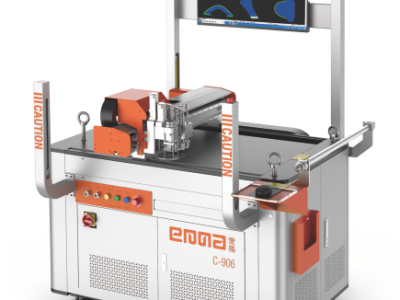
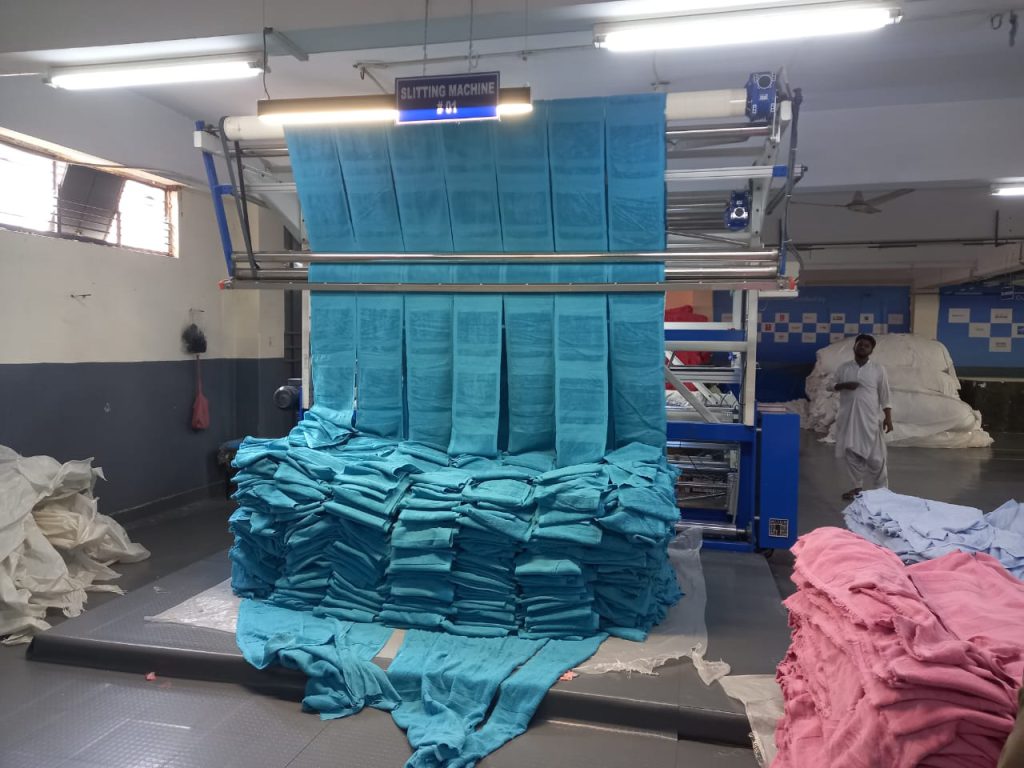
Modern longitudinal slitting machines utilize high-speed optical camera tracking combined with rotary or ultrasonic cutters. These optical systems detect the precise center of the drop-stitch thread at speeds exceeding 40 meters per minute, automatically shifting the cutting head position to follow warp bow or fabric skew. Ultrasonic slitting sealing mechanisms seal the edge synthetic binder yarns simultaneously during cutting, preventing lint unraveling and creating a stable, crisp edge for high-speed automatic cross-hemming lines.
Automated cross-hemming stations integrate continuous sewing heads, automatic label feeding units, and high-precision stacking arms. By eliminating manual handling between cross-cutting and corner-tucking, these systems maintain identical seam densities and fold widths across every towel size. Needle thread sensors continuously monitor tension and thread availability, stopping the unit instantly if a break occurs to prevent unstitched towels from moving down the packing line. This mechanical precision reduces cut-and-sew scrap to negligible levels while drastically lowering unit labor requirements.
Automated Quality Inspection and Optical Lint Removal Systems
Terry fabric is one of the most challenging materials to inspect visually due to its deep three-dimensional texture, dense loop structure, and heavy lint generation. Human visual inspection tables operating under fluorescent lighting catch less than 60 percent of structural defects, such as missing pile loops, oil stains, drop picks, and needle cuts. Defects passed down to the folding and packing department end up shredded, sold as second-quality goods at steep discounts, or returned by international buyers carrying heavy financial penalties.
High-resolution line-scan camera arrays mounted directly on inspection frames or continuous finishing lines solve this visibility problem. These visual systems illuminate the textured terry surface using multi-angle LED light bridges, capturing subtle shadow distortions caused by pulled loops, broken warp ends, or thin density bands. The system categorizes defect coordinates along the roll length in real time, generating digital fabric maps that instruct downstream automatic slitting units to bypass defective segments without halting processing speed.
| Inspection Factor | Manual Visual Inspection | Automated Optical Vision Systems |
| Defect Detection Rate | 50% to 65% average catch rate | 95% to 98% defect identification |
| Processing Speed | 10 to 15 meters per minute | Up to 60 meters per minute |
| Lint & Dust Tolerance | High human visual fatigue | Continuous optical air-sweep cleaning |
| Data Logging | Manual paper logs prone to errors | Automated digital roll mapping & tagging |
| Defect Classification | Subjective operator opinions | Real-time AI algorithmic scoring |
High-volume inspection environments face a major challenge from heavy lint accumulation, which blinds camera lenses and coats light bridges within hours. Advanced optical inspection units incorporate continuous positive-pressure air curtains and localized vacuum extraction hoods around optics. These systems blow away airborne cotton fibers before they settle on sensitive glass lenses, ensuring consistent defect detection during uninterrupted multi-shift operations.
Preventing Unplanned Downtime Through Sensor-Driven Maintenance
Unplanned downtime on high-performance rapier and air-jet terry looms causes severe operational disruption. A single broken main drive shaft, damaged sley mechanism, or burned-out nozzle valve can halt an entire weaving shed lane, throwing off downstream dyeing and slitting schedules. Traditional maintenance strategies rely on fixed interval servicing, which often replaces perfectly good components too early or fails to catch sudden mechanical wear before a catastrophic failure occurs.
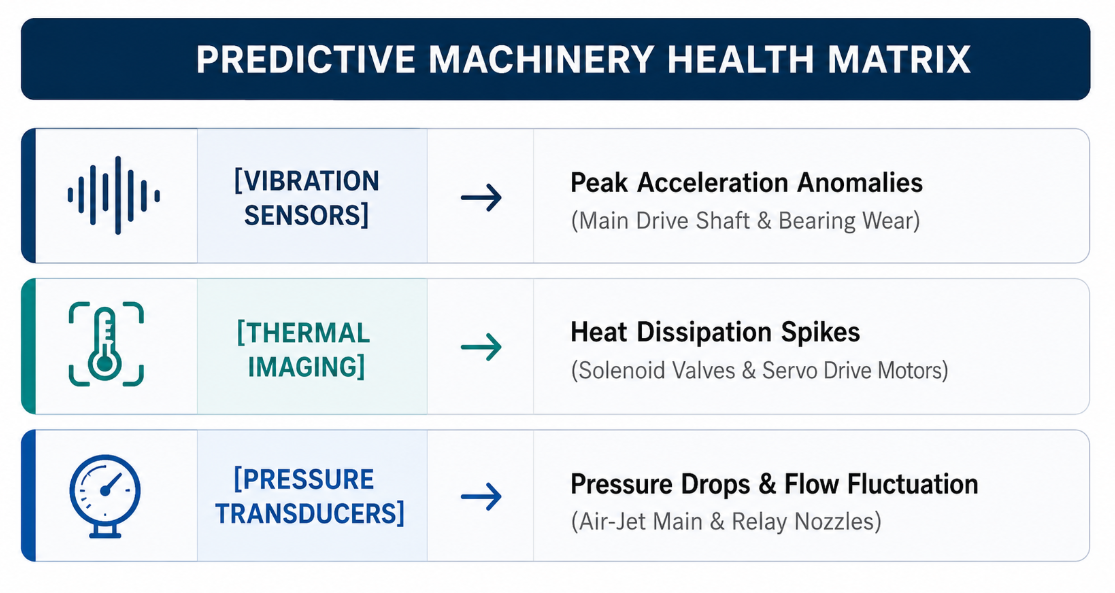
Deploying vibration analysis sensors, thermal monitoring probes, and oil quality transducers directly onto critical loom sub-assemblies shifts maintenance from reactive repair to predictive control. Vibration sensors mounted near the main drive bearings detect micro-cracks and gear pitting long before physical noise or frame shaking becomes noticeable. Pressure transducers on air-jet relay nozzle manifolds flag pressure drops or valve timing slowness, allowing mechanics to replace worn seals during scheduled style changes rather than experiencing unexpected floor breakdowns.
Predictive maintenance tracking extends the operational lifespan of heavy textile machinery while dramatically lowering annual spare parts budgets. Mechanics receive clear digital alerts detailing the specific component, wear severity, and required replacement parts before catastrophic mechanical failure occurs. This targeted maintenance framework keeps machine availability high, ensuring high-yield output across all production shifts.
Optimizing Water and Thermal Energy Consumption in Finishing
Terry towel finishing requires massive volumes of thermal energy and clean water during wet processing stages, including desizing, scouring, bleaching, continuous dyeing, and final tumbling. With rising energy tariffs and stricter industrial effluent regulations globally, inefficient water and heating management directly threatens factory profitability. In legacy wet processing setups, liquor ratios often run at inefficient volumes, wasting vast amounts of steam energy to heat excess water that is subsequently flushed down the drain.
Smart continuous washing and tumbling systems utilize closed-loop liquor ratio controls to maintain precise chemical, water, and heat balances based on raw fabric dry weight. Automated flowmeters regulate fresh water intake dynamically, while heat recovery units capture thermal energy from hot drain effluent to preheat incoming fresh processing water. Continuous monitoring of bath pH, conductivity, and water temperature ensures consistent bleach and dye penetration without running unnecessary rinse cycles, dropping overall water consumption per kilogram of finished fabric by substantial margins.
Modern continuous continuous tumbler drying lines utilize dynamic air-recirculation systems that measure exhaust moisture content continuously. Instead of running dryers on fixed time cycles, exhaust humidity sensors signal the machine drive to modulate conveyor speed and heating burner intensity based on real-time core fabric dryness. This prevents over-drying, which degrades natural cotton absorbency and harshens hand-feel, while cutting gas or steam consumption across the finishing department.
Modernizing Machinery Standards with Advanced Engineering Expertise
Upgrading factory floors with advanced mechanical systems requires specialized equipment, reliable replacement parts, and deep technical integration expertise. Factory leaders looking to upgrade their machinery setup can discover detailed engineering specifications and industrial mill solutions at Texserco, a trusted resource for optimizing textile plant equipment and manufacturing hardware. Modernizing existing machine assets through precision retrofits or introducing high-efficiency production lines allows towel mills to bridge the gap between legacy operations and state-of-the-art production standards.
High-performance weaving, shearing, and slitting setups depend heavily on high-precision mechanical components designed to withstand round-the-clock industrial operations. Upgrading critical sub-assemblies with modernized let-off drives, electronic Jacquard control interfaces, and continuous fabric feeding mechanisms reduces machine wear while increasing production speeds. Selecting rugged hardware engineered specifically for heavy terry weaving ensures long-term operational reliability under continuous floor stress.
Partnering with technical specialists allows manufacturing leadership to streamline installation, calibrate complex sensor arrays, and train floor technicians effectively. Equipping the plant with industrial-grade mechanical solutions stabilizes operational workflows, lowers maintenance frequency, and positions the factory to handle demanding, high-volume production contracts without compromising quality metrics.
Frequently Asked Questions
How does automated pile height adjustment impact overall yarn consumption?
Automated pile height systems continuously monitor loop dimensions during weaving, making micro-adjustments to the reed stroke and pile beam let-off. This prevents pile height drift, which often causes over-consumption of raw pile yarn. Maintaining exact target specifications prevents raw material waste, saving significant cotton tonnage over large production runs.
What causes frequent warp stops in heavy terry weaving, and how is it fixed?
Frequent warp stops are typically caused by uneven beam tension, improper sizing application, or friction spikes in the drop-wire and heddle areas. Smart let-off systems equipped with real-time tension load cells fix this issue by instantly adjusting beam brake torque, keeping warp sheet tension constant during loom speed changes.
Can existing rapier looms be retrofitted with smart automation sensors?
Yes, most modern high-speed rapier looms can be retrofitted with electronic let-off drives, digital tension sensors, optical break detectors, and vibration monitoring kits. Retrofitting updates older mechanical looms to modern operational standards without requiring a complete machinery overhaul.
What is the typical reduction in selvage waste when switching to automated cross-hemming?
Automated cross-hemming systems featuring optical edge tracking cut selvage scrap down to 0.8% to 1.2%, compared to 3.5% to 5.0% on manual setups. Optical tracking cuts precise fabric margins along the drop-stitch line, eliminating wide trimming margins.
How do optical inspection systems handle high-dust and lint environments in terry mills?
Industrial optical inspection systems utilize positive-pressure air curtains combined with targeted vacuum extraction units around camera lenses and light bridges. Continuous air streams blow cotton dust and lint away from optical glass surfaces, maintaining clear vision during uninterrupted multi-shift operations.
Why is ground warp tension separate from pile warp tension in towel production?
Ground warp yarn forms the flat structural backing fabric under high mechanical tension, whereas pile warp yarn must be fed slack at precise intervals to allow the reed to form soft, raised loops. Independent dual-beam electronic controls are necessary to manage these two vastly different tension profiles simultaneously.
How does automated tumbling affect towel absorbency and hand-feel?
Automated tumbling lines use moisture sensors in the exhaust air stream to control temperature, airflow, and conveyor speed dynamically. Processing the fabric until it reaches its natural moisture balance avoids over-drying, which bakes out natural fiber elasticity, maintaining optimal loop volume, softness, and absorbency.
What ROI timeline can a mid-sized towel factory expect from production automation?
Mid-sized terry towel mills typically achieve complete return on investment within 14 to 22 months after installing smart production automation. These savings stem directly from reduced yarn scrap, lower energy consumption per kilogram, lower labor overhead, and fewer product returns.
How does real-time liquor ratio tracking reduce chemical costs in continuous dyeing?
Real-time liquor ratio tracking uses automated flowmeters and weight sensors to adjust water and chemical dosing dynamically based on fabric dry weight. This prevents excess water usage, cutting chemical dye consumption and lowering the thermal energy required to heat processing baths.
What role do automated slitting lines play in preventing edge fraying during finishing?
Automated slitting lines utilize high-precision ultrasonic or hot-knife cutters guided by optical tracking cameras. Ultrasonic cutting seals synthetic warp binder edges instantly as it cuts, creating a clean edge that prevents unraveling during high-speed cross-hemming and washing processes.
Summary
Smarter production systems mark a clear shift from reactive troubleshooting to engineered process stability across every stage of terry towel manufacturing. Modernizing floor operations eliminates the destructive impact of yarn tension swings, GSM drift, cutting waste, and unplanned machine breakdowns. Implementing real-time mechanical monitoring systems turns variable floor factors into manageable, predictable processes that protect operating margins.
Investing in modernized processing setups delivers direct returns through lower yarn consumption, decreased labor requirements, reduced utility expenses, and lower scrap rates. As global buyers demand stricter quality compliance, faster turnarounds, and complete supply chain transparency, mills running connected manufacturing hardware gain a distinct competitive edge over legacy producers.
Building a resilient, high-margin towel manufacturing operation requires aligning physical machinery, real-time sensing technologies, and proactive maintenance protocols. Upgrading floor infrastructure transforms production bottlenecks into smooth, predictable throughput, positioning growing factories for sustainable expansion in a demanding global market.