
Leather cutting is one of the most important stages in the production of footwear, bags, garments, upholstery, and other leather products. The quality of the cutting process directly affects the appearance, fit, material usage, and production time of the finished product. When leather is cut manually, workers have to position patterns carefully, follow complicated shapes, and deal with natural variations in the material. This can make the process slow and can also lead to inconsistent results.
Modern CNC cutting technology offers a more controlled approach. Computer-based pattern handling, automated nesting, precision cutting, and punching can bring greater consistency to production while reducing some of the waste associated with traditional methods. For manufacturers handling large volumes or producing designs with complex shapes, this type of automation can make a noticeable difference.
One advanced solution available through Textile Services Company is designed specifically for automatic leather cutting with nesting technology. According to the product information, the system can reduce leather wastage by up to 10%, while also reducing the need for manual handling and physical space during the cutting process.
Why Leather Cutting Requires Precision
Leather is not a uniform material in the same way that many manufactured fabrics are. Natural variations in thickness, texture, grain, and surface condition can influence how each piece should be positioned and cut. A small mistake during cutting can affect how a component fits during stitching or assembly.
Manual cutting also depends heavily on worker experience. Skilled operators can achieve excellent results, but maintaining the same level of accuracy throughout a long production run can be challenging. Fatigue, rushed production schedules, and repetitive work can all increase the possibility of mistakes.
Precision cutting helps manufacturers create components that are closer to the required pattern dimensions. This consistency is particularly important when multiple pieces need to be joined together. Accurate cutting can make later sewing and assembly easier because operators receive pieces with more predictable dimensions.
How CNC Leather Cutting Works
CNC leather cutting uses digital instructions to control the movement of the cutting system. Instead of relying entirely on physical templates, patterns can be organized digitally and used to guide the cutting process. The operator can prepare the required designs and arrange them according to the shape and condition of the available leather. The machine then follows the programmed cutting paths with controlled movement.
This approach changes the cutting process from a highly manual operation into a more organized digital workflow. Designs can be changed without producing a new physical die, making it easier to handle different product styles and custom shapes. The machine described by Textile Services Company also combines cutting with a punching head, allowing punching operations to be performed as part of the automated process.
The Role of Nesting Technology in Reducing Waste
Material waste is one of the biggest concerns in leather manufacturing because usable leather can represent a significant production cost. Unlike simple rectangular materials, leather pieces often have irregular boundaries. Getting the most useful components from each hide requires careful planning. Nesting technology addresses this challenge by digitally arranging patterns to make better use of the available material. Instead of placing every pattern independently, the software can organize pieces within the available cutting area.
The system offered through Textile Services Company uses nesting technology and states that it can reduce leather wastage by up to 10%. The company’s broader product information describes digital nesting as a way to improve material savings for leather and footwear applications. Even a relatively small percentage of material savings can become meaningful when production volumes are high. Less waste means more of the purchased leather can potentially become usable product components rather than discarded material.
Why Die-Less Cutting Is Useful for Modern Production
Traditional cutting methods may require physical dies for particular shapes. Creating, storing, changing, and maintaining these tools can add time and cost, particularly when a manufacturer produces many different designs. Die-less CNC cutting provides a more flexible alternative. Digital patterns can be changed through the production system without requiring a separate physical die for every new shape.
This is especially useful for manufacturers that regularly introduce new products, seasonal collections, customized designs, or unusual shapes. The machine can cut different digital patterns without the same tooling requirements associated with traditional die-based processes. The Emma system is specifically described as supporting die-less cutting, allowing different shapes and fancy designs to be produced without creating a new die.
Improving Accuracy Across Production Runs
Consistency is just as important as speed in leather production. A product may contain several pieces that must fit together accurately during sewing or assembly. If individual components vary too much in size or shape, workers may need to make adjustments, which can slow production. The CNC system described by Textile Services Company is specified with half-millimeter cutting precision. This level of control is intended to help produce consistently sized pattern pieces for subsequent production stages.
Digital pattern control can also help reduce variations caused by manually tracing or positioning individual templates. Once the required pattern is prepared, the same digital instructions can be used repeatedly, helping maintain consistency between batches.
Faster Production With Automated Cutting
Time is another major factor in manufacturing. Manual cutting can require operators to trace patterns, position templates, cut individual sections, and repeat the process many times throughout the day.
Automation reduces the amount of repetitive manual work involved. According to the product information, one hour of operation with the cutting system can replace approximately four to six hours of hand-cutting work.
The exact productivity improvement will depend on the material, pattern complexity, production layout, operator workflow, and other factors. However, the main advantage remains the same: automated cutting can allow workers to spend less time performing repetitive cutting tasks and more time managing other parts of production.
Emma CNC Leather Cutting Machine and Its Production Benefits
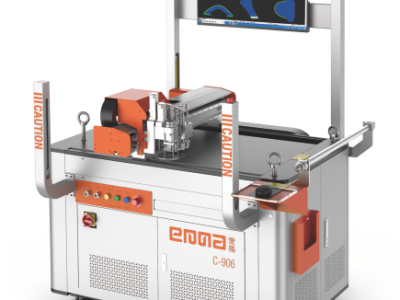
For manufacturers looking to modernize their leather cutting operations, the Emma CNC Leather Cutting Machine brings several useful functions into one automated cutting process. Textile Services Company describes it as an automatic leather cutting system with nesting technology, die-less cutting, CNC precision, digital patterns, and a punching head.
The combination of these features can be particularly useful where production involves multiple designs or frequent pattern changes. Digital nesting can help improve material utilization, while die-less cutting can reduce the need for separate physical tooling.
The machine also uses direct-drive motors and rack-and-pinion movement, with a design focused on reducing the number of moving parts. The manufacturer information states that this approach is intended to simplify maintenance and support smooth cutting movement.
For a production environment, these features are important because cutting equipment needs to provide not only accuracy but also dependable day-to-day operation.
Punching and Cutting in One Workflow
Some leather products require holes or punching patterns in addition to their outer shapes. When these tasks are performed separately, material may need to be moved between different workstations.
The cutting system includes a punching head that can perform punching across the material. This means cutting and punching functions can be incorporated into the same production workflow.
Combining operations can reduce unnecessary handling. It may also make production planning easier because operators can complete more of the required preparation in a single stage.
For products containing repeated holes, attachment points, decorative punching, or other patterned openings, this capability can be particularly useful.
Supporting Complex and Custom Designs
Product development in the leather industry often involves changing shapes and introducing new designs. A production method that depends heavily on fixed tooling may become less convenient when patterns change frequently.
Digital cutting makes design changes easier to manage. New patterns can be prepared electronically and sent to the cutting system without requiring the same physical tooling process for every new shape.
This flexibility can support manufacturers working with fashion products, footwear, bags, and other leather applications where designs may change from one collection or production order to another.
It also makes the process more suitable for smaller production batches. Manufacturers do not necessarily need to rely only on large quantities of one design to justify the cutting setup.
Reducing Manual Handling
Manual cutting requires people to spend considerable time positioning patterns, operating cutting tools, collecting pieces, and repeating the same actions. As production volumes increase, the amount of labor required for these activities can also increase.
Automated cutting reduces some of this repetitive workload. Digital patterns can be organized before production, while the CNC system handles the programmed cutting movements.
Textile Services Company states that its automatic leather cutting solution can save not only leather but also space and people handling.
This does not mean skilled workers become unnecessary. Instead, their role can shift toward machine operation, pattern preparation, quality checking, production planning, and other activities that require judgment and oversight.
Better Workflow Organization
A modern cutting department needs more than a machine that can make accurate cuts. The overall workflow also matters. Digital pattern organization can make it easier to prepare designs, repeat jobs, and coordinate cutting requirements.
When patterns are stored and managed digitally, manufacturers can create a more structured production process. Operators can work from prepared digital instructions instead of repeatedly setting up physical templates.
This can be especially helpful when production includes many different product styles. A more organized digital workflow can reduce setup confusion and make pattern changes easier to manage.
Applications Across Leather Manufacturing
CNC leather cutting technology can be useful across several product categories. The system described by Textile Services Company is positioned for leather and footwear applications and is also suitable for products such as bags and garments.
Footwear Production
Footwear requires multiple accurately shaped components that must fit together during assembly. Consistent cutting can support smoother stitching and assembly while helping maintain the intended shape of each component.
Leather Bags
Bags often include panels, straps, pockets, handles, and decorative elements. Digital cutting can make it easier to manage different shapes and patterns while reducing the need for individual dies.
Leather Garments
Leather garments may involve large panels and detailed pattern pieces. Precision cutting can help maintain consistency across matching sections and support more efficient material planning.
Custom Leather Products
Manufacturers producing customized or limited-run products can benefit from die-less digital cutting because new shapes can be introduced without creating separate physical tooling for each design.
How Automation Can Improve Material Efficiency
Material efficiency is not simply about reducing waste at the cutting table. It also involves planning patterns carefully, controlling production errors, and making better use of every usable section of material.
Nesting technology helps address the first part by arranging digital patterns efficiently. Precision addresses the second by reducing cutting variation. Digital pattern management supports the third by making repeat production more controlled.
When these capabilities work together, manufacturers can create a more efficient cutting workflow. The potential savings become increasingly important as production volume grows.
Maintenance and Machine Design
Industrial cutting equipment needs to remain practical to maintain. Excessive mechanical complexity can make servicing more difficult and may increase the number of components that require attention.
The machine information provided by Textile Services Company states that the system is designed with a minimum number of moving parts. It also uses direct-drive motors and rack-and-pinion systems, which the company says support easier maintenance and effective operation.
Smooth cutting movement is another consideration. A controlled motion system can help reduce unnecessary mechanical stress during operation, supporting stable performance over repeated cutting cycles.
Regular maintenance, proper cleaning, correct operation, and timely inspection remain important for any industrial CNC system.
What Manufacturers Should Consider Before Automating
Although CNC cutting can offer significant advantages, manufacturers should first evaluate their own production requirements. The right system depends on factors such as daily cutting volume, material types, pattern complexity, available floor space, and the level of automation required.
It is also important to consider how digital patterns will be prepared and managed. Employees should understand the software workflow and know how to check patterns before production begins.
Training is another important part of implementation. Operators should understand machine controls, material positioning, cutting procedures, safety practices, and basic troubleshooting.
A well-planned installation is more likely to deliver the expected productivity improvements than simply adding automated equipment to an unorganized workflow.
The Importance of Technical Support
Industrial machinery is a long-term production investment, so support after installation can be just as important as the equipment itself. Operators may require assistance during setup, adjustment, training, and troubleshooting.
Textile Services Company states that it provides an end-to-end approach covering consultation, installation, training, and ongoing support. The company also reports more than two decades of experience and more than 500 machines installed across 15 or more countries.
For manufacturers considering automated cutting, this type of technical support can help make the transition from manual production more manageable.
The Future of Leather Cutting
Leather manufacturing is gradually becoming more dependent on digital production methods. Customers expect consistent quality, manufacturers need better control over costs, and product development often requires greater flexibility.
CNC cutting fits naturally into this changing environment. Digital patterns, automated nesting, precision movement, and integrated punching provide manufacturers with tools to create a more organized production process.
The goal is not simply to make cutting faster. A successful automated system should help improve accuracy, material usage, flexibility, and workflow efficiency at the same time.
As manufacturers continue to adopt digital production methods, automated leather cutting is likely to become an increasingly important part of modern manufacturing facilities.
Conclusion
Leather cutting has a direct influence on production quality, material costs, labor requirements, and overall efficiency. Manual methods can still be useful for certain applications, but high-volume and design-focused manufacturing increasingly benefits from automation.
CNC cutting technology provides a more controlled way to manage digital patterns and produce accurate leather components. Nesting can help reduce material waste, while die-less cutting makes design changes easier. Punching capabilities can combine multiple operations, and precise digital cutting can support consistency throughout production.
The automatic system offered through Textile Services Company brings these capabilities together with nesting technology, half-millimeter precision, direct-drive motors, rack-and-pinion movement, digital patterns, and a punching head. The company states that its system can reduce leather wastage by up to 10% and that one hour of automated cutting can replace approximately four to six hours of hand-cutting.
For leather manufacturers seeking greater efficiency without sacrificing design flexibility, CNC cutting can provide a practical path toward a more accurate, organized, and modern production process.