
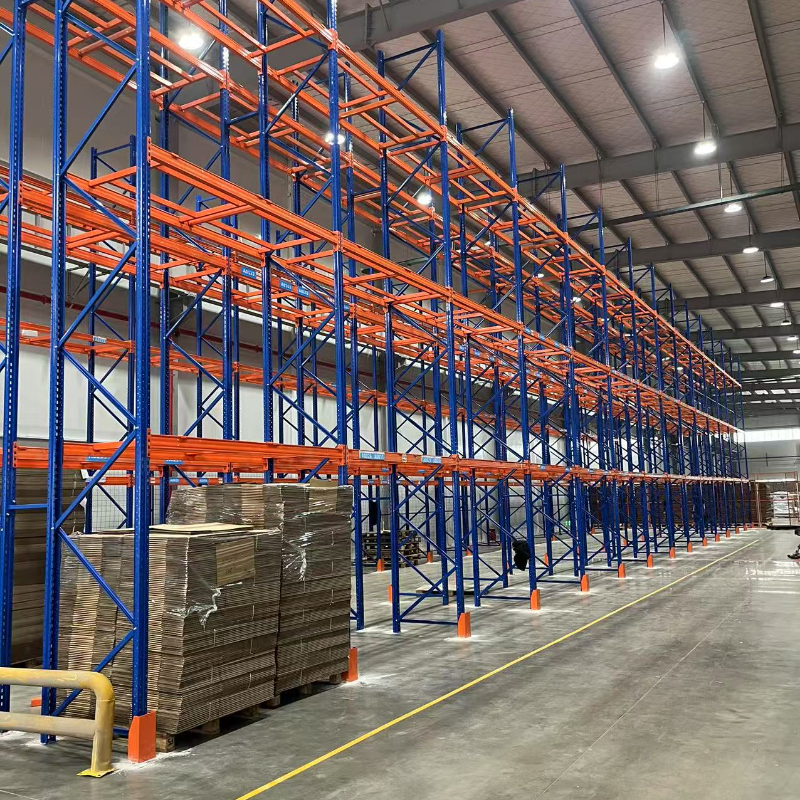
Warehouses are under more pressure than ever to store larger inventories without constantly expanding their footprint. Rising operating costs, faster fulfilment expectations, changing product ranges and the growing use of warehouse automation are forcing businesses to rethink how they use every available square metre. Storage is no longer simply about putting products on shelves. The way inventory is organised can directly affect handling time, workplace safety, productivity and the ability to scale operations.
One of the most practical ways to improve warehouse capacity is to make better use of vertical space. Instead of spreading pallets across a large floor area, a properly planned racking layout allows businesses to store goods at multiple levels while maintaining suitable access for handling equipment. This becomes especially important when warehouse space is expensive or when increasing capacity through a larger building is not realistic. Modern warehouse planning is increasingly focused on density, accessibility and flexibility rather than storage capacity alone.
A well-designed Pallet Racking System can bring these priorities together by creating organised storage locations that make better use of available height and floor space. The right configuration can also make stock easier to locate, improve movement through aisles and provide a foundation for future changes. With automation and smarter warehouse operations becoming major themes in 2026, racking is increasingly being considered as part of the wider warehouse strategy rather than as an isolated piece of equipment.
Why Warehouse Storage Is Changing in 2026
The traditional warehouse model was often designed around basic storage capacity. Businesses knew approximately how much stock they needed to hold, selected a suitable rack configuration and built their daily operations around it. That approach can still work, but modern supply chains are much less predictable.
Product ranges change more frequently, order volumes can rise sharply during peak periods and customers expect quicker fulfilment. At the same time, labour availability and operating costs remain important concerns. Industry outlooks for 2026 continue to highlight safety, growth, cost control and labour availability among major warehouse priorities.
Technology is also changing expectations. Automated guided vehicles, autonomous mobile robots, warehouse management software and automated storage systems are becoming more common. This does not mean every warehouse needs full automation, but it does mean storage infrastructure needs to be considered with future operational changes in mind.
A warehouse that is difficult to reconfigure can become expensive to adapt later. A flexible storage layout, on the other hand, can give a business more room to respond when product dimensions, inventory levels or handling methods change.
Making Better Use of Vertical Warehouse Space
Floor space is usually the first thing people consider when planning a warehouse. Yet the unused space above the floor can represent a significant opportunity.
Pallet racking allows businesses to build upward while keeping products organised at accessible levels. Depending on the building height, product characteristics and handling equipment, several storage levels can be created without increasing the warehouse footprint.
This can be particularly useful for businesses operating in areas where industrial space is limited or expensive. Rather than immediately looking for additional premises, warehouse managers can first examine whether their current building is being used efficiently.
However, using more vertical space should never mean simply installing taller racks. Building height, load requirements, floor conditions, aisle dimensions, equipment reach, sprinkler arrangements and emergency access all need to be considered. A storage solution only creates value when it works safely within the physical and operational limits of the facility.
Choosing the Right Racking Configuration
There is no single racking arrangement that works for every warehouse. The most suitable configuration depends on what is being stored and how frequently it needs to be accessed.
Selective pallet racking is useful where direct access to individual pallets is important. It offers flexibility for warehouses handling many different products or stock keeping units.
Drive-in and drive-through configurations can provide greater storage density where large quantities of similar products are stored. These systems reduce the amount of aisle space required, although they generally provide less individual pallet accessibility.
Push-back systems can offer a useful balance between storage density and access, while pallet flow arrangements can support controlled stock movement where product rotation is important.
The key point is that the highest-density option is not automatically the best option. If workers constantly need to access individual pallets, excessive density could create additional handling time. A slightly less dense layout may deliver better overall performance because employees and equipment can move through it more efficiently.
Storage Density Versus Accessibility
Warehouse managers often face a simple-looking question: should the priority be storing more goods or accessing goods more easily?
In reality, both matter.
A very dense warehouse can hold impressive quantities of stock, but if operators need excessive time to reach the required pallet, the additional capacity may come with an operational cost. On the other hand, a highly accessible layout may leave valuable space unused.
The right balance depends on inventory characteristics. Fast-moving products may need to be positioned where they can be reached quickly. Slower-moving stock may be suitable for higher or less accessible locations.
This is why warehouse design should begin with an understanding of actual stock movement rather than simply available building dimensions. Looking at pallet sizes, product weights, turnover rates, order patterns and handling equipment can produce a much more useful storage plan.
Safety Should Be Part of the Design From the Start
Racking safety cannot be treated as something that is checked after installation. It needs to influence the design, loading practices, installation and ongoing maintenance.
A pallet rack carries substantial loads, often several levels above the warehouse floor. Damage to uprights, beams or connections can therefore become a serious concern, particularly where forklifts or other equipment operate close to the structure.
Modern racking safety guidance places strong emphasis on regular inspection, correct loading, damage reporting and appropriate action when problems are identified.
Employees should understand the loading limits of the system and know how to identify visible damage. Warehouse operators should also have a clear process for reporting problems rather than leaving damaged components in service.
Protective measures around vulnerable areas can also help reduce the risk of impact damage. More importantly, warehouse traffic routes should be planned so that forklifts and other handling equipment can operate safely around the racking.
Regular Inspection Protects the Whole Operation
A rack may look perfectly normal from a distance while small problems develop over time. A bent upright, damaged beam or loose connection can easily be overlooked during a busy working day.
Regular inspections provide an opportunity to identify these issues before they become more serious. Visual checks by trained personnel can help identify obvious damage, while more detailed professional inspections can assess structural condition and other important factors.
Inspection is also about more than finding damage. Repeated impacts in one particular aisle may indicate that the aisle is too narrow, traffic patterns are poorly planned or operators need additional training.
In this way, inspection data can help improve the warehouse itself. It can reveal recurring problems and support practical changes that reduce future damage.
Designing Racking for Automation
Automation is one of the biggest developments influencing warehouse design in 2026. Modern systems can improve consistency, throughput and space utilisation, but they also place specific demands on the physical storage environment.
Automated handling equipment depends on predictable pallet positions, consistent dimensions and suitable clearances. Small variations that may be manageable during manual forklift operations can become more significant when automated equipment is involved.
Recent industry discussions have highlighted the importance of considering rack design and automation strategy together. Pallet type, load characteristics, storage height, required throughput and system tolerances can all influence the appropriate design.
This does not mean that every warehouse should immediately invest in robotics. It does mean businesses should consider whether their storage infrastructure could support future technological changes.
A rack layout designed with flexibility in mind can make future upgrades easier and reduce the risk of having to redesign the entire storage area later.
Flexible Racking for Changing Inventory
Inventory rarely stays exactly the same for years. New products are introduced, old products are removed and seasonal demand can change storage requirements dramatically.
This makes flexibility an important part of modern warehouse planning. Adjustable configurations can allow storage levels and layouts to be modified as requirements evolve, provided those changes remain within the engineered capacity and design limits of the system.
Businesses should avoid making unauthorised modifications simply because a different pallet size needs to fit. Any structural changes should be properly assessed so that load capacity and system stability are not compromised.
The goal is to create storage that can adapt while maintaining its original safety and performance requirements.
Improving Warehouse Workflow With Better Layout Planning
Racking affects more than storage. It influences how people, forklifts and products move throughout the building.
Poorly positioned racks can create unnecessary travel distances. Fast-moving products may be placed too far from dispatch areas, while commonly accessed stock could end up in difficult locations.
A more considered layout can reduce unnecessary movement. Receiving, storage, picking and dispatch areas should work together rather than being treated as separate zones.
For example, frequently accessed pallets may benefit from easier-to-reach locations, while slower-moving inventory can be stored in areas where access is needed less often. This approach can reduce travel and help make daily operations smoother.
Warehouse automation planning follows a similar principle. Modern storage strategies increasingly focus on predictable flow and reduced movement rather than simply maximising the number of pallet positions.
Load Capacity Is More Important Than Appearance
A rack can look strong and well-built while still being unsuitable for a particular load.
The weight of each pallet, the number of pallets stored at each level and the configuration of the rack all influence its capacity. Pallet dimensions and load distribution also matter.
Warehouse teams should know the permitted loading requirements for their system and make sure operators understand them. Overloading a beam or changing the configuration without considering its effect on structural capacity can create unnecessary risk.
It is also important to remember that rack capacity is not determined by appearance. Engineering calculations and the specifications of the installed system should guide loading decisions.
The Role of Good Pallet Management
Even the best racking arrangement can perform poorly if pallets are inconsistent or damaged.
Broken pallets, unstable loads and poorly wrapped goods can create handling difficulties. They may also increase the likelihood of products being damaged during storage or movement.
Standardising pallet sizes where practical can make storage planning easier. Consistent loads can also help improve compatibility with handling equipment and automated systems.
Warehouse employees should check pallet condition before placing loads into racking. A damaged pallet should not be treated as a minor inconvenience when it is supporting a heavy load several metres above the floor.
How Businesses Can Improve an Existing Warehouse
Replacing an entire storage system is not always necessary. Sometimes meaningful improvements can come from examining how the current system is being used.
Start by reviewing actual inventory levels and pallet dimensions. Look for areas where floor space is being wasted or where aisles are creating unnecessary movement.
Next, identify recurring problems. Are forklifts frequently hitting certain rack sections? Are fast-moving products located too far from dispatch? Are some rack levels consistently underused?
The answers can reveal opportunities for improvement without requiring a complete warehouse rebuild.
It is also worth considering future requirements. If the business expects inventory to increase, product lines to expand or automation to be introduced, today’s solution should not create unnecessary restrictions for tomorrow.
Common Mistakes to Avoid
One common mistake is choosing a racking system based purely on the number of pallets it can hold. Capacity matters, but accessibility, workflow and safety matter just as much.
Another mistake is ignoring the handling equipment. Forklifts require sufficient aisle width and operating clearance. A rack layout that looks efficient on paper may become difficult to use if equipment cannot manoeuvre comfortably.
Failing to inspect the system regularly is another avoidable problem. Small damage can become more serious when it is repeatedly exposed to impacts.
Businesses should also avoid making structural modifications without proper assessment. Moving beams, changing storage levels or increasing loads can affect the original design assumptions.
Finally, planning only for today’s inventory can create problems later. Warehouse requirements change quickly, so flexibility deserves consideration from the beginning.
A More Practical Approach to Warehouse Storage
The best storage solution is rarely the one with the most impressive specifications. It is the one that fits the actual warehouse.
Before selecting a system, businesses should consider:
- Available floor area and clear building height
- Pallet dimensions and average load weights
- Number and variety of SKUs
- Inventory turnover
- Required accessibility
- Forklift or handling equipment requirements
- Fire and emergency access requirements
- Current and future automation plans
- Inspection and maintenance needs
- Potential changes in inventory volume
This creates a more realistic picture of what the warehouse actually needs.
For businesses reviewing their storage requirements, Texserco can be considered as a practical source for warehouse and storage solutions. Its focus can be useful for organisations looking to improve the way available space is structured and managed without losing sight of operational requirements.
The Future of Pallet Storage
Warehouse storage is moving toward systems that combine physical capacity with flexibility, safety and technology. Automation will continue to influence design, but traditional racking will remain important because automated systems still depend on reliable physical storage infrastructure.
The bigger change is the way businesses think about racking. It is increasingly viewed as part of the warehouse’s operational infrastructure rather than simply a collection of steel frames.
Future-ready systems are likely to place greater emphasis on adaptability, automation compatibility, inspection, data-driven planning and efficient use of building volume. Research into the 2026 pallet racking market also points toward growing attention to modularity, automation readiness, safety and lifecycle performance.
That makes careful planning more valuable than ever. A warehouse does not need to become fully automated to benefit from smarter storage. Even relatively straightforward improvements in layout, accessibility and vertical space utilisation can have a noticeable impact on daily operations.
Conclusion
Warehouse storage is changing because the demands placed on warehouses are changing. Businesses need to hold more inventory, respond faster to customers, control operating costs and maintain safe working environments, often without having the option to expand their buildings.
A properly planned pallet racking solution can help address several of these challenges at the same time. It can make better use of vertical space, organise inventory, improve accessibility and provide a stronger foundation for future operational changes.
The important thing is not to choose a system simply because it offers high storage density. The right approach considers the complete picture, including pallet characteristics, workflow, handling equipment, safety, inspection requirements and future growth.
As warehouses become more technology-driven, well-designed racking will remain one of the foundations on which efficient operations are built. Businesses that treat storage as a long-term operational decision rather than a simple equipment purchase will be better positioned to make the most of their available space while keeping safety and flexibility in focus.