
Towel production requires a delicate balance between speed, durability, and edge finishing. Because terry cloth and pile fabrics consist of tiny loops that unravel easily, choosing the right cutting approach directly dictates product longevity and overall manufacturing efficiency.
For decades, textile factories relied strictly on mechanical shearing tools and rotary blades to separate large rolls of fabric into individual towels. While these conventional systems built the foundation of mass production, evolving quality standards have forced manufacturers to rethink traditional workflows.
When evaluating manufacturing efficiency, analyzing Ultrasonic vs Traditional Towel Cutting Methods becomes essential for modern textile producers seeking superior edge quality and reduced fabric waste. Comparing these two distinct engineering philosophies reveals how small changes in edge processing dramatically impact long-term operational costs and customer satisfaction.
Understanding the Fundamentals of Towel Fabric Cutting
Terry cloth possesses a unique structural composition compared to standard woven garments. The surface consists of raised loop piles designed to maximize surface area for moisture absorption. However, this loose structural matrix creates distinct challenges when subjected to localized mechanical pressure during cutting operations.
When a standard cutting edge passes through terry cloth, it physically pulls on individual yarns rather than severing them cleanly. This physical displacement creates loose threads along the perimeter, requiring immediate secondary finishing steps like overlock stitching or hem binding to prevent complete unraveling during washing.
Precision in towel edge separation determines not only the visual appeal of the finished product but also its dimensional stability. Uncontrolled fraying during cutting leads to irregular border widths, uneven hems, and increased material rejection rates on automated sewing lines.
Furthermore, different towel materials respond uniquely to cutting forces. High-GSM cotton, bamboo blends, and synthetic microfiber towels each demand specific handling techniques to preserve structural integrity along the cut edge.
Traditional Towel Cutting Techniques: How They Work
Traditional fabric cutting relies almost entirely on physical shear force. Mechanical systems utilize rotating circular knives, reciprocating straight blades, or heavy die-press punches to slice through stacked layers or continuous webs of fabric.
In a typical setup, continuous towel webs travel down a conveyor belt toward a mechanical cutting station. As the fabric passes under the blade, mechanical downforce drives the sharp edge through the material. While effective for simple shapes and high-volume straight cuts, this physical contact creates substantial friction and localized tension.
Mechanical Blade Wear and Maintenance
Mechanical blades degrade continuously from the moment they begin operation. The dense loops and tough backing yarns of terry cloth dull steel cutting edges far faster than smooth cotton sheeting. As blades lose their sharpness, they shift from slicing yarns to tearing them, leading to rough, uneven edges and increased thread shedding.
To maintain acceptable cut quality, plant operators must schedule frequent blade replacements and grinding routines. These routine maintenance stops interrupt production lines, generate downtime, and consume labor resources that could otherwise support output goals.
The Problem of Fraying and Lint Generation
Beyond blade wear, traditional mechanical cutting inherently creates high volumes of lint and loose fibers. The mechanical impact shatters fiber ends and releases airborne dust throughout the cutting department. This accumulation forces facilities to invest heavily in specialized dust extraction and filtration systems.
Moreover, because mechanical blades leave raw, unsealed fabric edges, every cut piece must immediately move to a finished hemmer or serging machine. Without immediate secondary edge sealing, handling the cut towel blanks causes rapid edge degradation and fraying.
The Rise of Ultrasonic Technology in Towel Production
Ultrasonic cutting offers a fundamentally different physical approach to fabric separation. Rather than relying on physical sharpness or heavy downforce, ultrasonic systems convert high-frequency electrical energy into mechanical vibrations.
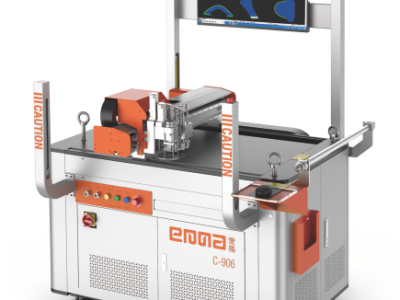
An ultrasonic cutting system consists of three main components: a power generator, a converter (transducer), and a custom-shaped horn (sonotrode). The generator converts electrical power into high-frequency signals, typically between 20 kHz and 40 kHz. The converter transforms these electrical signals into rapid mechanical oscillations that move the sonotrode tens of thousands of times per second.
Simultaneous Cutting and Edge Sealing
When the vibrating sonotrode contacts synthetic or blended textile fibers, localized frictional heat builds rapidly at the microscopic contact points. This localized thermal energy instantly melts the synthetic fibers along the cutting path, fusing them together as the blade moves forward.
This simultaneous cutting and sealing mechanism completely eliminates fraying along the edge. For microfiber towels and synthetic-blend fabrics, the resulting sealed boundary remains smooth, flexible, and completely resistant to unraveling, even after repeated commercial washing cycles.
Cold Tool Operation and Minimal Mechanical Stress
Despite generating localized thermal energy at the contact zone, the ultrasonic horn itself remains relatively cool. The heat remains strictly confined to the microscopic interface where the vibration interacts with the fabric structure.
Because the tool does not rely on brute mechanical pressure, the fabric experiences virtually zero tension or stretching during the cut. This lack of mechanical deformation allows ultrasonic systems to achieve extreme dimensional accuracy, maintaining exact rectangular shapes without distortion or puckering along the edge.
Cost, Maintenance, and Long-Term ROI Analysis
Adopting new production equipment requires weighing initial capital expenditures against ongoing operational savings. While traditional cutting tables feature lower upfront equipment costs, their long-term operational expenses accumulate through routine maintenance and secondary processing requirements.
Ultrasonic machinery carries a higher initial purchase price due to advanced electronic generators, transducers, and specialized titanium sonotrodes. However, analyzing total cost of ownership reveals significant advantages over multi-year production lifespans.
- Lower Consumable Costs: Ultrasonic horns experience minimal friction wear compared to steel blades, drastically reducing the frequency of replacement parts.
- Reduced Labor Overhead: By combining cutting and edge sealing into one automated step, factories reduce the number of dedicated sewing operators needed for secondary hem binding.
- Minimized Material Waste: Clean cuts without fraying reduce fabric rejection rates and prevent continuous edge trim losses.
- Energy Efficiency: Ultrasonic generators draw power primarily during active contact rather than maintaining constant heavy mechanical torque.
When calculating return on investment, high-volume towel manufacturers frequently recoup initial ultrasonic equipment costs within 12 to 18 months solely through reduced labor and eliminated hem-binding materials.
Eco-Friendly Manufacturing and Material Waste Reduction
Modern textile facilities face growing regulatory and consumer pressure to adopt environmentally responsible manufacturing practices. Reducing physical waste, airborne particulates, and energy consumption has become a core operational priority.
Traditional cutting methods generate substantial textile scrap. Frayed edges frequently force operators to trim larger borders during hemming to ensure clean seams, wasting valuable material across millions of units.
Ultrasonic processing supports sustainable manufacturing initiatives in several key ways:
- Zero Thread Waste: Because edges are sealed cleanly during the cut, thread breakage and loose fiber shedding are virtually eliminated.
- Elimination of Binding Tapes: Many synthetic microfiber cleaning towels cut with ultrasonics require no extra edge binding tape, reducing raw material usage.
- Clean Workroom Environments: Eliminating airborne lint improves indoor air quality, reducing energy demand on industrial HVAC and dust filtration systems.
By optimizing material utilization and lowering air filtration demands, facilities create cleaner, safer working environments while minimizing their environmental footprint.
Elevating Production Standards with High-Performance Machinery
Achieving consistent quality across large-scale textile operations requires robust automation designed for demanding continuous environments. Modern textile manufacturers increasingly rely on specialized machinery that integrates precise tension control, automated tracking, and advanced cutting units.
At TexSerCo, high-precision textile processing machinery is engineered to meet the rigorous demands of modern fabric converting facilities. By integrating state-of-the-art web handling with advanced cutting mechanisms, these solutions empower towel producers to maximize throughput while maintaining flawless edge quality across various terry cloth densities and synthetic blends. Investing in purpose-built automated equipment ensures that cutting operations run continuously with minimal operator intervention and maximum operational reliability.
Conclusion
Selecting the appropriate cutting system represents a pivotal decision for towel manufacturers striving to stay competitive in a demanding global market. While traditional mechanical blades remain useful for basic bulk trimming, their inherent limitations regarding fraying, blade wear, and dust generation present ongoing challenges for high-quality production lines.
Ultrasonic cutting technology solves these historical bottlenecks by uniting high-speed cutting with clean edge sealing in a single step. The resulting reductions in labor costs, material scrap, and secondary sewing steps make ultrasonic systems a compelling upgrade for factories producing premium terry towels, cleaning microfibers, and specialty textiles.