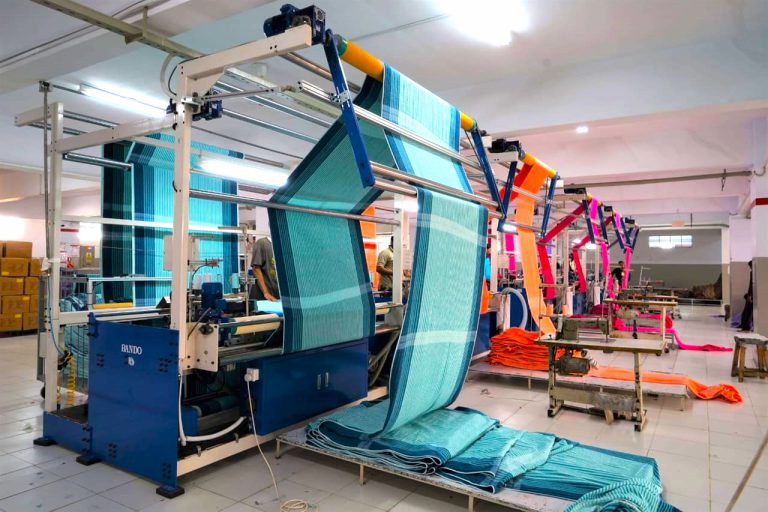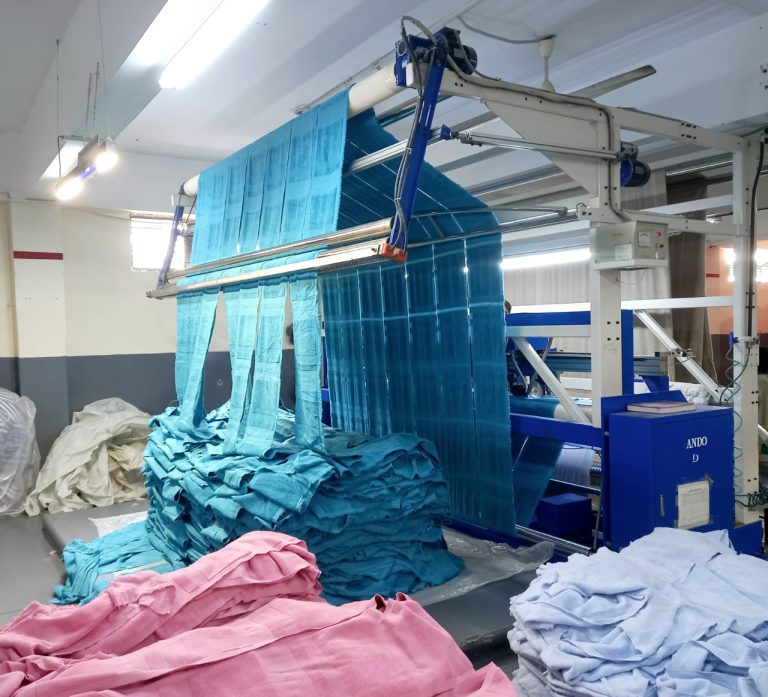

Textile manufacturing environments present demanding thermal challenges. Spinning frames, high speed weaving looms, and finishing machinery generate massive amounts of parasitic heat and friction. In tropical and subtropical climates where outdoor ambient temperatures exceed forty degrees Celsius, uncooled production sheds quickly become unbearable thermal traps. High ambient temperatures reduce worker concentration, accelerate equipment motor burnout, and cause severe yarn breakage due to dry, brittle fibers. Installing an Industrial Evaporative Cooling System provides energy efficient, high volume climate moderation tailored specifically for modern textile mills.

Thermodynamics of Direct Evaporative Cooling in Textile Plants
Unlike conventional compressor based air conditioning that consumes massive amounts of electrical power and recirculates stale indoor air, industrial evaporative cooling utilizes the natural endothermic principle of water vaporization. When warm, dry outdoor air passes through thick, water saturated cellulose honeycomb cooling pads, water molecules absorb sensible heat energy from the air stream to transform into water vapor. This heat exchange lowers dry bulb air temperatures by eight to fifteen degrees Celsius while introducing gentle, natural humidity.
In textile spinning and weaving operations, controlled relative humidity between sixty and seventy five percent is essential. Natural cotton and wool fibers are hygroscopic materials whose tensile strength, elasticity, and flexibility increase substantially as fiber moisture content rises. By delivering cool, humidified fresh air directly across spinning rings and weaving shuttles, evaporative cooling reduces static electricity, eliminates yarn fraying, and cuts loom warp breakage rates by more than half.
Heavy Duty Construction and Industrial Airflow Capacity
The TEXSERCO Industrial Evaporative Cooling System is engineered to withstand demanding factory roof and sidewall operating environments. The outer cabinet is molded from high impact ultraviolet stabilized polypropylene or corrosion resistant stainless steel, resisting outdoor weathering, intense solar radiation, and corrosive industrial atmospheres without fading or rusting.
A high efficiency, dynamically balanced backward curved axial fan powered by an IP55 sealed electric motor delivers airflow volumes ranging from eighteen thousand to thirty thousand cubic meters per hour per unit. Aerodynamic variable pitch fan blades minimize electrical power consumption while generating high static pressure capable of pushing cooled air through hundreds of meters of overhead spiral galvanized ductwork with adjustable drop diffusers.
Water Distribution and Automated Self Cleaning Technology
Consistent cooling pad saturation determines overall thermal efficiency. The system features an open water distribution manifold that spreads water evenly across high density cross corrugated cellulose pads without clogging. Submersible water pumps with thermal overload protection ensure continuous water circulation from the bottom reservoir sump.
To prevent mineral scale buildup and algae growth in hard water regions, the unit incorporates an automated drain flush valve. A microcomputer controller monitors operating hours and water conductivity. At programmed intervals, the valve opens, discharging concentrated mineral rich sump water completely before refilling with fresh water. This automated blowdown prevents crusty scale formation on cooling pads, doubling pad operational lifespan and preserving fresh, odorless air quality.
To review detailed airflow specifications, cooling pad dimensions, and roof mounting kits, visit the Cooling System Industrial product catalog page for comprehensive engineering data and facility sizing calculations.
Structured Maintenance Protocols for Industrial Coolers
Maintaining peak cooling performance and healthy indoor air quality requires regular upkeep by plant engineering staff:
- Weekly water sump and strainer basket inspection: Open the access panel to clean the pump inlet strainer basket, clearing loose dirt and foreign sediment from the reservoir.
- Weekly cooling pad surface rinse: Inspect cellulose pads for airborne textile lint accumulation, gently rinsing exterior pad faces with a low pressure garden hose.
- Monthly water pump and auto drain testing: Verify that the automated drain valve cycles cleanly and the submersible circulation pump maintains steady water flow across all pads.
- Quarterly fan motor and belt tension audits: Check motor mounting bolts and inspect V belts or direct drive couplings for correct tension and vibration free rotation.
- Seasonal winterization and shutdown protocols: Drain all water lines completely before cold winter periods, dry cooling pads thoroughly, and install protective vinyl weather covers.
Energy Efficiency and Operational Cost Comparison
The financial advantage of evaporative cooling over traditional refrigerated chiller systems is extraordinary. A standard industrial evaporative cooler delivering twenty thousand cubic meters of chilled air per hour consumes approximately one point one to one point five kilowatts of electrical power. Achieving equivalent cooling capacity through conventional mechanical compressors requires fifteen to twenty kilowatts of electricity.
This ten fold reduction in electrical power demand yields massive annual electricity savings for textile mills operating hundreds of machines across large acreage sheds. Furthermore, evaporative cooling operates with one hundred percent fresh outdoor air, continuously purging airborne textile dust, chemical dye fumes, and machinery oil mist from the factory atmosphere. Workers breathe fresh, invigorating air throughout long shifts, resulting in improved focus, lower fatigue, and reduced respiratory illness.
Improving Yarn Tensile Properties and Weaving Efficiency
The direct impact of evaporative cooling on textile manufacturing economics extends far beyond worker comfort. When relative humidity drops below fifty percent in unconditioned weaving sheds, cotton yarn loses its natural moisture content, becoming stiff and brittle. Under the rapid mechanical stresses of modern air jet or rapier looms, brittle warp yarns snap frequently, halting production and requiring manual weaver knotting.
By stabilizing ambient temperature at twenty eight degrees Celsius and relative humidity at sixty eight percent, evaporative cooling maintains optimal yarn moisture regain. Elasticity improves, yarn friction through heddle eyes drops, and loom stop frequency declines dramatically. Weaving shed efficiency increases by three to five percentage points, delivering thousands of additional meters of export quality fabric each month from identical machinery assets.
Psychrometric Dynamics and Water Quality Filtration
Operating industrial evaporative cooling effectively requires a clear understanding of regional psychrometric principles. Evaporative cooling efficiency depends on the wet bulb temperature depression, which represents the difference between dry bulb air temperature and wet bulb air temperature. During hot, dry summer months in industrial regions, dry bulb temperatures often reach forty two degrees Celsius while wet bulb temperatures remain near twenty four degrees Celsius. This eighteen degree depression allows evaporative coolers to deliver supply air at a comfortable twenty seven degrees Celsius.
To preserve cooling pad efficiency and prevent mineral crusting, incoming water supply lines must pass through automated sediment filtration and water softening units. Removing dissolved calcium carbonates and silica particles prevents mineral scale from cementing onto cellulose pad fibers. Clean, soft water ensures rapid, uniform capillary absorption across the entire pad surface, maintaining maximum heat exchange rates while keeping operating pads fresh and clean.
Overhead Ductwork Design and Airflow Balancing
Delivering conditioned air evenly across massive weaving sheds spanning thousands of square meters requires sophisticated ductwork design. The TEXSERCO cooling system utilizes lightweight spiral galvanized steel ducting or flame retardant fabric ducting suspended from ceiling trusses. Aerodynamically engineered duct tapers maintain constant internal air velocity as air flows from the main unit toward distant distribution branches.
Adjustable drum diffusers and high velocity directional nozzles allow plant engineers to focus cool airflow directly into high heat generation zones, such as above electric motor drives and weaving shuttle boxes. By balancing air velocity and distribution volume systematically, the system creates uniform microclimate zones across the production floor, preventing cold spots or stagnant warm air pockets in corner areas.
Environmental Sustainability and Green Manufacturing
International apparel buyers place tremendous emphasis on supply chain sustainability and factory carbon footprint metrics. Traditional air conditioning relies on chemical hydrofluorocarbon refrigerants that possess potent global warming potential and risk ozone depletion when leaks occur. Evaporative cooling uses pure, natural water as its sole working fluid, completely eliminating synthetic refrigerants from manufacturing facilities.
By consuming a fraction of the electricity required by chillers, mills reduce their direct electrical utility emissions and qualify for prestigious green factory certifications. Demonstrating sustainable environmental stewardship through energy efficient evaporative cooling enhances supplier credentials, attracting environmentally conscious multinational fashion brands seeking responsible manufacturing partners.