

In modern industrial textile operations, finished goods warehouses must manage hundreds of distinct product codes, including variable yarn counts, dyed fabric rolls, specialized apparel trims, and packaged retail goods. When warehouse operations require instant, unhindered access to every individual pallet without moving neighboring loads, Heavy Duty Selective Pallet Racking stands as the worldwide benchmark for industrial storage. Its straightforward beam and upright architecture delivers one hundred percent individual pallet selectivity, making it the premier choice for fast moving, high mix textile fulfillment centers.
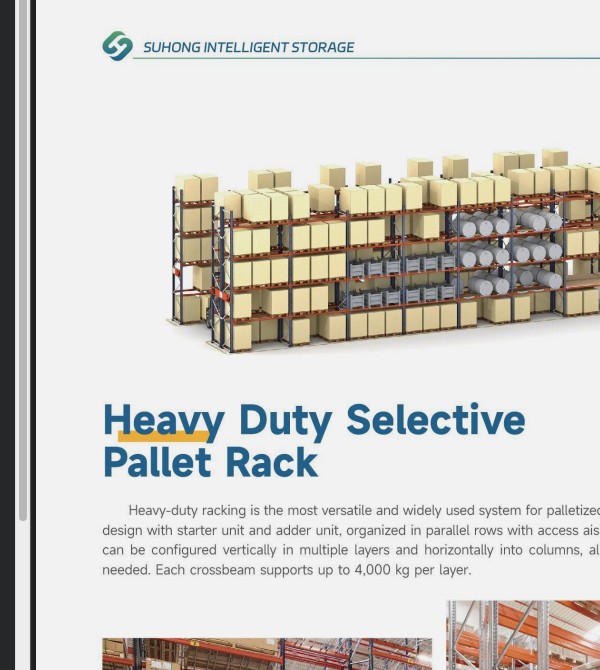
Structural Anatomy and Beam Connection Dynamics
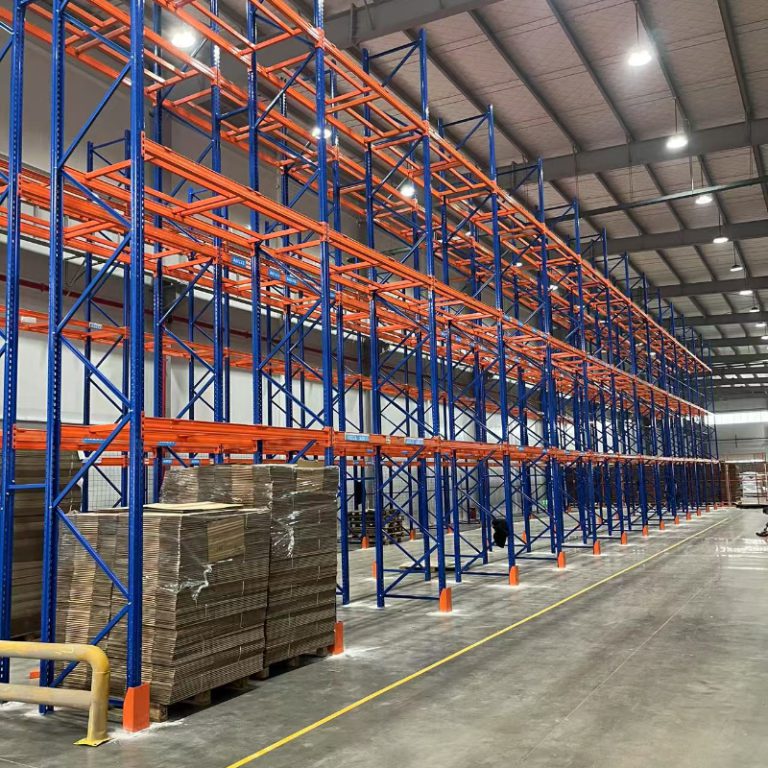
The Suhong Heavy Duty Selective Pallet Racking System consists of two primary structural components: vertical upright frames and horizontal load carrying step beams. Upright frames are assembled from precision roll formed vertical columns linked by bolted diagonal and horizontal steel lattice bracing. The columns feature teardrop or diamond slot punching along their face at fifty millimeter intervals, allowing warehouse staff to reposition beam elevations rapidly as pallet load heights change.
Horizontal step beams are fabricated from twin C channels interlocked and welded continuously to form a rigid structural box section. Heavy duty end connectors welded to each beam end feature three or four high strength steel locking teeth that engage column slots tightly. Spring loaded safety locking pins seat automatically upon beam insertion, preventing accidental beam dislodgement if a careless forklift operator lifts a pallet too high while extracting inventory.
Load Capacities and Deflection Standards
Textile pallets containing dense cotton yarn bobbins or rolled upholstery fabrics generate substantial concentrated dead weights. Suhong selective pallet rack beams are engineered to support uniform loads ranging from one thousand kilograms up to four thousand kilograms per pair of beams, with upright frame capacities exceeding twenty thousand kilograms per bay. All beam designs adhere strictly to international storage rack deflection limits, guaranteeing vertical deflection under full load never exceeds one two hundredth of the beam span.
For operations handling irregular pallets, plastic slip sheets, or open bottom wooden crates, heavy duty wire mesh decking panels or drop in steel shelf supports sit flush within beam step recesses. Wire mesh decking prevents undersized cartons from falling between beams while enabling overhead fire sprinkler water to cascade downward through all shelf tiers during fire emergencies.
Layout Flexibility and Forklift Compatibility
Selective pallet racking adapts effortlessly to any standard industrial forklift equipment. Facilities operating standard counterbalanced forklifts typically lay out operating aisles with clearances of three point five to three point eight meters. For facilities seeking greater storage density, pairing selective racking with narrow aisle reach trucks reduces aisle widths to two point seven meters, recovering up to thirty percent more storage footprint.
Furthermore, back to back rack rows linked by bolted structural row spacers maximize floor utilization while preserving access to every pallet position from parallel aisles. Single rack rows positioned against exterior building walls provide tidy storage for odd sized materials, spare machinery parts, and maintenance supplies, keeping central warehouse avenues clear for rapid shipping dispatch.
For customized aisle layouts, beam load tables, and seismic design specifications, explore the Heavy Duty Selective Pallet Racking product catalog entry for expert design consultations and prompt quotations.
Preventive Maintenance Schedules and Structural Care
Maintaining safety across high capacity selective rack installations requires vigilant adherence to structured inspection protocols:
- Daily aisle clearance and safety pin checks: Walk active forklift aisles daily to verify that beam safety locking pins remain engaged and aisles are free of wood debris.
- Weekly column baseplate and anchor bolt audits: Inspect heavy floor anchor bolts securing upright baseplates to concrete foundations, tightening any loosened hardware.
- Monthly beam deflection and visual weld inspection: Visually check loaded beams for excessive sagging and examine end connector welds for hairline fatigue cracks.
- Quarterly column verticality and plumb measurements: Use optical leveling instruments to confirm upright columns maintain vertical plumb within three millimeters per meter of height.
- Biannual frame damage classification audits: Inspect column uprights for forklift denting or twisting, replacing damaged upright sections immediately using certified structural splices.
Inventory Turnover Velocity and Order Fulfillment Speed
The paramount operational benefit of selective pallet racking is picking speed. Because every pallet location remains permanently open to the aisle, forklift operators drive directly to the requested SKU, lift the pallet, and transport it to the shipping dock in under two minutes. There is zero double handling, zero pallet shifting, and zero wasted driver labor.
This rapid selectivity makes selective racking the ideal configuration for finished goods distribution centers shipping multiple small orders daily. When paired with digital warehouse management systems, picking routes can be optimized along continuous loop paths, cutting forklift battery consumption and allowing dispatch teams to meet strict courier and container departure deadlines consistently.
Upright Protection and Workplace Safety Accessories
Forklift impacts pose the primary threat to industrial rack integrity. Suhong selective racking systems feature heavy duty wrap around steel column protectors and continuous heavy steel end of row barriers. Finished in vibrant safety yellow powder coating with reflective warning chevrons, these floor anchored deflectors absorb vehicle collisions safely away from load carrying vertical columns.
Backstop beam stops prevent pallets from pushing through back to back rows, while overhead pedestrian safety netting protects workers walking beneath cross aisle tunnel passages. These integrated safety enhancements create a secure, compliant working environment that passes rigorous multinational brand safety audits with outstanding marks.
Foundation Grouting and Anchor Bolt Shear Engineering
The structural stability of high elevation selective pallet racking depends fundamentally on the quality of its foundation interface. Industrial concrete floors frequently display subtle elevation variances of several millimeters across long warehouse spans. During installation, technicians insert high strength steel shims beneath upright column baseplates, bringing every vertical column into precise optical level.
Once leveled, non shrink high strength cementitious grout is pumped beneath the baseplates, eliminating hollow voids and providing uniform bearing contact with the concrete floor. Dual heavy duty mechanical anchor bolts drilled deep into the slab resist overturning moments and lateral shear forces generated when loaded forklifts brake firmly in front of the rack. This rigorous foundation preparation guarantees that the racking structure remains solid and secure through decades of heavy pallet placement cycles.
Seismic Aisle Bridge Ties and Pallet Backstops
In regions subject to seismic activity or ground vibrations from adjacent heavy weaving looms, selective racking rows require overhead aisle bridge ties. Heavy structural steel beams link parallel rack rows across top forklift avenues, transforming independent upright rows into a three dimensional rigid framework that prevents harmonic sway during ground tremors.
Additionally, rear pallet backstop beams installed along the back face of single rows prevent inattentive forklift drivers from pushing pallets through the rear rack envelope. Heavy duty safety mesh screens fastened to the rear of racks positioned along pedestrian walkways provide absolute containment, preventing loose carton inventory from falling into personnel corridors below.
Economic Longevity and Facility Adaptability
Selective pallet racking offers unrivaled economic durability. Its standardized bolted and clipped components can be disassembled, relocated, expanded, or reconfigured whenever business requirements evolve. If a textile mill expands production or relocates to a larger facility, the existing selective racking components move effortlessly, delivering decades of continuous service life on a single capital investment.
Regular structural engineering audits, combined with prompt replacement of any mechanically distorted components, ensure that selective pallet racking assets deliver decades of safe, efficient service life for demanding textile distribution facilities.