
In modern garment manufacturing, the cutting room represents the financial heart of the entire operation. Fabric accounts for sixty to seventy percent of the total cost of any finished garment. A cutting room that experiences fabric tension distortion, edge misalignments, or inaccurate pattern trimming squanders thousands of meters of valuable material every month. Traditional manual fabric spreading and handheld rotary knife cutting are slow, labor intensive, and prone to severe operator fatigue and cutting inaccuracies. Upgrading to an automated Autex Spreading and Cutting System revolutionizes pre production operations by combining tension free automated fabric spreading with high speed CNC knife cutting precision.

The Physics of Tension Free Fabric Spreading
Knitted and woven apparel fabrics possess natural elasticity that can cause catastrophic sizing errors if stretched during spreading. When manual workers pull heavy fabric rolls down long cutting tables, frictional drag stretches the fabric plies lengthwise. After cutting, the cut panels relax and contract, shrinking unpredictably and causing severe fitting defects during sewing assembly.
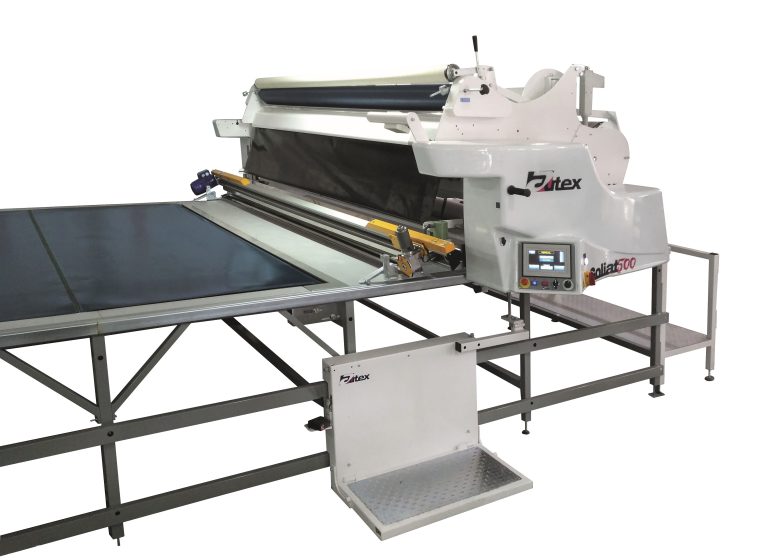
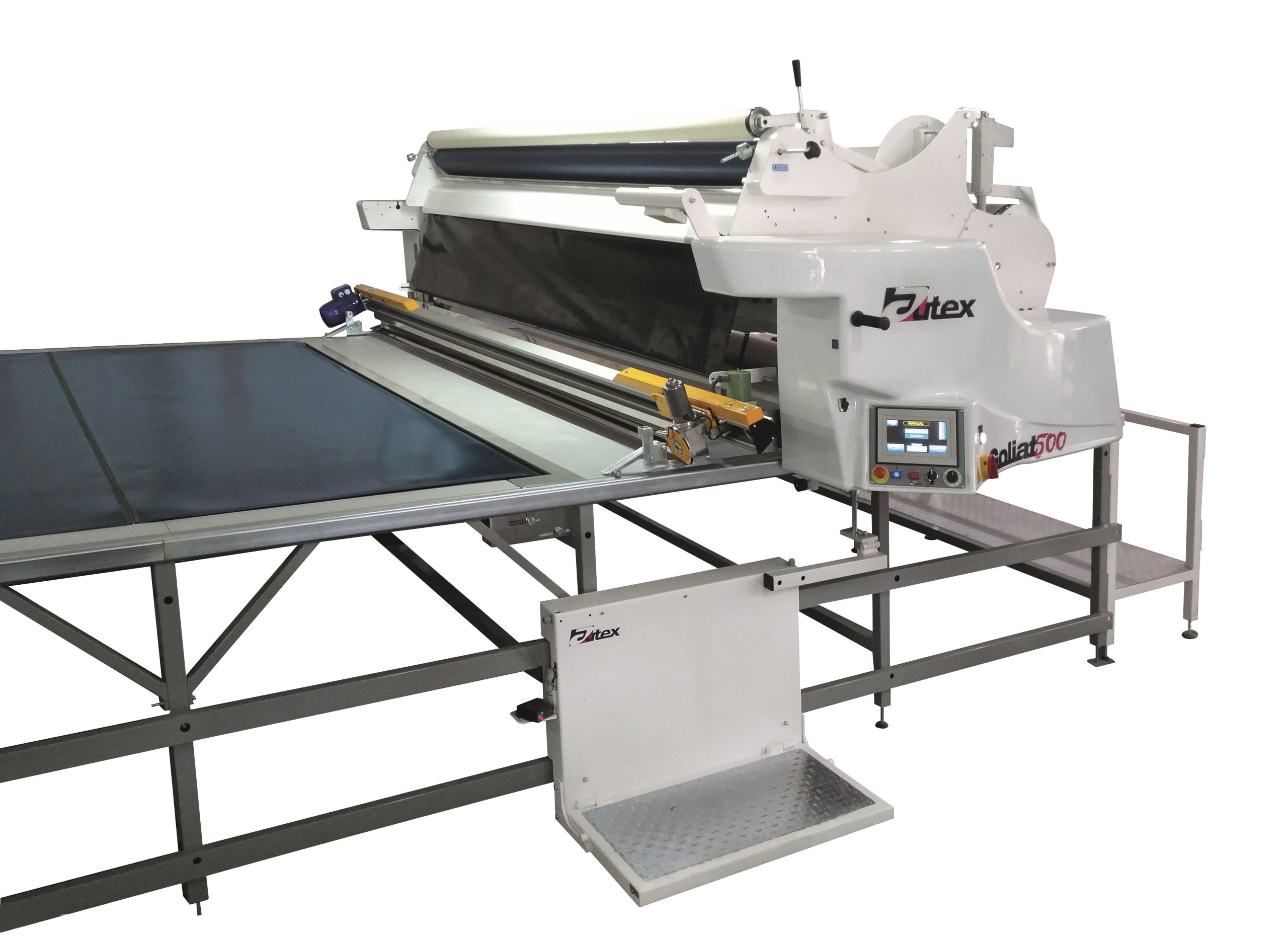
The Autex Automated Spreading Machine resolves this fundamental physics problem through an electronically synchronized cradle feed system. Rather than pulling fabric from a stationary core bar, the motorized cradle rotates the entire fabric roll positively, unwinding fabric gently at the exact travel velocity of the spreading carriage. Sensitive infrared optical loop sensors monitor fabric tension continuously, maintaining a relaxed, micro floating loop between the roll and the spreading table. Plies settle onto the cutting surface completely free of tension, guaranteeing absolute dimensional stability across all cut components.
High Precision Edge Alignment and Selvage Control
Fabric roll widths are rarely uniform throughout hundreds of meters of length. Irregular selvage edges in manually laid plies force cutting room managers to add generous perimeter margins, wasting valuable fabric along both table edges. The Autex Spreader features high speed photoelectric edge tracking sensors paired with a responsive stepper motor lateral shifting mechanism.
As the carriage travels along the table at speeds up to one hundred meters per minute, the optical sensors detect selvage deviations instantaneously. The lateral shifting cradle moves left or right in fractions of a second, aligning every ply edge to within a single millimeter tolerance. This flawless edge registration minimizes edge waste, allowing nesting software markers to be positioned right up to the selvage boundary and saving one point five to three percent in raw fabric consumption across every production marker.
Vacuum Compression and High Speed CNC Knife Cutting
Once spreading plies reach heights of fifty to eighty millimeters, the material moves onto the Autex CNC Cutting System conveyor table. Cutting through multiple plies of dense denim, slick silk, or spongy terry towel requires absolute structural rigidity. The cutting table incorporates a high power multi chamber vacuum turbine system that pulls air through table perforations, compressing thick, spongy fabric layers into a dense, rigid block.
High strength polyethylene wrapping film feeds over the laid plies automatically, sealing the top surface and maximizing vacuum holding pressure. An intelligent vertical reciprocating knife blade manufactured from hardened high speed tool steel navigates through the compressed fabric stack with digital servo precision. Operating at reciprocating frequencies up to four thousand strokes per minute, the knife follows computer generated CAD nesting coordinates smoothly, cutting complex curves, notches, and internal drill holes with pinpoint accuracy.
To inspect detailed cutting table dimensions, vacuum motor ratings, and compatible CAD marker software formats, review the official Autex Spreading and Cutting product catalog page for expert engineering specifications and equipment quotes.
Preventive Maintenance Schedules for Spreading and Cutting Cells
Sustaining sub millimeter cutting accuracy and smooth carriage motion requires consistent maintenance by qualified cutting room technicians:
- Daily blade inspection and sharpening wheel dressing: Inspect the reciprocating cutting knife for edge chipping, cleaning sharpening stones and verifying correct bevel angles.
- Daily vacuum table air filter cleaning: Remove textile lint and dust from the main vacuum pump intake filter to preserve peak holding suction across the cutting bed.
- Weekly carriage drive track and encoder cleaning: Wipe linear guide rails and optical encoder strips with clean lint free cloths to prevent dust induced positioning errors.
- Monthly bristle block surface inspection: Examine the plastic bristle bed on the cutting table for damaged or missing bristles, replacing worn sections to ensure clean blade penetration.
- Quarterly linear guide lubrication: Lubricate precision linear bearings and ball screw drives using manufacturer approved synthetic grease, wiping away excess lubricant.
Automatic Blade Deflection Compensation and Smart Sharpening
When a cutting knife travels through thick fabric plies around sharp ninety degree corners, lateral resistance can cause the flexible steel blade to bend or deflect. Blade deflection produces top to bottom piece variance, where upper fabric plies match marker dimensions but bottom plies are cut too small or too large, leading to assembly mismatches in sewing lines.
The Autex CNC Cutter incorporates active electronic blade deflection monitoring. Dual strain sensors embedded within the cutting head measure lateral resistance in real time. If the blade begins to deflect when rounding a tight curve in heavy denim, digital servo controllers adjust cutting head tilt angles instantly to counteract the deflection force, ensuring vertical cut accuracy from the very top ply down to the bottom ply. Integrated dual motor sharpening stones dress the knife edge automatically at scheduled intervals, maintaining a razor sharp edge without stopping the cutting cycle.
Drastic Reductions in Fabric Waste and Sewing Efficiency Gains
The operational return generated by automated spreading and cutting extends throughout the entire factory. Modern computerized nesting software arranges garment pattern pieces with tighter clearances than any human marker planner can achieve by hand. By nesting pattern parts tightly and cutting with zero edge buffer waste, factories routinely save four to six percent in total fabric yardage.
Furthermore, because every cut piece features identical dimensions, perfect notches, and smooth edges, sewing machine operators assemble garments significantly faster. Pieces align effortlessly without stretching or trimming, eliminating sewing line bottlenecks and reducing garment assembly rework rates by over seventy percent. The cutting room transforms from a slow, chaotic bottleneck into an orderly, high speed manufacturing engine.
Automated Drill Punch and Notch Marking Technology
Modern garment assembly relies heavily on precision internal registration marks for positioning pockets, darts, buttonholes, and belt loops. Hand marking internal points with chalk or awls on cut bundles is labor intensive and prone to operator error. The Autex CNC Cutting Head features an integrated high speed pneumatic drill punch and automated marking tool that operates in perfect synchronization with the cutting knife.
As the cutting head navigates pattern contours, the heated drill punch descends instantaneously at designated CAD marker coordinates, melting a clean micro perforation through all fabric plies without burning or fusing surrounding fibers. When sewing operators receive the cut parts, the drill holes provide exact, unambiguous alignment guides for pocket setting and button placement, accelerating sewing assembly speeds and eliminating manual measuring on the sewing line.
Advanced Sharpening Abrasives and Thermal Management
Maintaining razor sharp blade edges across continuous eight hour shifts requires sophisticated sharpening mechanics. When cutting tough synthetic blends, abrasive denim twills, or heat sensitive polyester fabrics, dull blades cause severe edge fraying, ply dragging, and heat fusing where cut edges stick together. The Autex system utilizes precision motor driven dual abrasive discs that sharpen both sides of the vertical knife simultaneously.
Electronic sensors monitor blade temperature continuously during high speed reciprocating cutting. If cutting friction raises blade temperatures toward the softening point of synthetic fibers, the control system activates an automatic chilled air cooling jet that blasts the knife edge continuously. This localized air cooling prevents fabric melting and resin sticking, ensuring that cut plies peel apart cleanly and effortlessly on assembly bundles.
Rapid Return on Investment in Modern Apparel Mills
Investing in an integrated automated spreading and cutting cell delivers swift, measurable financial payback. In a typical export apparel plant processing fifty thousand meters of fabric monthly, a four percent fabric saving recovers tens of thousands of dollars in raw material costs every month. When combined with substantial labor reductions in the cutting room and elimination of downstream sewing adjustments, complete capital investment recovery is routinely achieved within twelve to sixteen months.