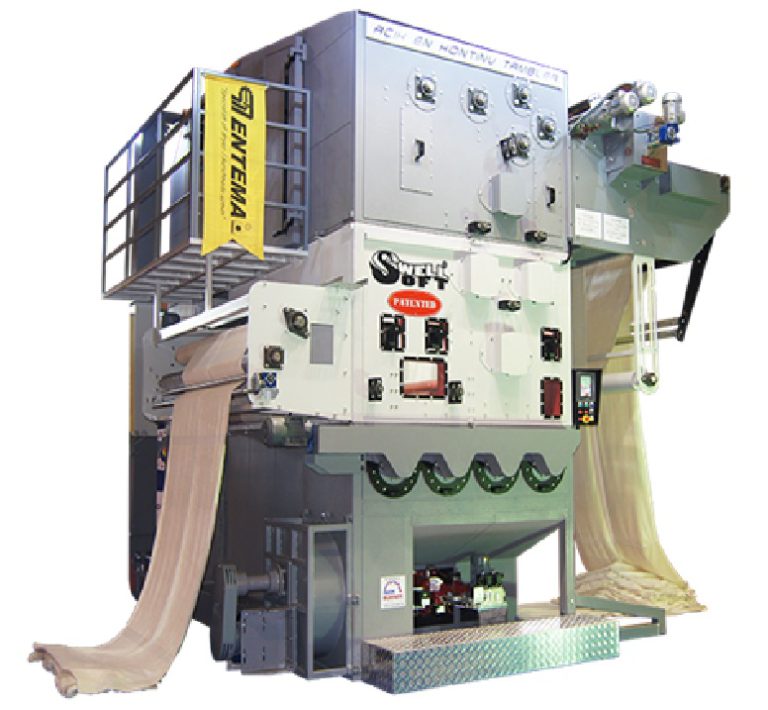


In high end terry towel manufacturing, luxury bathrobe production, and knitted fleece finishing, achieving extraordinary fabric softness, lofty loop bulk, and permanent dimensional stability defines brand success. Traditionally, dye houses relied heavily on chemical softening agents such as silicone emulsions and quaternary ammonium compounds to simulate fabric softness. However, chemical softeners wash out after several home laundering cycles and severely impair towel water absorbency by coating natural cotton cuticles with water repellent films. Installing an ENTEMA Swellsoft Continuous Tumbler provides a revolutionary mechanical alternative that creates plush, long lasting fabric hand feel while dramatically improving water absorption and eliminating customer lint shedding.
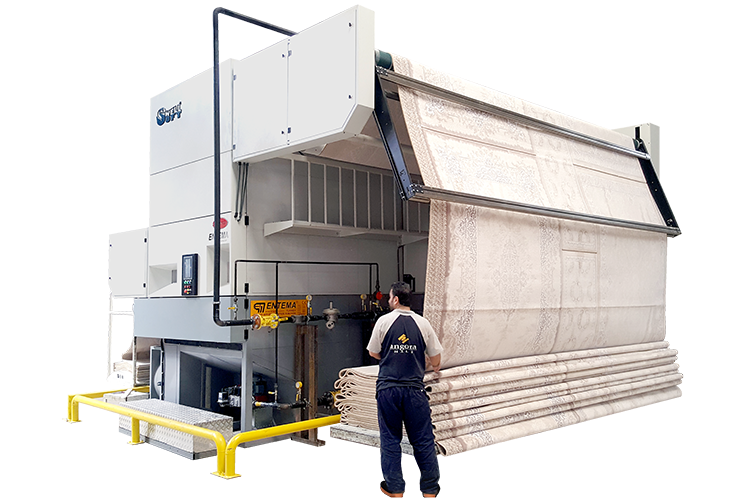
Aerodynamic Venturi Propulsion and Impact Chamber Mechanics
The engineering core of the Swellsoft Continuous Tumbler is its high velocity aerodynamic transport channel. Fabric rope or open width fabric webbing enters an enclosed stainless steel Venturi tube where massive streams of heated, pressurized air accelerate the fabric toward heavy stainless steel baffle grids. As the fabric travels through the Venturi nozzle at speeds exceeding forty meters per second, aerodynamic shearing forces untwist compacted yarn fibers and open compressed cotton loops.
Upon exiting the nozzle, the fabric collides gently against polished sinusoidal stainless steel impact baffles. This controlled mechanical impact delivers a continuous kneading and massaging action across both fabric faces. Compacted weave intersections relax, internal yarn tensions dissipate completely, and flattened terry loops spring upright into plush, three dimensional columns. Unlike harsh rotary tumble dryers that damage delicate selvages, the continuous aerodynamic airflow supports the fabric weight uniformly, ensuring zero friction abrasion or surface fuzzing.
Continuous Processing Velocity Versus Discontinuous Batch Tumbling
For decades, textile mills operated large discontinuous batch tumble dryers. Batch tumblers require workers to load wet fabric ropes by hand, run forty minute drying cycles, and unload hot goods into rolling tubs. This batch method produces severe shade variation between consecutive loads, consumes immense electrical and thermal energy during heat up phases, and creates massive labor bottlenecks in the finishing department.
The Swellsoft Continuous Tumbler eliminates batch inconsistencies by processing fabric in an uninterrupted open width or rope flow at line velocities between fifteen meters per minute and forty five meters per minute. Fabric enters continuously from previous bleaching or washing ranges, travels through multiple alternating aerodynamic tumbling zones, and exits onto continuous plaiters or rolling winders. Every single meter of fabric receives identical thermal and mechanical exposure, guaranteeing uniform loop bulk, consistent fabric width, and identical hand feel across million meter production contracts.

Chemical Free Softening and High Absorbency Retention
Modern export buyers in European and North American markets enforce strict testing standards regarding textile water absorption rates. Under standard absorption testing protocols, a terry towel must absorb water droplets in less than three seconds. Towels softened with excessive chemical softeners fail this test repeatedly because silicone residues form a waterproof barrier over cotton cuticles, causing water droplets to bead on the surface for ten to twenty seconds.
By relying exclusively on aerodynamic mechanical softening, the Swellsoft tumbler preserves the pure, natural hydrophilicity of untreated cotton fibers. The mechanical impact opens fiber micro pores, creating millions of capillary channels that wick moisture instantaneously. Towels finished through Swellsoft tumblers achieve water drop absorption in under one second while exhibiting a deep, plush hand feel that never washes out in consumer home laundries.
Process Control Architecture and Recipe Management in Modern Finishing Plants
Precision control over air velocity, chamber temperature, and fabric transit speed is essential when processing diverse textile substrates. The Swellsoft system integrates an industrial programmable logic controller coupled to an intuitive color touchscreen interface. Operating engineers can store hundreds of customized processing recipes tailored to specific yarn counts, weave constructions, and fiber compositions.
For dense Egyptian cotton bath sheets, the recipe engine commands maximum air acceleration through the Venturi tubes while maintaining moderate chamber temperatures of one hundred twenty degrees Celsius to preserve natural cellulose moisture regain. Conversely, for delicate modal fleece or elastane blended knits, the controller reduces aerodynamic nozzle velocity by thirty percent and modulates heating dampers to prevent thermal degradation. Variable frequency drives on main circulation blowers modulate electrical consumption dynamically, ensuring precise airflow delivery while avoiding energy waste during production gaps.
Integration within Continuous Wet Processing and Downstream Packaging Lines
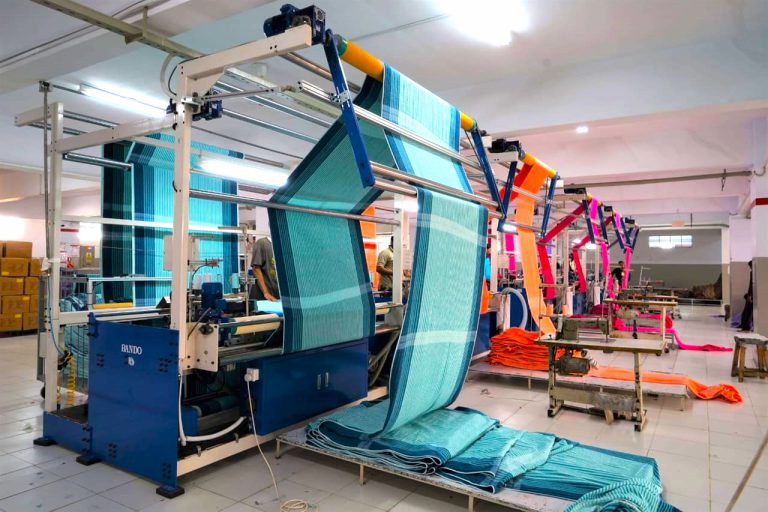
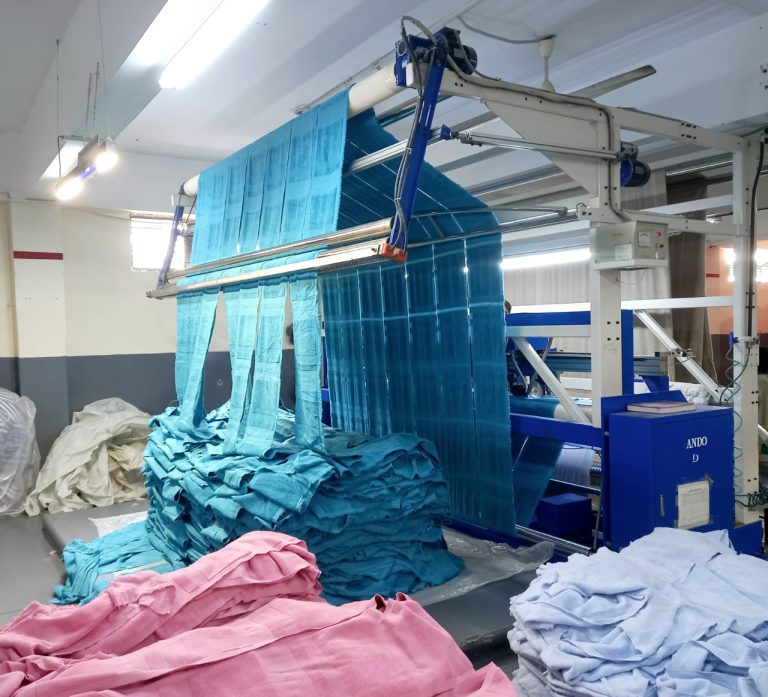
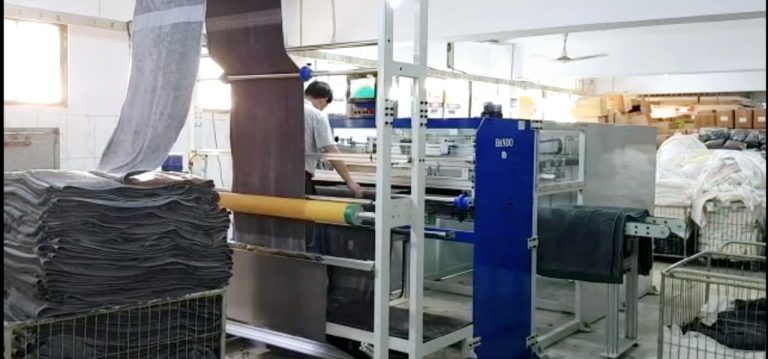
Achieving smooth material flow across the plant floor requires eliminating manual batch transfers. The Swellsoft Continuous Tumbler fits seamlessly between continuous rope washing ranges and automated cutting departments. Wet fabric ropes exiting hydro extractors pass directly into open width expanders and motorized feeding scray accumulators that buffer production variations without placing lengthwise tension on the moist fabric.
Downstream, the relaxed, completely dried fabric discharges onto high speed motorized plaiting arms that fold goods into uniform stacks on transport pallets. Alternatively, fabric feeds directly into continuous longitudinal slitting and automated hemming lines. By maintaining an unbroken production chain, plant managers eliminate manual cart handling, reduce floor transit labor, and safeguard delicate fabric surfaces from accidental floor contamination or grease spotting.
To inspect mechanical drawings, heating options, and complete fabric width specifications, visit the official Swellsoft Continuous Tumblers product catalog page for detailed engineering data and finishing trials.
Preventive Maintenance Schedules for Tumbling Chambers
Sustaining peak aerodynamic performance and energy efficiency requires disciplined maintenance across high volume finishing shifts:
- Daily lint filter screen cleaning: Clean the primary stainless steel lint collection screens every four hours using soft bristle brushes to maintain unhindered airflow.
- Weekly steam heat exchanger coil blowdown: Inspect steam radiator finned tubes, using dry compressed air to clear fine cotton dust that can reduce thermal heat transfer efficiency.
- Monthly aerodynamic nozzle and baffle inspection: Examine interior Venturi nozzle throats and stainless steel impact grids for thread wrapping or surface resin buildup.
- Quarterly main circulation blower bearing lubrication: Lubricate high temperature fan bearings using high grade synthetic grease rated for operating temperatures up to one hundred eighty degrees Celsius.
- Biannual exhaust air damper and sensor calibration: Calibrate electronic exhaust humidity sensors and verify pneumatic damper actuators to maintain optimal chamber moisture balance.
Residual Shrinkage Elimination and Garment Fit Stability
Fabric shrinkage represents one of the most persistent sources of customer returns in the apparel and home textile industries. Knitted cotton fabrics and woven terry towels subjected to mechanical drawing and tenter frame pulling during bleaching and dyeing enter finishing under high longitudinal tension. If made into garments without relaxation, the first consumer wash causes severe lengthwise shrinkage of up to twelve percent.
Inside the Swellsoft tumbling chamber, intense air turbulence vibrates the fabric web in all three spatial dimensions simultaneously without any mechanical clamp restraints. The warp and weft yarns contract naturally into their relaxed, low energy geometric equilibrium. Residual shrinkage rates drop below three percent, meeting the strictest international dimensional stability standards for luxury hotel towels and premium athletic apparel.
Lint Extraction and Fiber Dust Removal Efficiency
New cotton towels and plush knit fabrics naturally shed loose surface fibers, short cotton linters, and broken seed coat fragments during initial use. Consumers complain bitterly when new towels shed lint onto skin or leave white fluff on bathroom tiles. Conventional finishing methods struggle to remove this loose lint before packaging.
The Swellsoft Continuous Tumbler features an integrated continuous vacuum dust extraction circuit. As high velocity air streams flex and shake the fabric, loose fibers and floating lint separate cleanly from the fabric matrix. High capacity exhaust blowers sweep the dislodged lint into self cleaning rotary drum filters, discharging pristine, dust free fabric that requires zero customer pre washing. Clean, lint free towels package directly into polybags, delighting commercial buyers and retail consumers alike.
Thermal Energy Recovery and Operating Economics
Steam consumption accounts for a significant portion of textile finishing costs. The Swellsoft system incorporates advanced thermal exhaust heat recovery exchangers. Hot, moist exhaust air exiting the tumbling chamber preheats incoming fresh air, recovering up to thirty five percent of exhaust thermal energy. Insulated chamber panels constructed with double walled rock wool insulation maintain exterior panel temperatures below forty degrees Celsius, preventing heat radiation into the finishing shed and keeping operating costs exceptionally low.