
The process of turning raw terry cloth into finished bathroom accessories requires complex mechanical coordination. Engineers designing factory floors face unique challenges when manipulating highly textured fabrics. Unlike flat cotton or synthetic blends, materials with raised loops create friction variables that disrupt standard conveyor systems. The weight of the material also fluctuates significantly depending on the ambient humidity inside the facility.
Factory operators must calibrate their equipment constantly to prevent the fabric from stretching or warping during the initial feeding stage. Tension control mechanisms monitor the pull on the fabric rolls to ensure the material remains perfectly flat before it reaches the cutting blades. This careful preparation prevents the expensive raw material from becoming distorted or damaged right from the beginning of the production cycle.
Maintaining uniform tension across wide rolls of heavy fabric demands precise sensor feedback loops. When material feeds too quickly, it bunches up and causes uneven cuts. When it feeds too slowly, the stretching distorts the final dimensions of the product. Specialized optical sensors scan the edges of the material continuously to correct any lateral shifting instantly. These micro-adjustments guarantee that the fabric aligns flawlessly with the mechanical guides.
The integration of pneumatic rollers provides the exact amount of pressure needed to flatten the textured loops temporarily without crushing the fibers permanently. Achieving this delicate balance ensures the finished product retains its plush texture and high water absorbency.
Core Components Driving Continuous Thread Processing
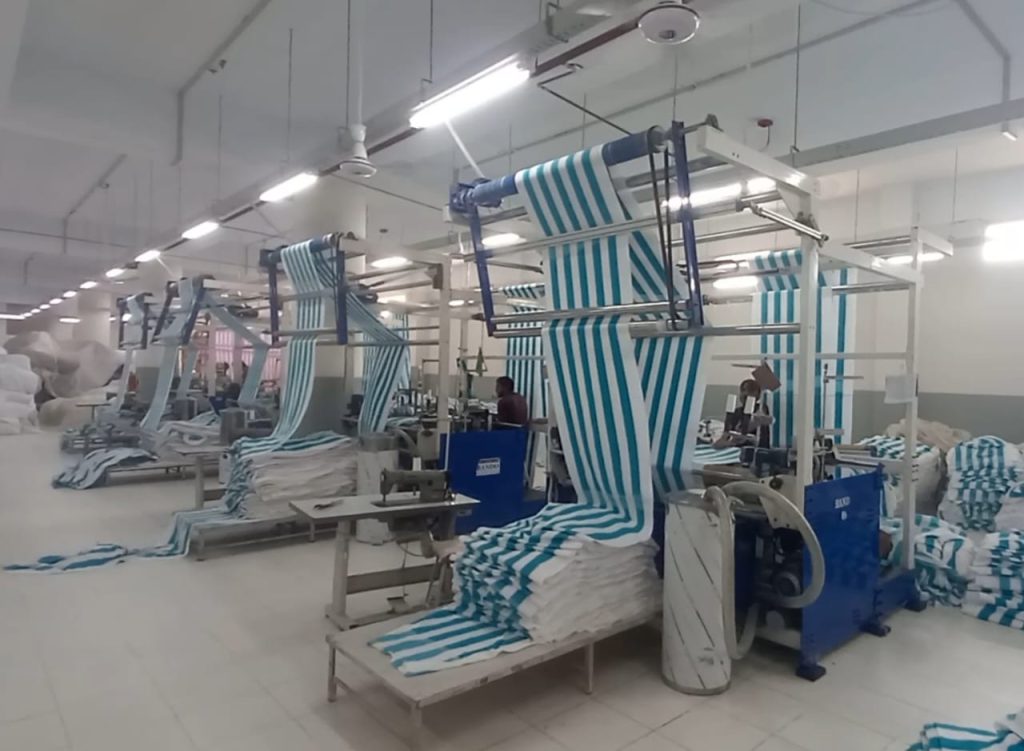
To overcome these material handling obstacles, industrial facilities rely on sophisticated Towel Automation machines to standardize the manufacturing workflow. These heavy-duty industrial systems replace manual measuring and cutting with continuous computerized processing. Mechanical feeding units grip the edges of the raw fabric rolls and pull them through the production line with exact precision. Rotary blades slice the wide master rolls into specific widths while maintaining perfectly straight lines. The synchronization between the feeding rollers and the rotary blades prevents any fraying along the freshly cut edges. By eliminating manual intervention, these machines guarantee that every single unit matches the required dimensions perfectly.
Beyond the cutting mechanism, the stitching modules represent the most intricate part of the processing line. High-speed sewing heads operate continuously to fold and bind the raw edges before the fabric can unravel. The needles penetrate thick layers of folded terry cloth thousands of times per minute. Heavy-duty industrial motors power these sewing heads while specialized cooling systems prevent the needles from overheating and snapping. Automated thread tensioners adjust the pull on the spools dynamically to keep the stitches uniform across varying thicknesses of material. This dynamic adjustment prevents the thread from breaking during extended production runs, ensuring a flawless seam along every edge.
Precision Engineering in High-Volume Slitting and Hemming
Slitting wide master rolls into individual sections requires absolute dimensional accuracy. Industrial optical alignment tools track a microscopic longitudinal line woven directly into the fabric base. The cutting blades follow this invisible track to ensure every strip matches the exact width requirements of the final product. Even a millimeter of deviation during the slitting phase causes compounded errors during the folding and sewing stages. Factories minimize this waste by utilizing titanium-coated circular blades that remain incredibly sharp even after slicing through thousands of meters of dense cotton loops. These premium blades require less frequent replacement, keeping the entire processing sequence moving smoothly.
Following the slitting process, the raw longitudinal edges must be folded and sewn immediately. Mechanical folders guide the moving fabric into a double fold to hide the frayed ends inside the hem. The hemming units sew this fold securely while the material continues moving forward with rapid momentum. Achieving a perfectly flat hem on thick terry cloth involves managing the bulk of the folded material. Pressure feet press the double fold flat just milliseconds before the needle pierces the fabric, ensuring the final seam feels smooth rather than bulky. This meticulous edge management prevents the finished product from developing uneven borders after multiple washing cycles.
Resolving Dimensional Variability During High-Speed Cross Cutting
After the continuous strips receive their longitudinal hems, the system must separate them into individual lengths. The cross-cutting phase requires the fabric to pause for a fraction of a second while a blade travels perpendicularly across the material. Stopping a fast-moving production line without losing tension presents a massive engineering challenge. Accumulator mechanisms gather a small amount of fabric into a vertical loop, allowing the feeding end to keep moving while the cutting zone momentarily halts. This buffer zone absorbs the physical shock of stopping and starting, protecting the delicate internal gears from excessive mechanical stress.
The transverse cutting blades utilize laser sensors to detect the exact boundaries between woven panels. Many designs feature distinct flat woven borders that dictate where the cut must occur. The system measures the distance from the previous cut and verifies it against the laser detection of the border area. If the fabric has shrunk or stretched, the computer adjusts the cut line instantly to ensure the border remains symmetrical on both ends of the final product. This level of adaptive processing eliminates the need for manual inspection and correction, drastically increasing the daily output of the facility.
Programmable Logic Controllers Synchronizing Multi-Axis Operations
The coordination of feeding, slitting, hemming, and cross-cutting relies entirely on central programmable logic controllers. These industrial computers process thousands of data points per second from sensors located throughout the production line. The controllers send instantaneous commands to the servo motors driving each individual component. This electronic synchronization replaces the outdated mechanical driveshafts and gears that previously connected different factory floor machines. By decoupling the mechanical linkages, engineers can adjust the timing of specific actions without retooling the entire processing line, providing unprecedented flexibility for production managers.
Touchscreen interfaces allow floor managers to input new product dimensions and stitching parameters within seconds. The system saves hundreds of different product profiles, making the transition between different batches seamless. Diagnostic software monitors the electrical draw of every motor to detect potential mechanical failures before they happen. If a sewing needle becomes dull, the motor driving that head requires slightly more electricity to push it through the fabric. The controller detects this microscopic power spike and alerts the maintenance crew to replace the specific needle during the next shift change.
Exploring Advanced Bando and Alpha Stitching Technologies
Finding equipment that balances rapid output with flawless stitching quality remains a priority for textile facility managers. The industry sees massive improvements through the implementation of specialized auto-length hemming and slitting systems powered by advanced Japanese Bando sewing heads. These robust setups deliver exceptional output, reaching operational speeds of twenty meters per minute while maintaining eight perfect stitches per inch. The integration of continuous touch screen interfaces and modern inverters ensures operators can calibrate these machines rapidly for different production volumes. Such reliability guarantees that large factory orders meet strict international quality standards effortlessly.
A reliable machinery provider makes a significant difference in factory output. Dedicated technology partners operating out of Karachi have spent over two decades equipping the global market with these specific Alpha and Bando solutions. With over five hundred successful machinery installations across fifteen different countries since 2004, these specialists provide the hands-on technical support necessary to keep continuous manufacturing lines running smoothly. Their deep expertise in programming logic controllers and mechanical troubleshooting helps factory owners maximize material efficiency and minimize mechanical downtime on the production floor. By offering comprehensive end-to-end guidance, they empower factory owners to scale their operations confidently.
Final Thoughts
The mechanical advancements driving modern fabric production demonstrate a brilliant fusion of physical engineering and digital control. Facilities that upgrade their processing lines experience immediate improvements in both material yield and product consistency. The elimination of manual handling reduces human error completely while protecting workers from the repetitive strain associated with heavy industrial sewing.
Transitioning to fully synchronized electrical equipment also provides factory owners with granular data regarding their daily operations. Managers can analyze exact metrics regarding energy consumption, mechanical wear, and material waste. This information allows for predictive maintenance schedules that prevent catastrophic mechanical failures and keep the entire supply chain moving without interruption.