
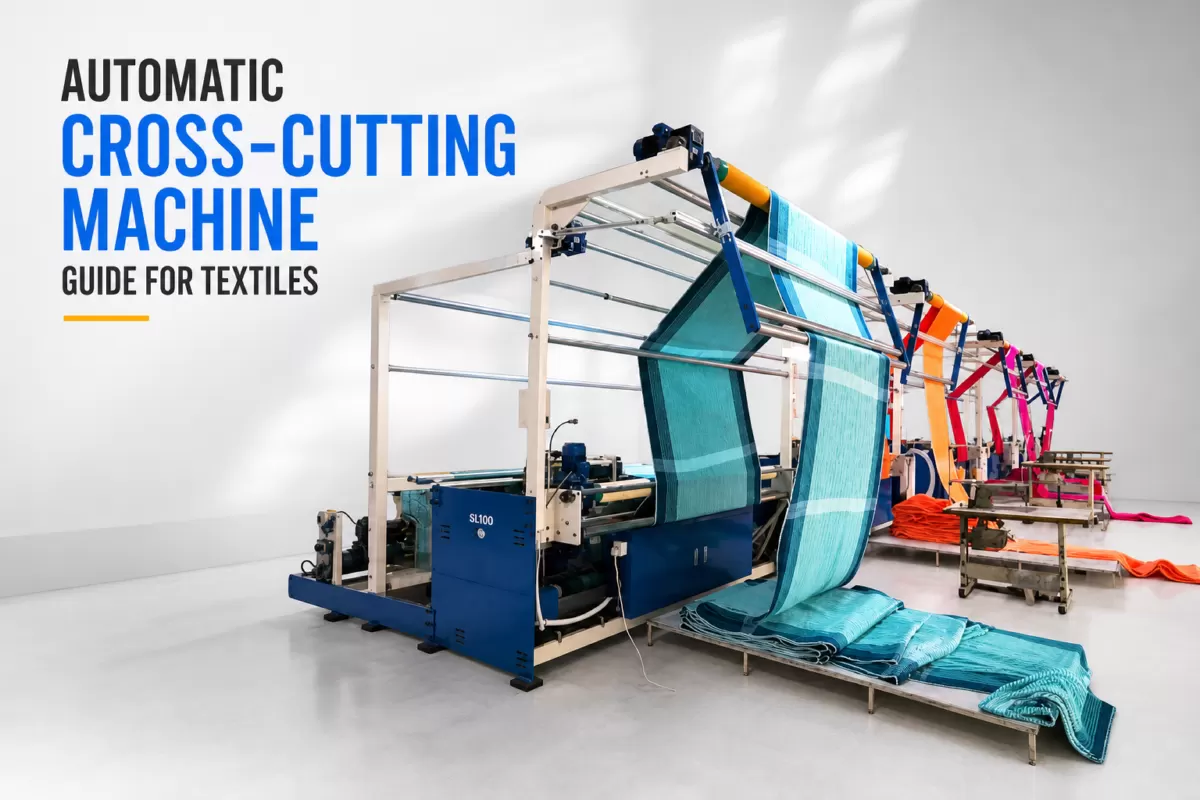
If you are standardizing towel or home textile production, an automatic cross-cutting machine can help replace inconsistent manual cutting with a more controlled, repeatable process. For buyers, the real question is not just “how fast is it?” but whether the machine fits your material, output target, and downstream workflow.
This guide explains what automatic cross-cutting does, where it fits in a textile line, which features matter most, and how to compare it with related equipment such as slitting and hemming machines. The goal is practical: help you evaluate a towel cross-cutting machine based on production needs, not just brochure claims.
What an automatic cross-cutting machine does
An automatic cross-cutting machine is used to measure and cut textile lengths consistently, with less operator handling than a manual setup. In towel and home textile production, that usually means feeding material to a set length, cutting it cleanly across the width, and preparing pieces for the next step in the line.
For buyers, the value is in consistency. When cut length varies from piece to piece, downstream operations such as hemming, folding, packing, and quality inspection become harder to control. Automated cutting helps standardize that first critical step.
Texserco’s Bando Auto Cross Cutting Machine is positioned for towels, bed sheets, table cloths, and other home textiles, making it relevant for factories that need textile cutting automation in a practical production setting.
Where it fits in towel and home textile production
Cross-cutting is usually one station in a larger workflow. In a towel line, it may sit after material preparation and before finishing or packing. In home textiles, it can support consistent piece preparation for items that need uniform dimensions before hemming or other finishing steps.
That placement matters because the machine should be chosen as part of a line, not in isolation. A high-output cutter is not helpful if the next process cannot keep up, and a compact machine may be better if your floor space is limited or your line is already partially automated.
For buyers building a connected towel automation line, it is worth looking at adjacent equipment such as an auto length slitting machine for length-based separation tasks and an auto length hemming machine for downstream finishing.
Key features to look for
When comparing an automatic fabric cutting machine, focus on the features that affect real production performance: measurement accuracy, feeding stability, width compatibility, power requirements, and build quality. These are the areas that most directly influence consistency and uptime.
Automated length measurement
Automated length measurement is one of the most important functions in a cross-cutting machine. Instead of relying on an operator to mark each cut manually, the machine controls length through its measuring system, helping keep pieces more uniform.
In practice, this reduces variation caused by operator fatigue, inconsistent marking, or line speed changes. It also makes planning easier because you can better predict the finished piece size from the start of the process.
Feeding and cutting automation
Feeding automation matters as much as the cut itself. If material is not fed smoothly, even a sharp cutting system can produce uneven results or interrupt production. A good setup should move material steadily, maintain alignment, and minimize manual repositioning.
For factories, this usually means less handling, fewer interruptions, and a more efficient handoff between operators and machines. It also supports a safer working environment by reducing repeated manual interaction at the cutting point.
Working width and power requirements
Before purchase, confirm the working width you need for your product range. Towels, bed sheets, and table cloths may have different width requirements, and the machine should match the widest practical material you plan to process.
Power is another basic check. The Bando unit is specified for 380V 3-phase power, which is common in industrial settings but still needs to be verified against your facility’s electrical setup. If your line is being upgraded, electrical compatibility should be reviewed early, not after installation.
A machine should be selected for the line you actually run, not the line you hope to run later. Width, power, and output must all match the real production environment.
Performance and output expectations
Texserco lists the Bando Auto Cross Cutting Machine at 7–12 pieces per minute. That is a useful benchmark, but buyers should treat it as a reference point rather than a universal promise. Actual throughput depends on the material, operator setup, product size, and how smoothly the machine is integrated into the rest of the line.
When evaluating performance, ask these questions:
- What material thickness and texture will I run most often?
- Will the machine be used continuously or in batches?
- Can the line ahead of and after the cutter keep pace?
- How much manual correction is still needed during feeding?
These questions matter because “speed” alone does not define productivity. A slightly slower machine that runs consistently with fewer stops may be more useful than a faster unit that needs frequent adjustment.
Cross-cutting vs slitting vs hemming
Buyers often compare these processes because they sit close to one another in a textile workflow, but each serves a different purpose.
- Cross-cutting cuts across the width of the material to create pieces of a defined length.
- Slitting separates material along its length or into narrower sections, depending on the application.
- Hemming finishes the edge by folding and stitching or otherwise securing it for durability and appearance.
If your production issue is inconsistent piece length, cross-cutting is the right category to evaluate. If you need lengthwise separation, slitting is more relevant. If the cut piece still needs edge finishing, hemming equipment becomes part of the next stage. That is why many factories review related cutting equipment and finishing machines together instead of buying one unit at a time.
How to choose the right machine for your line
The best automatic cross-cutting machine is the one that fits your product mix and production constraints. A buyer’s checklist should go beyond price and include the following:
- Material type: towels, bed sheets, table cloths, or other home textiles.
- Target output: how many pieces per minute you realistically need.
- Working width: the widest material you expect to process.
- Power availability: confirm electrical compatibility before installation.
- Automation level: how much feeding and measuring should be automated.
- Line integration: whether the machine will work alone or as part of a connected workflow.
- Operator training: whether your team can run and maintain it confidently.
- Service support: spare parts, installation, and post-sale assistance.
It is also worth asking how the machine handles changeovers. If you process multiple product sizes, quick setup and clear controls can matter as much as raw cutting speed.
For factories in Pakistan, Asia, the Middle East, and similar markets, this is where a supplier with installation, training, and consultation support can make a meaningful difference. Texserco’s role as a machinery and towel automation provider is especially relevant when you need guidance on matching global equipment to local production conditions.
Related towel automation equipment
Many buyers do not need only one machine. They need a connected production path that supports cutting, trimming, and finishing with fewer handoffs.
Bando Auto Cross Cutting Machine
This is the core option for buyers who need automated length measurement and precise cross-cutting for towels and home textiles. If your main priority is consistent piece length with reduced manual effort, start here and review the product details on the Bando Auto Cross Cutting Machine page.
Auto Length Slitting Machine
If your workflow also requires lengthwise separation or narrower sections, the auto length slitting machine is a logical companion. It helps buyers compare whether their operation needs cross-cutting, slitting, or both.
Auto Length Hemming Machine
When the cut piece needs a finished edge, the auto length hemming machine becomes part of the downstream process. This is especially important for towel production where edge quality affects both durability and presentation.
Buyer checklist and next steps
Before you request a quote or schedule a demo, confirm these points with your supplier: