
Traditional manufacturing matrices often balance material costs against process velocity. In high-volume upholstered goods, commercial seating, and footwear production, raw leather substrates represent the single largest variable expense, often accounting for over 40 to 60 percent of total production costs. Unlike synthetic textiles, natural hides present an irregular, non-homogeneous surface topology complete with highly localized anisotropic tensile properties, stretch vectors, and structural surface scarring.
Relying on manual artisans or legacy fixed-die hydraulic clicking presses forces facilities into an inefficient operational compromise. Mechanical die tooling requires static geometries, introducing lengthy design freeze cycles and massive overhead expenditures for physical tool sets. When cutting variations occur, or when raw hides exhibit natural defects like structural branding marks or insect bites, fixed dies are mechanically incapable of dynamic toolpath deviation. This structural rigidity directly compromises raw material yields, consistently stranding valuable square footage as unusable scrap around the die periphery.
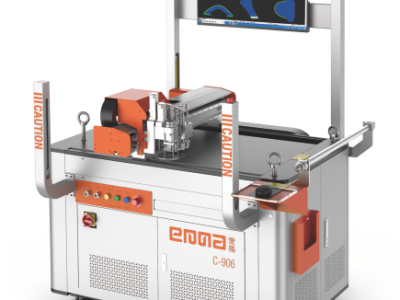
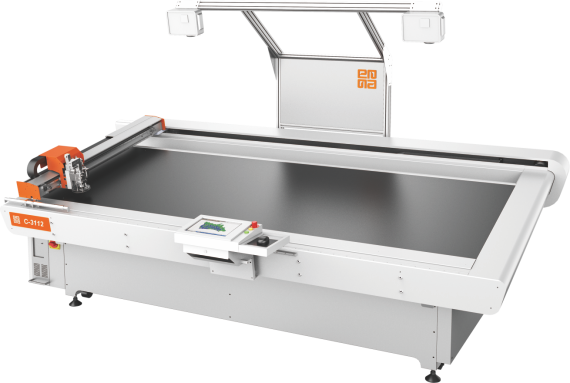
Implementing the Emma CNC Leather Cutting Machine transitions your cutting floor from static mechanical processing to real-time, software-calibrated material optimization. This architecture fuses a multi-axis CNC gantry with advanced vision systems and high-frequency oscillating tool heads, allowing the machine to execute complex geometries on a dynamic basis. Instead of crushing leather fibers under thousands of pounds of hydraulic die pressure, the system uses high-speed vertical blade frequencies to shear fibers cleanly along exact CAD coordinate pathways. By digitizing the initial hide evaluation and substituting fixed dies with fluid vector paths, factories bypass tooling bottlenecks entirely, improving raw hide utilization while compressing production cycle timelines.
Spatial Topography and Automated Defect Isolation
Maximizing yield across non-homogeneous natural materials requires an active data-capture phase prior to the physical introduction of the cutting blade. Hides are divided into distinct structural zones: the compact, dense grain of the butt region offers maximum tensile strength and minimal stretch, whereas the loose, elastic fiber matrix of the belly and flank sections easily distorts under load.
Advanced CNC equipment mitigates these regional variations using high-resolution overhead camera arrays that scan the entire hide layout in milliseconds. Digital operators map structural surface imperfections directly within the control software, assigning specific quality thresholds to different areas of the hide.
Once these digital parameters are established, local algorithmic nesting servers process thousands of spatial arrangement combinations, arranging parts as close as 0.2 millimeters apart. This dense nesting capability, coupled with real-time zone configuration, systematically reduces waste factor percentages by up to 18 percent compared to manual layouts. To maintain this precision during high-speed cutting, a high-vacuum hold-down matrix splits the cutting bed into independent vacuum zones, applying localized downward pressure to flatten surface warping and eliminate material slippage without marking delicate leather finishes.
Downstream Velocity and Structural Edge Integrity
The mechanical action of the cutting tool head determines not only the processing speed but also the structural behavior of the cut pieces during final assembly. When a manual knife or heavy steel die cuts through leather, it exerts lateral friction or high compression forces that pull and deform the fiber network along the perimeter of the cut piece.
Digital knife systems resolve this problem by pairing brushless AC servo motors with rapid oscillating tool carriages that operate at thousands of strokes per minute. This rapid vertical movement ensures the blade shears the material purely on a vertical plane, eliminating fiber distortion and edge fraying.
The resulting clean, unmarred edges reduce preparation times for skiving, stitching, and edge painting. When pieces exhibit absolute dimensional uniformity, automated downstream sewing systems experience significantly less needle deflection and thread tension issues, directly accelerating final assembly cycles.
Quantifiable Operational Performance Metrics
Transitioning from mechanical die configurations to digital CNC tooling modifies key performance metrics across the entire manufacturing facility. The deployment of automated knife technology introduces predictable, measurable improvements in material savings, throughput capacity, and labor costs.
Production speeds scale markedly, with digital toolpath trajectories achieving linear cutting velocities of up to 1,500 millimeters per second, increasing overall throughput by 300 percent over manual operations. Automated nesting algorithms reliably increase hide utilization averages to 85 percent or greater, delivering immediate savings on premium material purchases.
Labor efficiency is similarly optimized, allowing a single machine technician to monitor multiple automated cutting zones simultaneously, which reallocates specialized workers to higher-value finishing and inspection roles. Furthermore, zero-tooling lead times enable design teams to deploy updated DXF or ISO files straight to the production floor, condensing pattern prototyping loops from weeks down to a few minutes.
Thermal Preservation Versus Molecular Oxidation
Selecting a mechanical knife CNC system over gas-based carbon dioxide laser cutting systems is critical for maintaining the raw material’s structural integrity. Lasers rely on focused thermal energy to vaporize material along a vector path, a process that cooks the protein structures within leather, resulting in hardened, charred edges that crack when bent or stretched.
Additionally, carbonized laser-cut edges emit strong odors and leave dark ash residues that smudge light-colored hides, requiring secondary manual cleaning steps. This charred edge profile also degrades adhesive bonding properties; industrial contact cements require porous surfaces to establish deep polymer interlocks, and a glazed, carbonized edge blocks this penetration, causing early seam delamination under load.
Digital knife cutting avoids thermal issues by preserving the native physical properties of the leather right up to the cut boundary. From a maintenance standpoint, blade wear is predictable and easily managed through software tracking that logs cumulative linear distance cut, allowing staff to replace blades during regular shift breaks rather than dealing with unexpected mid-job failures.
Structural Framework and Axis Kinematics
The long-term accuracy of high-speed CNC machinery depends on a rigid, stress-relieved steel gantry structure that resists structural warping from intense acceleration forces. Heavy-duty dual-motor gantry drives paired with helical rack-and-pinion assemblies eliminate harmonic vibrations, ensuring tight tolerance accuracy down to small fractions of a millimeter.
This structural framework is paired with modular tool carriages that adapt to changing production needs. Technicians can swap between electric oscillating knives for thick, heavy hides and pneumatic tools that utilize pressurized air to blast through hardened material composites.
By controlling mechanical backlash and minimizing structural deflection at high feed rates, the machine maintains physical alignment over thousands of continuous operating hours. This reliable accuracy prevents downstream waste, as every cut piece matches its digital template exactly.
Software Integration and Dynamic Workflows
Transitioning to automated material handling changes how design templates move through the factory environment. Traditional production methods require extensive physical cataloging, where physical templates must be cataloged, retrieved, and verified manually before setting up a run.
Digital systems bypass these physical storage constraints by processing direct CAD standard formats such as DXF, AI, and PLT files. This digital asset infrastructure allows engineers to instantly alter design paths, add ventilation perforations, or incorporate internal stitch markers within the centralized control interface.
This continuous digital loop connects design workflows directly to active hardware components. Consequently, production managers can implement layout adjustments immediately, eliminating the traditional communication gaps between engineering desks and the active cutting floor.
Just-In-Time Logistics and Scale Flexibility
This structural and software agility allows manufacturers to shift toward flexible, demand-driven manufacturing models. Since digital cutting files can be selected and swapped instantly within the control interface, factories can produce custom or low-volume batches without the financial overhead typically caused by low tool utilization.
This agility allows for direct integration with enterprise resource planning frameworks, automatically translating client orders into ready-to-cut nesting layouts based on real-time leather stock availability. This end-to-end digital workflow shortens lead times, minimizes data errors, and provides full lot traceability across the entire manufacturing process.
Frequently Asked Questions
How does a CNC leather cutter manage natural thickness variations within a single hide?
Advanced systems utilize software-driven depth control alongside floating tool head mechanisms. Operators can set specific tool pressures or mechanical depth stops within the cutting software. Additionally, the multi-zone vacuum system flattens variable sections against the cutting surface, ensuring the oscillating knife maintains a uniform cutting depth relative to the bed, regardless of structural density shifts.
Can these machines process materials beyond natural leather?
Yes. The modular tool head architecture allows these systems to cut a wide variety of flexible materials, including synthetic leathers, composite textiles, carbon fiber pre-pregs, foam padding, rubber gaskets, and corrugated cardboard. Operators simply switch the tool head module or adjust the blade frequency to match the physical characteristics of the chosen substrate.
What maintenance routines are required to prevent unscheduled downtime?
Daily maintenance involves clearing debris from the cutting bed and checking the vacuum filtration system to ensure optimal material hold-down force. Weekly protocols include lubricating the linear guide rails, inspecting the gantry drive belts or rack-and-pinion systems for wear, and verifying tool head calibration. Tracking blade mileage through the control software ensures dull tools are replaced before they cause edge deformation.
Is specialized programming knowledge required to operate the software?
Modern CNC systems feature intuitive user interfaces that convert standard CAD files, such as DXF, AI, or PLT formats, into machine-readable G-code automatically. While basic training on nesting optimization and safety protocols is necessary, operators do not need to write raw code manually; the software handles tool path generation, nesting layouts, and speed parameters automatically.
How do oscillating knives prevent the leather from bunching or shifting during intricate cuts?
The system combines high-velocity vertical stroke frequencies with an intense localized vacuum hold-down matrix. The vacuum matrix applies thousands of pascals of downward pressure across the material surface, neutralizing the lateral forces generated by the moving blade. Because the blade moves up and down rapidly as it advances along the vector path, it shears the fibers vertically rather than dragging through them horizontally.
What is the typical lifespan of an oscillating cutting blade?
Blade longevity depends entirely on material density, thickness, chemical tanning treatments, and overall cutting volume. For example, cutting heavily treated automotive leathers with abrasive pigments wears down tungsten carbide blades faster than cutting soft garment leathers. Most industrial software tracking suites log cumulative cutting hours, helping teams replace blades predictably during scheduled production breaks.
How does automated nesting handle major structural flaws like brand marks or deep scars?
During the initial inspection phase, the operator uses a digital stylus or overhead vision system to trace around any unusable areas, categorizing them by flaw type. The nesting software treats these marked zones as internal boundaries, calculating nesting layouts to position components entirely outside of those coordinates while utilizing the surrounding premium material.
What are the power and air consumption requirements for an industrial CNC cutting system?
High-volume CNC setups generally require a three-phase power supply to drive the high-volume vacuum pumps and main gantry servo motors. Additionally, clean, dry, compressed air is required if the system utilizes pneumatic oscillating tools or automated hole-punching modules. Specific pressure and kilowatt metrics vary based on the physical size of the cutting bed and total vacuum horsepower.
Can this machinery be integrated into an existing conveyorized production line?
Yes, configurations are available with automated conveyor beds. These systems automatically advance raw materials from an uncoiling roll or loading table onto the active cutting surface, execute the nested cut program, and then move the finished parts to a dedicated collection area while bringing in the next section of material for a continuous workflow.
How does a mechanical CNC system compare economically to a die press over time?
While a die press requires ongoing capital expenditure for every new pattern size or style modification, a digital CNC system incurs a single upfront equipment investment. Over time, eliminating die manufacturing costs, reducing manual labor overhead, and lowering material scrap rates by 15% to 18% allows high-volume operations to achieve full capital payback relatively quickly.
Summary
Replacing mechanical dies with a software-driven cutting environment prepares a production facility for changing market demands. As fast-fashion cycles and customized consumer configurations require shorter product lifespans, the capability to shift patterns instantly becomes a core competitive advantage.
Beyond immediate yield gains, the reduction in physical labor demands stabilizes factory workflows against systemic regional skill shortages. Training digital technicians to oversee automated cells is a repeatable process, ensuring consistent quality independent of manual leathercraft experience.
Ultimately, integrating high-capacity digital cutting mechanisms transforms the cutting department from a variable, high-scrap bottleneck into a highly predictable automated data center. This operational predictability provides a stable framework for scalable factory growth.