
Industrial towel manufacturing requires absolute precision during the fabric separation phase to guarantee that subsequent hemming and finishing stages achieve maximum efficiency. Within high-volume terry cloth conversion lines, preserving the geometric stabilization of the material while executing longitudinal slitting or cross-cutting determines the downstream yield of the entire plant. When processing heavy, highly textured pile structures, micro-deviations in the cutting pathway directly compromise structural stability, leading to immediate structural degradation and severe thread unravelling during commercial laundering.
For plant engineers and operations managers, selecting the optimal fabric separation modality requires a deep technical understanding of mechanical forces versus acoustic thermal interactions. High-speed automation platforms must handle complex structural variables, including web tension variations, warp and weft density variations, and individual pile loop dynamics. Choosing an inappropriate cutting sub-system introduces significant downstream bottlenecks, including premature blade wear, structural inconsistencies, and micro-grooving along the fabric transport mechanisms.
When evaluating production lines for terry cloth and luxury pile textiles, manufacturers frequently compare acoustic thermal separation against mechanical shearing systems. Evaluating Ultrasonic vs Traditional Towel Cutting Methods reveals distinct mechanical differences in how tool geometry interacts with individual textile fibers. Mechanical separation relies on continuous structural stress executed via synchronized circular knives or heavy cross-cut shear bars, whereas acoustic processing utilizes high-frequency sound waves to generate localized thermal energy.
The Kinematics of Mechanical Fabric Separation
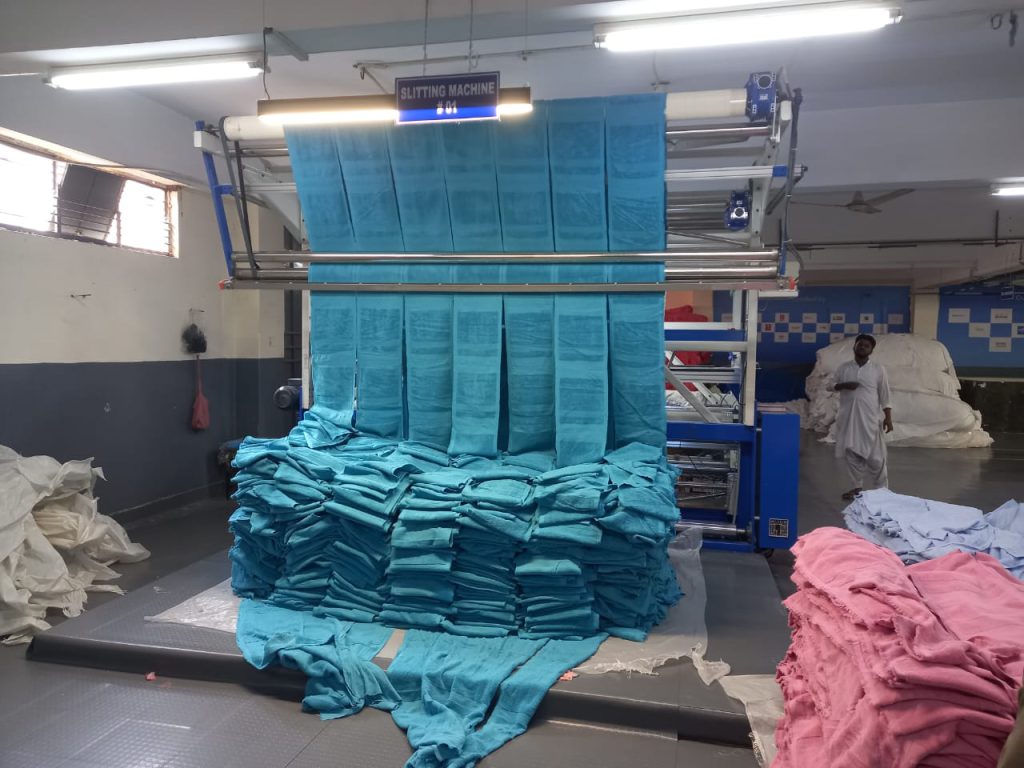
Industrial mechanical cutting systems, such as the self-steering configurations utilized in advanced Bando auto-length slitting machinery, operate via high-velocity rotational shear. Standard setups feature high-alloy steel or tungsten carbide circular knives rotating in counter-direction to the continuous fabric feed web. This configuration maintains a precise, calculated downward force against a hardened steel counter-blade or anvil to split the fabric cleanly between the pile-free weaving channels.
To achieve a clean separation without pulling the surrounding terry loops, the mechanical assembly must balance blade geometry with rotational velocity. The cutting edge must penetrate the dense warp and weft grid simultaneously, applying immediate sheer force before the flexible cotton fibers can deflect or bunch up. When operating at continuous production speeds reaching 30 to 60 meters per minute, the mechanical knives must overcome extreme lateral friction. If the blade geometry degrades by even a fraction of a millimeter, the system no longer cuts cleanly; instead, it tears the raw cotton weave, causing structural distortion along the pile line.
The primary engineering advantage of high-performance mechanical slitting is its deep material penetration and structural independence. Automated mechanical units feature independent, motorized cutting assemblies where each cutter steers itself automatically via photo-electronic fabric guides. This allows the system to adjust dynamically to physical deviations in the moving textile web, ensuring the knives slit precisely down the center of the pile selvedge. This approach provides unmatched efficiency when processing pure cotton, thick luxury terry loops, and heavy multi-layered home textiles that require deep mechanical separation without scorched edges or thermal discoloration.
The Physics of Acoustic Thermal Separation
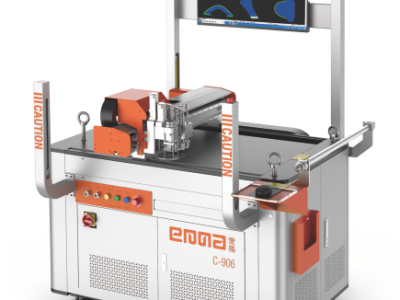
Ultrasonic fabric cutting replaces mechanical shearing forces with localized acoustic energy. The sub-system consists of three primary components: an electronic power supply or generator, a piezoelectric transducer, and an acoustically tuned horn, also known as a sonotrode. The generator converts standard electrical current into a high-frequency, high-voltage electrical signal, typically vibrating at 20 kHz to 40 kHz. The piezoelectric transducer converts this electrical energy into microscopic, high-frequency mechanical vibrations.
These rapid mechanical oscillations travel down the sonotrode, which continuously presses against the moving textile web over a fixed anvil. As the fabric passes through this high-vibration gap, the acoustic energy creates localized friction within the molecular structure of the individual fibers. For synthetic textile blends, such as polyester-microfiber blends or poly-cotton variations, this intense localized friction raises the material temperature past its melting point almost instantly.
As the acoustic horn moves through the material, it performs two actions simultaneously: it melts a microscopic path through the web to separate the fabric, and it fuses the raw edges together as the synthetic polymers cool down. This process creates a clean, sealed edge that prevents any unravelling of warp or weft yarns without physical blade friction. However, because this process relies on thermal fusion, it requires a minimum percentage of thermoplastic synthetic fibers within the textile matrix to achieve a stable bond. Pure cotton fibers do not melt under acoustic frequencies; instead, they char or burn if exposed to excessive acoustic energy without a polymer binding agent.
The Industrial Reality: Mitigating the Cost of Mechanical Degradation
Relying on legacy mechanical setups or improperly calibrated cutting sub-systems introduces a series of real-world operational complications that impact factory profitability. In high-volume production, the phrase “routine maintenance” often translates to significant financial losses caused by unplanned downtime and rapid mechanical degradation. Processing continuous, multi-axis terry webs at high speeds generates intense localized friction, accelerating tool wear and causing microscopic blade chattering.
When a mechanical blade dulls, its cutting dynamics shift from clean shearing to crushing and pulling. This physical pulling skews the web tension across the machine width, causing the heavy terry fabric to track unevenly through the cutting and hemming zones. As a result, the cut drifts into the adjacent pile loops, producing loose threads and uneven borders. When these loose threads enter high-speed cross-hemming units, they trigger automatic thread-breaking detectors, causing frequent machine stoppages.
Furthermore, processing heavy terry cloth generates a massive volume of airborne cotton particulate and industrial lint. This lint can settle into open linear guide rails, coat optical sensor lenses, and pack into the threads of precision ball screws. When this highly absorbent cotton dust mixes with bearing lubrication, it transforms into a dense, abrasive sludge. This sludge increases electrical resistance inside control cabinets and accelerates the wear of moving metal components. In mechanical systems, this issue requires regular teardowns for blade sharpening and machine calibration. While ultrasonic systems eliminate blade dulling, they introduce their own technical challenges, including acoustic horn erosion and thermal management issues during continuous operations.
Quantifiable Operational Gains and Technical Metrics
Selecting the right cutting technology and deploying automated towel finishing systems yields measurable improvements in production capacity and material utilization. Transitioning from legacy manual setups to automated slitting and hemming machinery provides verifiable performance upgrades across several key operational areas:
- Production Output Optimization: Automated slitting machinery consistently maintains continuous operational speeds of 30 to 60 meters per minute. This capability delivers a fourfold increase in throughput compared to manual division processes, allowing facilities to fulfill high-volume orders much faster.
- Raw Material Waste Minimization: Integrated photo-electronic fabric guides and automated steering systems scan the borders of the moving web continuously. By maintaining an exact path down the center of the pile-free weaving channels, these systems reduce raw material waste margins by approximately 8%, saving significant amounts of fabric over high-volume production runs.
- Hemming Quality and Stitch Density: Synchronized automation lines transfer the precisely slit fabric lanes directly into cross-hemming units without manual intervention. This continuous workflow allows machines to sew both sides of the towel simultaneously, ensuring a uniform stitch density of 8 stitches per inch and eliminating the edge variances common in manual operations.
- Reduction in Labor Allocation: Unifying fabric slitting, cross-cutting, and length hemming into a continuous automated sequence reduces manual material handling. This optimization allows facilities to reallocate operators from repetitive manual cutting tasks to higher-value machine monitoring roles.
Architectural Synchronization with Downstream Hemming
The structural integrity of a towel’s edge depends on the mechanical harmony between the initial fabric separation and the subsequent hemming stages. If the longitudinal slitting leaves a frayed edge, the downstream folding plates and cross-hemming units will struggle to manage the loose material. In automated lines, the material moves continuously from the cutting knives into the folding section, where mechanical arms and targeted pneumatics fold the raw edges over before stitching.
Maintaining clean edge alignment during this transition requires active web tension control. Heavy terry cloth demands strong grip traction from drive rollers to prevent slippage. If the cutting system exerts uneven lateral forces on the fabric web, the material will stretch along one border, causing the finished towel to warp or bunch once relaxed. Advanced automation systems resolve this issue by integrating closed-loop tension controllers equipped with load cells that continuously adjust the feed roller speeds to keep web tension completely uniform.
When the fabric lanes transition to the cross-cutting and cross-hemming phase, the system uses electronic encoders to track the exact speed of the material. If a plant changes production from standard bath towels to large beach towels, operators select the corresponding recipe via the programmable logic controller (PLC) interface. The PLCs instantly send the new length parameters to the cross-cutting assemblies, adjust the folding plate widths, and update the stacking conveyor speeds. This level of technical synchronization ensures that whether you use high-speed mechanical shearing or ultrasonic fusion, the edge of the fabric is positioned correctly for the sewing needles, creating a durable, retail-ready product.
Engineering Selection Framework: Deciding the Factory Standard
Choosing between ultrasonic thermal separation and advanced mechanical cutting depends on your primary product specifications and raw material compositions. Plant engineers should use a data-driven framework to select the ideal cutting standard for their production requirements:
- Material Composition: For production runs focused on 100% pure cotton luxury towels, high-performance mechanical cutting systems remain the correct choice. Cotton lacks the thermoplastic properties required for ultrasonic welding, making mechanical shearing necessary for a clean split without fabric charring. If your product mix includes microfiber sports towels, industrial cleaning cloths, or high-synthetic institutional blends, ultrasonic cutting offers significant advantages by sealing the edge during the cut.
- Operational Velocity vs. Depth: Mechanical slitting lines can run at high speeds (up to 60 meters per minute) regardless of the fabric’s thickness or pile weight. Ultrasonic systems, however, are limited by thermal transfer rates; heavier fabrics require slower processing speeds to ensure the acoustic energy fully melts and seals the thicker synthetic web.
- Edge Finishing Constraints: If your final product requires a traditional stitched hem, mechanical slitting is ideal because it provides a soft, pliable border for downstream folding plates. Ultrasonic cutting creates a rigid, fused polymer bead along the edge. For some applications, this sealed edge can replace a traditional stitched hem entirely, reducing thread consumption but altering the final feel of the edge.
- Capital Expense vs. Maintenance Allocation: Ultrasonic systems require a higher initial investment due to the cost of high-frequency power generators and specialized acoustic transducers, but they lower long-term costs by eliminating blade sharpening routines. Mechanical systems have a lower initial equipment cost but require consistent maintenance schedules to manage blade wear, lint accumulation, and geometric calibration.
Summing Up
The choice between acoustic thermal separation and high-velocity mechanical shearing is not a matter of selecting a superior technology, but rather of aligning machine mechanics with material science. For textile facilities focused on high-volume, 100% cotton terry production, precision self-steering mechanical systems remain essential. They deliver the raw cutting power and physical separation required for heavy natural fibers without the risk of thermal degradation or edge charring. Conversely, for synthetic and microfiber lines, ultrasonic cutting offers an efficient solution by combining slitting and edge-sealing into a single, high-speed step.
Optimizing production efficiency requires a complete understanding of your downstream processes. Clean, precise fabric separation—free from thread pulling and structural distortion directly protects downstream cross-hemming and automated folding systems from unexpected downtime. By choosing the right cutting sub-system based on fabric composition, weight, and production goals, manufacturers can minimize material waste, lower maintenance costs, and maximize throughput across the entire finishing line.