
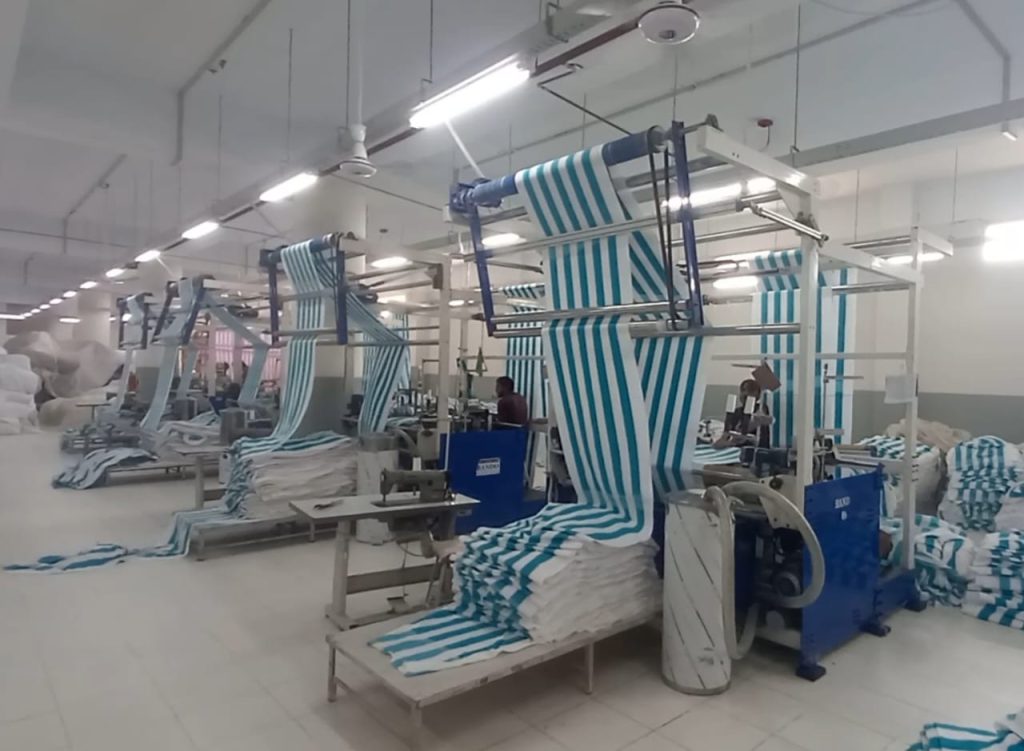
Textile factory floors operate under intense financial pressure where every millimeter of fabric and every second of production time dictates profit margins. Plant managers face a dual crisis of evaporating skilled labor pools and escalating raw material costs. Operating a profitable towel production line requires strict adherence to quality metrics, yet achieving this with manual labor is becoming mathematically impossible. Margins shrink when operators fatigue, leading to irregular stitches, wasted cotton, and rejected shipments. The traditional model of filling a factory floor with hundreds of manual sewing benches fails to meet modern volume demands. The root of the problem lies in the physical limitations of human operators and the mechanical degradation of legacy equipment. When you depend on manual operations, your production speed is entirely bottlenecked by the fatigue level of your workforce.
Older mechanical sewing units suffer from constant vibration and wear, leading to unplanned downtime. A broken needle or a misaligned feed dog on a manual machine stops a single operator, but when multiple machines go offline, the entire work-in-progress inventory piles up. This mechanical degradation directly eats into quarterly profits through both repair costs and lost throughput. We are witnessing a fundamental redesign of the textile workflow to counteract these exact variables. Floor managers are stripping out manual benches and installing continuous, high-speed automated lines that maintain exact stitch tension from the first towel to the ten-thousandth. This is How Smart Automation is Transforming Towel Manufacturing in 2026 by removing human error from the equation entirely. Upgrading to intelligent machinery stabilizes the production floor, ensuring that shipment deadlines rely on programmed logic controllers rather than the variable attendance of a manual workforce.
The Real Cost of Manual Operations
Relying on a manual workforce for high-volume towel production creates invisible financial leaks across the factory floor. Skilled sewing operators who can consistently maintain exact stitch counts are retiring or migrating to other industries, leaving severe gaps in the talent pool. Training new operators takes months, and during that ramp-up period, the factory absorbs the cost of high spoilage rates and ruined raw materials. Terry cloth is an unforgiving material. The loops that give towels their absorbency also create massive friction against manual blades and sewing needles. When a manual operator feeds heavy terry cloth into a standard sewing machine, they are fighting the weight and the drag of the fabric with their bare hands. This physical struggle leads to uneven selvedge alignment. If the selvedge is not perfectly straight, the final towel looks warped and feels cheap, causing retail buyers to immediately reject these shipments.
Beyond human error, legacy mechanical equipment introduces extreme maintenance liabilities. Manual sewing machines lack predictive diagnostics. A mechanic only knows a part has failed after the machine breaks and halts production. The cost of unplanned downtime far exceeds the price of the replacement part because idle operators and missed shipment windows compound the financial damage. When factory owners calculate the true cost of their manual operations, they must include the wages paid during machine downtime, the cost of rejected fabric, and the energy wasted by inefficient, older motors constantly idling between items.
Technical Mechanics of Modern Machinery
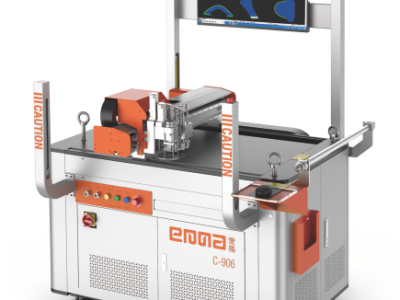
Transitioning from manual labor to automated systems requires robust machinery designed for continuous operation. Solutions like the Bando and Alpha automated lines replace fragmented manual steps with a unified, high-speed workflow. These systems pull fabric straight from the roll, automatically measure the required dimensions, execute precision cuts, and stitch the edges in one seamless motion. The physical architecture of these machines prevents the fabric bunching and stretching that plagues manual operations.
Precision with Programmable Logic
The brain of these modern systems is the Programmable Logic Controller. The PLC synchronizes the blades with the fabric feed rate, ensuring exact tension control. When fabric moves at high speeds, even a fraction of a millimeter of misalignment causes catastrophic fabric jams. The PLC constantly reads sensor data to adjust the feed rollers, keeping the towel perfectly aligned before it reaches the sewing heads. This level of digital synchronization eliminates the need for an operator to physically guide the material, thereby removing the primary source of dimensional errors in towel manufacturing.
Fabric Tension and Cross Cuts
Maintaining constant fabric tension across a wide material span is an engineering challenge that automation solves through synchronized drive rollers. In a manual setup, the fabric sags in the middle, causing a bowed cut. Automated cross-cut machines eliminate this by utilizing pneumatic tension bars that pull the fabric perfectly taut just milliseconds before the heavy-duty steel blade descends. This ensures an absolutely straight, clean severing of the heavy terry cloth, preserving the integrity of the cotton loops. Automated edge detection optical sensors scan the border of the towel pattern, instructing the PLC to adjust the blade position on the fly. Even if the woven pattern shifts slightly during the bleaching and dyeing process, the machine compensates instantly.
Speed and Stitch Consistency
Volume demands require industrial speed without sacrificing finish quality. Modern automated machines utilize advanced Japanese sewing heads capable of running at twenty meters per minute while laying down exactly eight stitches per inch. A manual operator cannot sustain this speed for more than a few minutes before fatigue causes the stitch count to fluctuate. By integrating advanced inverter technology, the automated machines maintain constant motor torque, ensuring the needle punches through thick terry cloth with the exact same force every single time. This uniformity guarantees that the end product meets the strict quality control standards demanded by international buyers.
Quantifiable Production Gains
Factory owners need hard data to justify equipment upgrades. Transitioning to advanced automated systems yields specific, measurable improvements across all core production metrics. The layout of these benefits clearly demonstrates the financial return on modern machinery.
- Output Multiplier Effect A single automated line replaces the output of multiple manual operators. One hour of automated operation equals roughly four to six hours of manual work. This allows factories to drastically increase their daily yield without expanding their physical footprint or hiring additional staff.
- Material Waste Eradication Automated length measurement and precise execution ensure that every towel matches the exact programmed dimension. Digital control reduces material waste by up to eight percent, a massive saving when calculated over thousands of tons of cotton per year.
- Energy Consumption Control Modern automated machines utilize advanced inverters that only draw maximum power when the sewing heads are actively engaged. Unlike legacy motors that draw continuous heavy current, this intelligent power management significantly lowers the monthly electrical overhead of the factory.
- Labor Reallocation By automating the repetitive tasks, factory managers can move their reliable staff away from monotonous machine operation and into quality control, logistics, or machine supervision roles. This maximizes the value of the human workforce while letting the machines handle the heavy lifting.
Equipment Degradation Defense
Industrial machinery operates in harsh environments filled with cotton dust, high humidity, and continuous vibration. Older equipment breaks down rapidly under these conditions, but modern automated systems are built to defend against this specific degradation. Airborne cotton fibers settle on exposed lubricants to form a thick, grinding paste that destroys gears and drive belts. Modern systems enclose their critical moving parts in sealed, pressurized housings. By maintaining a slight positive air pressure inside the casing, the machine physically pushes dust away from the sensitive internal components.
Maintenance and Interface Integration
The most significant defense against unplanned downtime is the Human-Machine Interface. Touch screen displays provide operators with real-time diagnostic data. Instead of guessing why a blade is underperforming, the HMI alerts the operator to the exact sensor failure or tension irregularity. This targeted information allows maintenance teams to perform rapid, precise fixes rather than spending three hours diagnosing a vague mechanical issue. Furthermore, modern equipment utilizes self-lubricating bearing systems. Instead of relying on a mechanic to manually grease dozens of fittings every week, the machine distributes precise micro-doses of synthetic oil to high-friction zones based on actual run-time hours.
The Financial Argument for Plant Upgrades
Capital expenditure on automated textile machinery is a calculated strategy to protect future profit margins. The initial investment in advanced auto length and cross-cut machines quickly pays for itself through the elimination of human error, the massive reduction in fabric waste, and the stabilization of production speeds. When you map out the total cost of ownership for a manual production line over five years, the expenses associated with high labor turnover, machine idling, B-grade product discounts, and emergency repairs far exceed the cost of an automated system.
When evaluating the return on investment for a complete factory overhaul, plant managers must look beyond the initial purchase price. Legacy industrial equipment requires massive industrial power drops and creates brutal power spikes every time a motor engages. The modern automated lines utilize soft-start inverters that ramp up the power draw smoothly, protecting the factory’s electrical grid. Moreover, when you operate automated machinery, you drastically reduce the footprint required to produce the same volume of goods. You do not need to lease additional warehouse space to house more manual benches; you simply maximize the vertical throughput of your existing square footage. An automated factory floor proves to international buyers that you have the technological infrastructure to handle massive orders without compromising on stitch quality or delivery timelines.
FAQ’s
1. How does automation address the issue of inconsistent stitch quality?
Modern systems utilize precise Japanese sewing heads integrated with Programmable Logic Controllers. The PLC dictates the exact feed rate, guaranteeing a uniform eight stitches per inch regardless of the fabric thickness or production volume.
2. Does automated machinery reduce raw material waste?
Yes. Automated machines use digital length measurement to execute perfectly straight cuts at exact intervals. This eliminates the diagonal wandering common with manual scissors, saving up to eight percent in total material waste.
3. What role does the Human-Machine Interface play in daily operations?
The touch screen HMI provides operators with real-time diagnostics and control over machine parameters. It pinpoints errors immediately, which drastically reduces the time mechanics spend diagnosing mechanical degradation or sensor faults.
4. Can these automated systems handle different towel dimensions easily?
Absolutely. The automated length and width parameters are adjusted via the touch screen interface. The machine instantly recalibrates its blades, allowing for fast changeovers between different client orders without physical retooling.
5. How does inverter technology benefit the factory owner?
Inverter technology regulates the power drawn by the machine motors. It ensures the motors only use the necessary amount of electricity for the specific load, preventing power spikes and significantly reducing the overall energy consumption of the plant.
6. Will installing automated machinery require a completely new workforce?
No. The goal is labor reallocation. The complex physical task of handling heavy terry cloth is managed by the machine, allowing your existing workforce to transition into supervisory, quality control, or operational roles that add more value.
7. How does the PLC prevent fabric jams during high-speed production?
The PLC continuously monitors sensor data along the fabric path. If it detects a tension irregularity or a buildup of material, it instantly adjusts the roller speeds to smooth out the fabric before it reaches the sewing heads, preventing jams.
8. Why are Japanese sewing heads preferred in modern towel automation?
Japanese sewing heads are engineered with incredibly tight tolerances and high-grade materials. They withstand the immense vibration of continuous high-speed operation far better than standard heads, resisting mechanical degradation and ensuring a longer operational lifespan.
9. What is the financial impact of eliminating unplanned downtime?
Unplanned downtime costs the factory hourly wages for idle workers, missed shipment penalties, and wasted energy. By using automated diagnostic systems to perform predictive maintenance, factories avoid these cascading financial losses and maintain consistent daily output.
Conclusion
Plant operators can no longer absorb the financial drain of manual stitching inconsistencies and unpredictable labor availability. Integrating PLC-driven cutting and sewing architectures fundamentally alters the cost-per-towel equation. This shift transitions the factory floor from a reactive environment—where managers constantly battle mechanical degradation and operator fatigue—into a predictable, high-yield operation governed by sensor data and continuous workflow. The metrics are undeniable, as replacing fragmented manual benches with unified machine centers directly correlates to lower electrical overhead and near-zero material spoilage.
Upgrading a textile facility requires a precise evaluation of current production bottlenecks rather than just replacing old motors. Factory owners must identify exactly where manual handling is slowing down the feed rate or causing edge misalignment. Implementing advanced automated lines, such as those supplied and supported by the technical specialists at Texserco, ensures that your infrastructure is engineered to handle massive continuous output. Moving away from manual dependency is the only mathematically sound strategy to protect profit margins, guarantee dimensional exactness, and meet the aggressive shipment deadlines of the global retail market.