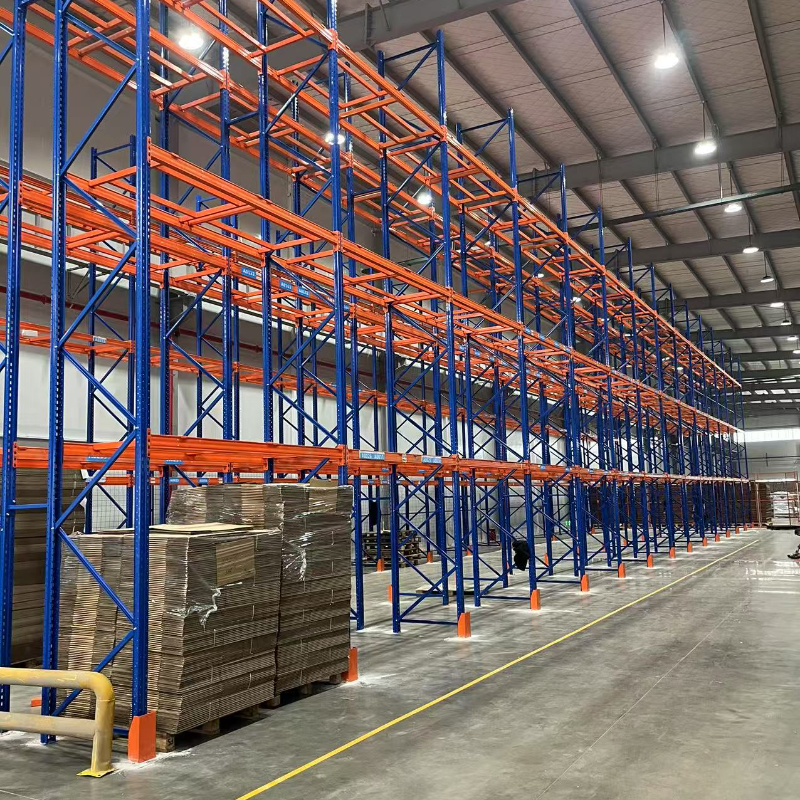

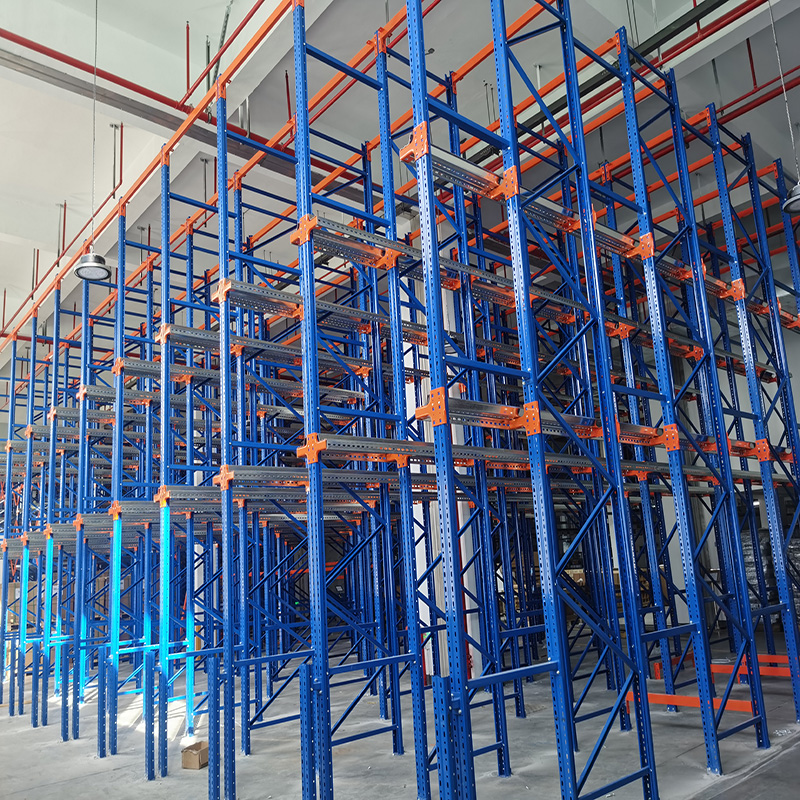
In the highly competitive landscape of global supply chains, warehouse real estate has shifted from a basic utility to one of the most significant line items on corporate balance sheets. Rising land acquisition costs, coupled with the rapid expansion of e-commerce and regional fulfillment hubs, mean that operations can no longer survive on horizontal layouts alone. Maximizing spatial density while ensuring continuous accessibility is a core operational challenge. Implementing a robust, highly optimized pallet racking system is the foundational structural intervention required to solve this equation.
A pallet racking system is not merely a static storage structure. When engineered properly, it functions as a highly integrated physical framework that directly dictates a facility’s material handling velocity, inventory control protocols, and overall throughput. By shifting focus from simple floor area to vertical cubic volume, facilities can expand their capacity three-to-four-fold without expanding their physical footprint. This comprehensive guide breaks down the engineering, configurations, safety considerations, and technological integration of modern racking systems to help operations leaders make data-driven decisions.
Decoding the Anatomy of a High-Performance Pallet Racking System
To the untrained eye, industrial racking looks like simple steel shelving. In reality, it is a highly engineered structural matrix subjected to immense static loads and severe dynamic stresses from forklift operations. Understanding the exact structural components is critical for building a safe and functional warehouse floor.
Upright Frames (The Columns)
Upright frames are the vertical structures that determine the height and depth of the rack system. Composed of two vertical posts joined by diagonal and horizontal bracing, these frames are roll-formed or structural steel components. The structural integrity of the entire system depends on the column’s gauge thickness, profile design, and seismic-rated baseplates bolted directly into the concrete floor slab.
Load Beams (The Horizontal Spans)
Load beams are the horizontal support structures that directly hold the pallets. They lock into the vertical upright frames via heavy-duty connectors featuring auto-locking pins to prevent accidental dislodgement from upward forklift impact. Beams are engineered with a specific structural deflection limit (typically L/180, meaning the beam can only flex 1/180th of its length under maximum load) to ensure structural safety.
Wire Decking and Safety Supports
While pallets theoretically rest directly on the steel load beams, modern safety standards dictate the use of wire decking. Constructed from heavy-duty wire mesh reinforced with channel supports, wire decking prevents loose products or degraded pallets from falling through the rack levels. Furthermore, its open mesh design ensures that warehouse fire suppression systems (ESFR sprinklers) can penetrate down through every level of the racking matrix in case of an emergency.
Rigidity Accessories: Row Spacers and Cross-Bracing
When racks are positioned back-to-back, they are tied together using structural row spacers. These steel braces ensure uniform distance between rows and significantly increase the global lateral stability of the system. Additionally, top-tie bracing or heavy-duty back-bracing may be integrated into high-bay warehouses to counter dynamic shear forces during forklift transitions.
Strategic Configurations: Types of Pallet Racking Systems and Their Operational Math
There is no one-size-fits-all solution when choosing a pallet racking system. The ideal configuration depends entirely on three key operational variables: the number of unique Stock Keeping Units (SKUs), the throughput velocity of those SKUs, and the rotation methodology required (First-In, First-Out vs. Last-In, First-Out).
| System Type | Storage Density | Selectivity | Inventory Flow | Ideal Application |
| Selective Racking | Low to Medium | 100% (High) | FIFO | High SKU count, lower volume per SKU |
| Double-Deep | Medium to High | 50% (Medium) | LIFO | Identical SKUs, long shelf-life |
| Drive-In / Drive-Through | High | Low (Single Lane) | LIFO / FIFO | Bulk, uniform products, cold storage |
| Push-Back Racking | High | Medium-Low | LIFO | High-density dynamic, mid-range SKUs |
| Pallet Flow (Gravity) | Very High | Low (Lane-specific) | FIFO | Perishables, high-velocity distribution |
| Very Narrow Aisle (VNA) | High | 100% (High) | FIFO | High-bay warehouses, premium floor space |
Selective Pallet Racking
This is the most common and standard configuration in warehousing. It offers immediate access to every single pallet stored (100% selectivity). Since every pallet position is directly reachable from the aisle, it works perfectly for operations that manage a vast array of unique SKUs with unpredictable demand curves. However, its major drawback is its poor spatial efficiency; because standard Selective systems require wide forklift aisles (typically 3.2 to 3.8 meters), over 60% of the warehouse’s footprint is dedicated to aisle space rather than actual storage.
Double-Deep Racking
By placing selective racks two-deep, this layout eliminates one of every two aisles, immediately increasing storage density by up to 30% over standard selective layouts. However, it requires specialized pantograph-equipped forklifts (reach trucks) to access the rear pallet position. Because the front pallet must be removed to access the back one, Double-Deep configurations are locked into a Last-In, First-Out (LIFO) material flow, making them less suitable for perishable items or batch-tracked pharmaceuticals.
Drive-In / Drive-Through Racking
Designed for dense bulk storage, Drive-In racking allows forklifts to literally drive directly into the structural bays to deposit or retrieve pallets. By eliminating access aisles entirely, these systems offer exceptional volumetric utilization. The primary trade-off is high structural vulnerability; forklifts constantly operating inside the racking increases the risk of structural column collisions. Therefore, choosing a pallet racking system of this nature requires specifying heavy-duty structural steel and integrating comprehensive column guarding.
Dynamic Racking: Push-Back and Pallet Flow
For high-volume operations where speed is paramount, dynamic gravity-driven systems offer incredible storage density. Push-Back Racking operates on a LIFO principle using nested, rolling carts. When a new pallet is loaded, it gently pushes the existing pallet back onto a slight incline. Pallet Flow Racking, on the other hand, operates on a true FIFO model. Pallets are loaded from the rear, rolling down gravity-fed wheel tracks equipped with internal centrifugal speed controllers to arrive safely at the front picking face. These systems drastically reduce travel times for operators but require substantial initial capital investment and precise structural alignment.
Engineering Load Capacities and Structural Safety Standards
Designing a reliable industrial warehouse structure is a precise engineering discipline. Underestimating mechanical load constraints or ignoring seismic activity variables can lead to catastrophic progressive collapses, destroying millions of dollars in inventory and risking human life. Every commercial pallet racking system must be built to conform strictly to standards set by the Rack Manufacturers Institute (RMI) and regional building codes.
Critical Engineering Note: Static vs. Dynamic Loading
A major point of failure in poorly designed systems is the failure to distinguish between static load capacity and dynamic load capacity. A static load refers to the stationary weight of the pallet sitting perfectly centered on the rack. A dynamic load occurs when a forklift operator forcefully drops a heavy pallet onto the beams or collides with an upright frame. Racking structures must always be calculated with a structural safety factor of at least 1.9 to account for these sudden, intense dynamic shocks.
Several variables govern the load-bearing capacity of a racking setup:
- Floor Slab Structural Capacity: Racks concentrate massive point loads through the upright baseplates onto the concrete warehouse floor. The slab’s thickness, reinforcement mesh, and soil compaction rating must be verified to prevent localized structural settling or concrete shearing.
- Seismic Engineering: In seismic-prone zones, racking systems must be engineered with specialized heavier-duty baseplates, massive anchor bolts, and additional diagonal bracing to absorb horizontal ground acceleration without tipping or fracturing.
- Beam Deflection Limits: Standard steel beams will naturally flex slightly under maximum capacity. However, deflection must never exceed 1/180th of the clear span. If a beam shows a visible, permanent sag when empty, it is structurally compromised and must be replaced immediately.
Choosing Your System: A Multi-Variable Decision Matrix
Before sourcing structural components, a detailed operational audit must be performed. Relying on generic warehouse layouts without aligning them with your product velocity metrics will inevitably lead to bottlenecked workflows or wasted space. To build an efficient layout, you must analyze several critical operational factors:
First, evaluate SKU Density vs. Volume. If you have a small number of unique SKUs but massive quantities of each, high-density systems like Drive-In or Pallet Flow are ideal. Conversely, a high-SKU, low-volume profile requires the high selectivity of a Selective or VNA layout. Second, match your Forklift Fleet Compatibility with your structural design. VNA layouts require specialized wire-guided turret trucks, whereas standard Selective racks can be serviced by generic counterbalance forklifts. Ensure your aisle spacing calculations match the exact outer turning radius of your material handling equipment, including a generous safety tolerance of at least 300mm.
Integrating Automation with Your Pallet Racking System
The future of logistics is not static. As modern warehouses look to reduce labor overhead and accelerate pick rates, integrating automation with physical racking has become a major industry standard. Modern automated systems convert standard static storage into a high-speed dynamic asset. This includes integrating racking matrices with Automated Storage and Retrieval Systems (AS/RS), shuttle-driven storage channels, and automated conveyor configurations that route products directly from the picking face to the packaging line.
Transform Your Warehouse Floor with Texserco
When engineering high-capacity, heavy-duty industrial storage networks, relying on off-the-shelf structural components is a recipe for operational bottlenecks. Texserco stands as the premier industry partner for custom industrial machinery, warehouse automation systems, and high-performance material handling structures.
Texserco’s team of structural and automation engineers specializes in designing turnkey, custom configurations tailored to your precise inventory profile, material flow speed, and spatial dimensions. From basic heavy-duty structural steel racking to highly complex, automated shuttle systems, Texserco ensures your warehouse infrastructure maximizes volumetric efficiency while strictly adhering to international safety and structural standards
By utilizing automated pallet shuttle systems, warehouses can run deep-lane configurations without the structural hazards of driving forklifts inside the racking lanes. The automated shuttle rides on rails built directly into the rack bays, lifting and carrying pallets to the picking face. This high-efficiency integration of structural racking with robotic automation represents the peak of modern warehouse design.
Best Practices for Maintenance, Inspection, and Compliance
A warehouse floor is a highly dynamic environment, with heavy forklifts moving in close proximity to loaded steel structures throughout every shift. Over time, minor impacts accumulate, compromising the load-carrying ability of the steel. Therefore, establishing a continuous maintenance and inspection routine is mandatory for both legal compliance and workplace safety.
1. Scheduled Structural Inspections
Under OSHA and European EN standards, industrial racking systems must be inspected at least once a year by a qualified structural engineer. Additionally, internal warehouse safety managers must conduct weekly or monthly visual inspections, documenting any signs of beam deflection, column twisting, sheared anchors, or cracked floor concrete.
2. Strategic Protection Upgrades
Preventative engineering is always more cost-effective than structural repair. Implementing heavy-duty column guards, aisle-end protectors, and post-shields can deflect forklift impacts, saving your core upright frames from structural damage. Additionally, implementing clear, high-visibility labeling on every single rack bay indicating its maximum load rating prevents overloading by forklift operators.
3. Instant Damaged Component Protocols
If a rack upright or beam sustains a visible bend, it must be immediately offloaded and isolated. Trying to straighten bent steel columns through manual force cold-works the metal, significantly weakening its structural load capacity. Compromised components must be systematically replaced with original manufacturer parts under the supervision of a structural engineer to guarantee the system’s ongoing structural integrity.
Conclusion
A warehouse’s storage infrastructure should never be treated as an afterthought. Investing in the right pallet racking system is a long-term strategic decision that shapes your operations for decades. By optimizing vertical volume, analyzing SKU velocity curves, choosing the correct material flow configuration, and prioritizing structural safety, you can turn a basic warehouse into a highly efficient, responsive logistics center.
As logistics operations face increasing pressure to execute faster with lower margins, integrating structural robustness with high-speed automation is the ultimate path forward. By working with dedicated industrial engineering specialists like those at Texserco, warehouses can confidently scale their capacity, secure their inventory, and build an agile supply chain capable of handling tomorrow’s operational challenges.